

So, what exactly is blue light therapy good for? In short, it’s a non-invasive treatment that uses very specific wavelengths of LED light to heal and purify your skin from the outside in. While it’s most famous for clearing up acne by killing bacteria, its benefits are much broader. Blue light also helps calm the inflammation behind conditions like psoriasis and eczema, and it even has a role to play in wound care.
Answering Your Key Questions About Blue Light Therapy
Blue light therapy is a refined, science-backed treatment that uses precise wavelengths of light to kickstart helpful biological processes within the skin. It's crucial to understand this isn't the same as the UV light from the sun. The visible blue light used in these therapies is carefully calibrated to be safe and targeted, penetrating just deep enough to address issues like acne bacteria and surface inflammation without harming the surrounding tissue.
This gentle yet effective approach has become a cornerstone in dermatology. It offers a powerful alternative for people who want real results without the harsh side effects that can come with some topical creams or oral medications. The magic is in its selectivity—it hones in on the "problem" cells or bacteria, leaving everything else untouched.
How Does It Work for Different Conditions?
The whole process hinges on light absorption. Our skin—and the bacteria living on it—contain specific light-sensitive molecules called porphyrins. When these molecules are exposed to blue light, they absorb its energy, which triggers a chemical reaction. This reaction produces a form of oxygen that is toxic to bacteria, effectively wiping them out.
This same core mechanism also helps to:
- Reduce Inflammation: By calming down overactive cellular responses, blue light soothes the redness and swelling you see with acne, rosacea, and eczema.
- Manage Oil Production: It can help regulate hyperactive sebaceous glands, which means less oily skin and fewer clogged pores over time.
- Support Healing: Its antimicrobial effect creates a cleaner environment for wounds to heal properly, significantly lowering the risk of infection.
Because it works right at the skin's surface, LED-based blue light therapy is exceptionally good at tackling superficial skin concerns. It provides a gentle but potent way to restore balance and clarity, making it a valuable tool in any modern skincare routine.
To help you see the applications more clearly, this table breaks down the main conditions that blue light therapy is used for and the science behind why it works so well for each one.
Blue Light Therapy Applications at a Glance
| Condition | How Blue Light Therapy Helps | Primary Wavelength Range |
|---|---|---|
| Acne Vulgaris | Eliminates P. acnes bacteria and reduces inflammation in the sebaceous glands. | 415 nm - 470 nm |
| Psoriasis & Eczema | Calms inflammation and slows the rapid growth of skin cells. | 415 nm - 450 nm |
| Wound Care | Provides an antimicrobial effect to prevent infection and support cleaner healing. | 400 nm - 470 nm |
| Rosacea | Reduces the inflammation and redness associated with flare-ups. | 415 nm - 460 nm |
As you can see, the effectiveness of blue light therapy comes down to targeting specific problems—from bacteria to inflammation—with the right wavelength of light. This precision is what makes it a trusted and reliable treatment in modern dermatology.
How Blue Light Works Its Magic on Your Skin
Think of blue light therapy as a secret weapon for your skin—one that works silently and precisely, without any harsh chemicals or scrubs. It’s all about using a very specific kind of light to bring your skin back into balance. This targeted energy is the reason LED blue light therapy has become such a go-to for tackling certain skin issues.
So, how does it work? It starts with a basic principle of physics: absorption. Your skin, and specifically the bacteria living on its surface, contains light-sensitive molecules. When blue light within a particular range, typically between 415 to 470 nanometers (nm), hits the skin, it’s absorbed by these molecules inside acne-causing bacteria like Cutibacterium acnes.
The Chain Reaction That Clears Your Skin
Once that light is absorbed, it doesn't just disappear. It triggers a powerful chain reaction. Imagine it like sunlight hitting a solar panel—the light energy is instantly converted into a different form of energy. In this case, it’s a chemical one.
Inside the bacteria, the blue light energizes molecules known as porphyrins. This interaction creates a specific type of oxygen that is completely toxic to the bacteria, effectively destroying them from the inside out. The best part? This process is incredibly targeted. It happens without harming your surrounding healthy skin cells, which is why LED therapy is so celebrated for being non-invasive.
This gentle-but-effective mechanism is the key to understanding what blue light therapy is used for: calming down redness, clearing up breakouts, and restoring overall clarity. It gets right to the source of the problem without causing any collateral damage.
This infographic gives a great visual breakdown of the main applications, from acne and psoriasis to wound care.
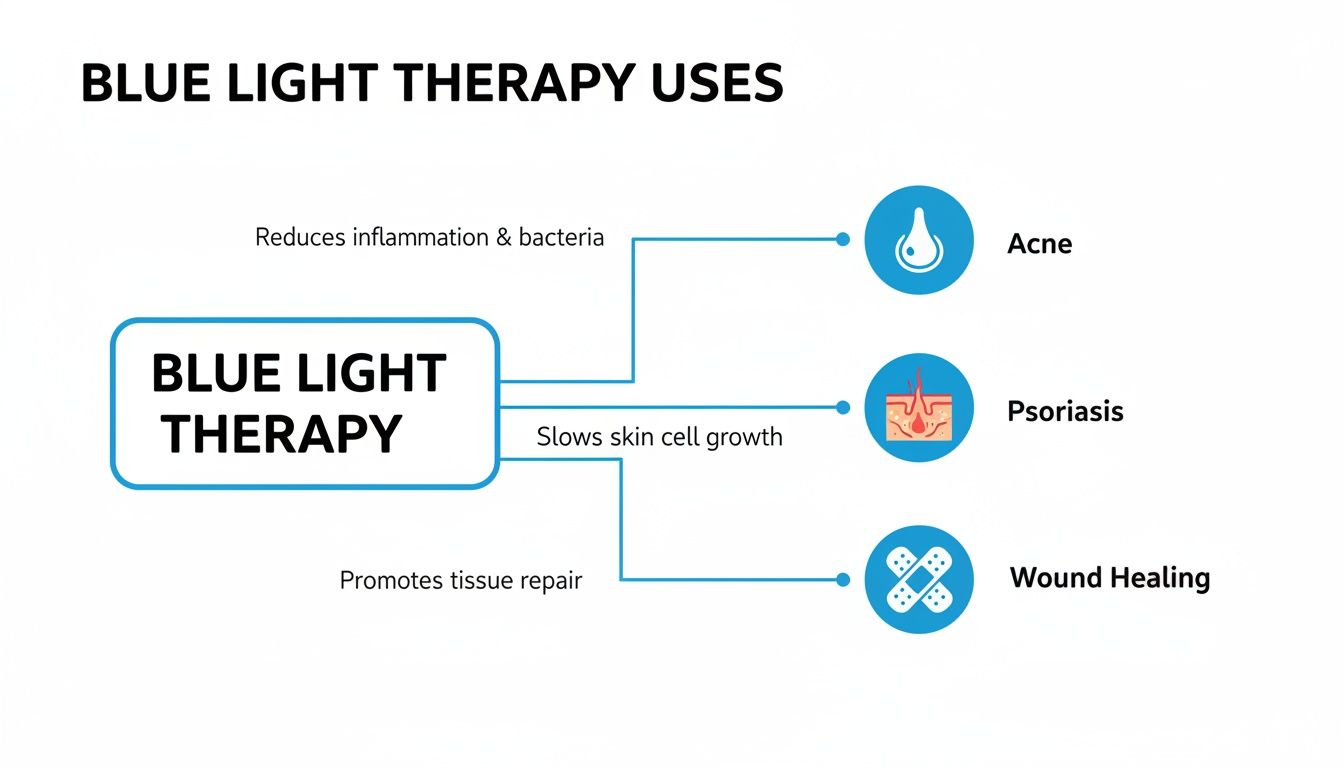
As you can see, the benefits go well beyond just pimples, showing just how versatile it can be for calming distressed skin.
Why LED Technology Is a Game Changer
The rise of Light Emitting Diodes (LEDs) is what really made this therapy accessible and effective. Unlike older light sources, high-quality LEDs produce extremely precise wavelengths of light with almost no heat. This precision guarantees your skin gets the exact dose of therapeutic light it needs to kickstart that beneficial biological response.
This makes the treatment not only effective but also incredibly safe for at-home use. You can dive deeper into the nuts and bolts in our article explaining how LED light therapy works.
Here’s why an LED-based approach makes all the difference:
- Targeted Wavelengths: LEDs deliver the exact 415-470 nm range needed to activate porphyrins in bacteria for a powerful effect.
- No Harmful Rays: This is not UV light. The blue light from LED devices is non-damaging, making it a safe option for consistent use.
- Gentle on Skin: The low heat output means there’s virtually no risk of burns or discomfort. Sessions are comfortable and easy to stick with.
When you understand this core mechanism, it becomes obvious how blue light therapy serves as a foundational tool for managing skin issues. It isn't just a surface-level fix; it’s a scientific process that partners with your skin’s own biology to create a healthier environment. This is exactly why it works so well across a range of applications.
Targeting Stubborn Acne with Blue Light Therapy
If you ask anyone what blue light therapy is used for, you'll almost always get the same answer: acne. It’s the therapy's claim to fame, and for very good reason. For anyone struggling with mild to moderate breakouts, blue light offers a powerful, drug-free way to manage the problem right at its source—all without the harsh side effects of topical chemicals or oral medications.
The magic lies in how it deals with the specific bacteria behind inflammatory acne, Cutibacterium acnes (or C. acnes). These tiny microbes live deep within our pores and hair follicles. When they get a chance to multiply, they trigger the red, sore blemishes we all know and hate.
A Precise Attack on Acne-Causing Bacteria
Think of blue light therapy as a targeted airstrike against acne. The specific wavelengths of blue LED light, typically around 415 nm, are absorbed by light-sensitive compounds inside the C. acnes bacteria. This kicks off a phototoxic chain reaction that destroys the bacteria from within, leaving the surrounding healthy skin completely untouched.
This highly focused approach delivers a few key benefits for getting breakouts under control:
- Calms Inflammation: By knocking out the bacteria, blue light helps soothe the body's inflammatory response, which is what reduces the redness and swelling of pimples.
- Helps Prevent Future Breakouts: Using it regularly keeps the bacterial population down, making it much harder for new blemishes to even get started.
- Gentle and Non-Irritating: Unlike many creams and washes that can leave skin dry, flaky, and irritated, LED blue light is incredibly gentle and perfect for consistent use.
The real beauty of using LED blue light for acne is its precision. It doesn't take a sledgehammer approach. Instead, it delivers a focused, purifying energy right where it’s needed most, offering a clean and effective path to clearer skin.
The Power of Consistency with At-Home LED Devices
Let’s be honest—the biggest challenge with any skincare routine is sticking with it. This is where modern at-home LED devices have really changed the game. High-quality, hands-free gadgets let you get effective treatments in short, 10- to 20-minute sessions that easily fit into your day.
Being able to treat your skin while you're working, reading a book, or just relaxing on the couch removes the friction that causes so many people to give up. It empowers you to maintain the steady schedule needed to see a real difference in blackheads, whiteheads, and those painful inflammatory spots. You can explore more about how blue light therapy benefits your skin in our detailed guide.
And this isn't just about convenience; it's backed by solid science. Clinical studies have shown time and again that self-administered blue light therapy can produce significant improvements. For instance, a 2010 study on patients with long-term facial acne found that after daily 6-minute sessions with a 414 nm LED device, participants saw an impressive 39.1% reduction in total comedones (blackheads and whiteheads) by the fourth week.
This data really drives home the point that success comes from consistent, low-level exposure. It's not about a single, intense blast of light but about the cumulative effect of regular, gentle treatments. At-home LED devices are perfectly designed for this, making acne management feel less like a chore and more like a simple part of your daily wellness practice.
Soothing Psoriasis and Eczema Flare-Ups
While blue light therapy gets a lot of attention for fighting acne, some of its most meaningful work is in managing chronic skin conditions. For the millions of people navigating the frustrating cycles of psoriasis and eczema, this gentle therapy offers a way to find real relief, often without having to turn to steroids or other aggressive systemic treatments.
With these conditions, the goal isn't killing bacteria like it is with acne. Instead, the focus is on calming the skin's own overactive immune response. Both psoriasis and eczema are driven by underlying inflammation and skin cells that multiply way too fast, which is what causes all that redness, itching, and scaling. This is where blue light really shines, offering a targeted way to dial down the irritation.
How Blue Light Calms Inflammatory Skin
So, what’s actually happening when blue light hits inflamed skin? It’s working on two fronts to interrupt the flare-up cycle.
First, the therapy helps slow down the out-of-control growth of skin cells—a process called hyperproliferation. This is what’s responsible for the thick, scaly plaques you see with psoriasis. Think of it like putting the brakes on a runaway train; blue light helps bring that rapid cellular turnover back to a more normal, manageable pace.
At the same time, blue light has a powerful anti-inflammatory effect. It helps quiet the frantic signals in your skin that are screaming "itch!" and "get red!" This one-two punch of slowing cell growth while also reducing inflammation makes it a fantastic option for anyone looking for a gentle but effective way to manage their symptoms.
The result? Skin that feels calmer, looks less angry, and is far less itchy. It's not just physical relief—it’s a mental break from the constant discomfort these conditions can cause.
By tackling both hyperproliferation and inflammation, blue light therapy gets to the root of what makes psoriasis and eczema so persistent. It offers a way to manage symptoms by working with your skin's biology, not against it.
The Science-Backed Benefits for Chronic Conditions
This isn't just wishful thinking; there's solid clinical evidence backing it up. Blue light therapy is proving to be a surprisingly effective tool for managing these inflammatory conditions, which affect millions of people. For perspective, psoriasis alone impacts 2-3% of the world's population, so finding safe, accessible treatments is a huge priority.
Research shows that consistent use of blue light leads to real, measurable improvements. For instance, a 2005 clinical study on atopic dermatitis and hand-foot eczema found that patients treated with blue light saw their Dyshidrosis Area and Severity Index (DASI) score drop from 34.9 to 23.3. The control group saw no change at all. It’s a clear demonstration of how targeted LED therapy can produce tangible results, and you can see the data for yourself on the official government research site.
Modern Solutions for Hard-to-Treat Areas
One of the biggest frustrations with conditions like psoriasis is treating hard-to-reach spots, especially the scalp. Scalp psoriasis can be incredibly distressing, causing intense itching and flaking that's tough to hide. This is where modern, portable LED devices have become absolute game-changers.
A hands-free, wearable device, like an LED cap, allows you to treat your entire scalp consistently and effortlessly. You can just put it on and go about your day, making it easy to stick with the regular sessions needed to see a difference. That convenience is a critical part of long-term success.
Using a portable LED device for scalp issues has some clear advantages:
- Targeted Treatment: It delivers even light across the whole scalp, making sure no spot gets missed.
- Ease of Use: You can finally skip the messy, goopy creams and ointments that are so difficult to apply to the scalp.
- Consistency: The simple, hands-free design makes sticking to a treatment schedule almost effortless.
By making treatment this accessible, these devices empower you to take back control of your skin and scalp health. To learn more about this approach, check out our detailed guide on using light therapy specifically for eczema. Ultimately, blue light therapy offers a modern, effective, and steroid-free path toward managing flare-ups and finally achieving calmer, healthier skin.
Integrating Blue Light Therapy into Your Daily Routine
Understanding what blue light therapy can do is one thing, but actually seeing the results—clearer skin, less inflammation, or even a healthier scalp—comes down to one crucial element: consistency. Think of it like starting a new workout routine. You won't get fit after one trip to the gym, but regular, dedicated sessions are what build momentum and deliver real, visible change over time.

The trick is to make your light therapy sessions an easy, automatic part of your daily or weekly schedule. Thankfully, the new generation of high-quality at-home LED devices makes this incredibly simple. You don't need to schedule appointments or drive to a clinic anymore; you can get a powerful, effective treatment right in your own home.
When a treatment is this convenient, it’s much easier to turn good intentions into a solid habit.
Crafting Your At-Home Treatment Protocol
So, what does a good at-home routine actually look like? While it's always best to follow the instructions for your specific device, most protocols are built around the same core principles. The aim is to deliver a steady, cumulative dose of therapeutic light to your skin.
A typical at-home session usually breaks down like this:
- Session Length: Most treatments last between 10 to 20 minutes. This is generally the sweet spot for delivering an effective dose of light energy without overdoing it.
- Frequency: To get started, aim for 3 to 5 sessions per week. This regularity is key for keeping things like bacteria or inflammation under control.
- Consistency: This is the golden rule. The benefits of blue light therapy are cumulative, so sticking with it day after day is what truly drives lasting results.
This structured approach ensures your skin gets the consistent signal it needs to begin purifying, repairing, and rebalancing itself.
The Power of Combination Therapy
Blue light is a fantastic surface-level specialist, and it truly shines when it comes to zapping acne-causing bacteria. But what if you're also dealing with deeper issues like inflammation or want to work on skin texture and firmness? That’s where you bring in its counterpart: red light.
By combining blue and red light, you’re essentially creating a full-stack skincare strategy. The blue light cleans up the surface, while the red light gets to work repairing and rejuvenating the layers underneath. It’s a true “best of both worlds” approach.
Many modern devices now come with both blue and red light modes, which lets you either switch between them or use them together for a more comprehensive treatment.
Here’s a quick look at how they work together:
- Blue Light (415-470 nm): This wavelength works right at the skin's surface. Its main job is antibacterial, as it’s incredibly effective at destroying the C. acnes bacteria responsible for breakouts.
- Red Light (630-660 nm): This wavelength penetrates deeper into the dermal layers of the skin. It works by stimulating your cells’ energy centers to reduce inflammation, improve circulation, and fire up collagen production for anti-aging benefits.
For someone with inflammatory acne, this one-two punch is a game-changer. The blue light kills the bacteria causing the problem, while the red light calms the associated redness and helps the blemishes heal faster with less chance of scarring.
Essential Safety Tips for Home Use
One of the best things about at-home LED therapy is its excellent safety profile, largely because it’s 100% UV-free. Still, following a few common-sense safety rules will ensure you get all the benefits with zero downside.
First and foremost: always protect your eyes. While the visible light from LED devices is much safer than UV, you don't want direct, prolonged exposure. Any reputable device will include protective eyewear—make it a non-negotiable part of every single session.
Beyond that, just stick to the manufacturer's guidelines. This means:
- Following the recommended session times and resisting the urge to overdo it.
- Making sure your skin is clean and free of any products that could block or reflect the light.
- Using the device only as intended and on the specified treatment areas.
By following these simple rules, you can confidently and safely make blue light therapy a cornerstone of your personal wellness routine.
Frequently Asked Questions About Blue Light Therapy
Even after learning the science, it's normal to have a few lingering questions. Let's dig into some of the most common ones I hear, getting straight to the practical answers you need before deciding if blue light therapy is right for you.
Is At-Home LED Therapy as Effective as In-Office Treatments?
This is probably the most common question I get, and the answer really boils down to one word: consistency.
Professional, in-office treatments use high-intensity light sources. The catch? They're expensive and require you to schedule appointments, which makes keeping up with them a real challenge.
A quality at-home device, on the other hand, puts clinically-backed wavelengths right in your hands. It lets you tackle things like mild-to-moderate acne and boost your overall skin health on your own time. Think of it like exercise. A single, intense personal training session once a month will never beat consistent, 20-minute workouts you do at home every day. The best treatment is always the one you actually stick with.
The real magic of at-home devices is how they make consistency almost effortless. By removing the barriers of cost and scheduling, they give you the control to build a steady routine, and that's what drives lasting results.
This simple accessibility is what turns light therapy from a rare event into an easy, everyday part of your self-care.
How Is Blue Light Therapy Different from Red Light Therapy?
While they both fall under the "light therapy" umbrella, blue and red light are specialists that work on different problems at different depths. Understanding the distinction is key to seeing why the best devices often include both.
Blue light has a shorter wavelength, typically around 415–470 nm. This means it works right at the skin’s surface. Its primary job is antibacterial, making it the go-to for clearing up acne by destroying the C. acnes bacteria that causes breakouts in the first place. It’s a surface-level cleaner.
Red light, with its longer wavelength of about 630-660 nm, penetrates much deeper into the skin’s dermal layer. Down there, its job is to energize your cells' mitochondria. This action ramps up healing, reduces inflammation, and stimulates new collagen production, making it the star player for anti-aging and recovery.
This is why so many modern devices are dual-action. They provide a comprehensive, one-two punch for skin health:
- Blue light handles the immediate problem on the surface, like active breakouts.
- Red light works from below to repair, calm, and rebuild healthier skin for the long haul.
One purifies, the other rebuilds. Together, they offer a far more complete approach to skin wellness.
Are There Any Side Effects with Blue Light Therapy?
One of the best things about LED-based blue light therapy is its excellent safety record. For most people, it's considered extremely safe. Crucially, it contains absolutely no UV light, so you don't have to worry about the risks that come with sun exposure or tanning beds.
The most common side effects are very minor and temporary. Some people might notice a little bit of redness or dryness in the treated area right after a session, but this almost always fades quickly.
To ensure you're getting a safe and effective treatment, just stick to two golden rules:
- Always choose a device from a reputable brand that is transparent about its quality and safety standards.
- Follow the manufacturer’s instructions to the letter, especially regarding session times and wearing the provided protective eyewear.
While blue light therapy is gentle for almost everyone, if you have a known photosensitivity or a specific light-related medical condition, it's always smart to talk with your doctor first. For everyone else, it’s a remarkably safe and non-invasive option.
How Long Does It Take to See Results?
When it comes to light therapy, patience and consistency are everything. You won't see changes overnight because the therapy works by kickstarting your body's own natural processes, and that takes time. The exact timeline really depends on your skin, the condition you're treating, and how regularly you use the device.
For acne, most people begin to see a noticeable drop in inflammation and fewer new breakouts within 2 to 4 weeks of consistent, daily use. For more persistent issues like psoriasis, it may take several weeks of regular sessions before you see a clear reduction in redness and scaling. It helps to remember that blue light therapy is often about managing an ongoing condition, so continued use is the key to maintaining your results.
Ready to make consistent, effective light therapy a seamless part of your routine? The Prospek cordless LED therapy cap was designed for exactly that. With dual-spectrum technology and a comfortable, hands-free design, you can get your daily treatment in while you work, relax, or travel. Upgrade your self-care and experience the convenience of modern light therapy today. Discover Prospek at prospekthera.com.