

Think of it as a personal power-up for your cells, one that fits perfectly into your life. That’s the idea behind a mini red light therapy device. It’s a compact, portable tool that uses advanced LEDs to deliver specific, targeted wavelengths of light to your scalp and skin, helping support your body's natural wellness from the outside in.
Your Guide to Portable Red Light Therapy
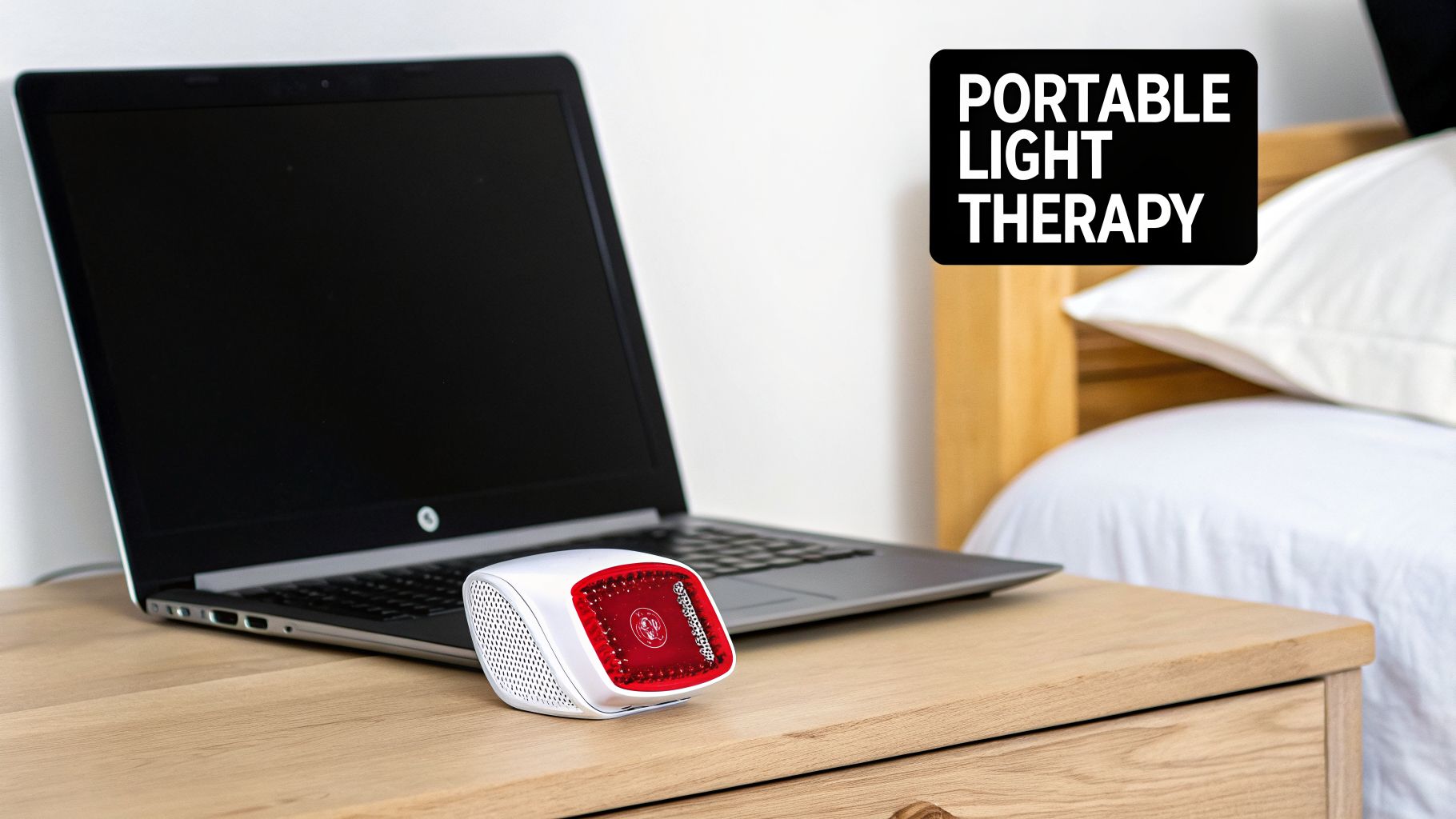
When you hear "light therapy," you might picture bulky, clinical machines that keep you stuck in one room. The latest mini red light therapy devices are a world away from that. They bring the science of photobiomodulation—a fancy term for using light to boost cellular function—out of the clinic and into your everyday life.
At the heart of this technology are powerful but cool-running Light Emitting Diodes (LEDs). Unlike old-school bulbs, these modern marvels can produce very precise wavelengths of light without the extra heat or risky UV rays. This makes them perfect for safe, effective, and consistent treatments you can do yourself.
Why Portability Matters
The "mini" isn't just about a smaller size; it's about making the therapy a consistent part of your routine. Let's be honest, the wellness habits that stick are the ones that don't feel like a chore. That's where portability makes all the difference.
A great device should bend to your life, not the other way around. Here’s what makes that possible:
- Cordless Operation: A built-in rechargeable battery is a game-changer. It frees you from being chained to a wall, so you can do a session while making coffee or tidying up.
- Discreet Design: Many of the best new units are flexible panels you can slip right under a cap or beanie. This lets you get your treatment in without anyone knowing, turning downtime into productive wellness time.
- Travel-Friendly Build: A lightweight, compact design means it can easily be tossed into a carry-on or gym bag, so you never have to break your routine, even when you're on the move.
The real purpose of a mini red light therapy device is to fit so seamlessly into your day that you actually use it. Whether you're at your desk, on the couch, or even on your commute, the right device makes consistency feel effortless.
In this guide, we'll get into exactly how these fascinating tools work. We’ll break down the science behind key wavelengths like 660nm Red and 850nm Near-Infrared (NIR) and show you what each one does for your scalp and skin. From understanding the benefits to choosing the right device, you’ll get a clear idea of how this technology can become a valuable part of your personal wellness toolkit.
How LED Red Light Therapy Actually Works
It might sound like something from a science fiction movie, but the way red light therapy works is surprisingly simple. Think of it like photosynthesis for your body. Just as plants absorb sunlight to create energy, our cells can absorb specific wavelengths of light to power themselves up. This entire process has a scientific name: photobiomodulation (PBM).
At its heart, PBM is about giving your cells a gentle boost. It's not about heat or damaging UV rays. Instead, the therapy uses targeted beams of light to kickstart a whole cascade of positive biological responses deep within your cells, all without causing any harm.
The real magic happens inside tiny cellular powerhouses called mitochondria. When you use a red light therapy device, these mitochondria soak up the light energy. This helps them work more efficiently to produce the fuel that powers your cells, a molecule known as ATP (adenosine triphosphate). More ATP means your cells have more energy to repair, rejuvenate, and function at their best.
The Two Key Wavelengths
A good red light therapy device won’t just use any light. It uses a specific, well-researched combination of two non-invasive wavelengths. Each one plays a different role depending on how deeply it can penetrate your skin.
-
660nm (Red Light): This visible red light has a shorter reach, which makes it perfect for working on the skin’s surface. It’s absorbed mostly by the upper layers, where it can help improve skin health and support the delicate environment around your hair follicles.
-
850nm (Near-Infrared Light): You can’t see this one with your naked eye, but it’s a powerful player. Near-infrared light travels much deeper, reaching the tissues beneath the skin’s surface. This makes it a fantastic tool for supporting recovery and function in those underlying areas.
By combining these two wavelengths, a device can deliver a more comprehensive treatment that addresses issues on the surface and well below it. It’s this dual-action approach that really unlocks the potential of modern photobiomodulation. If you’re curious to learn more, you can explore our detailed guide on how LED light therapy works.
The Power of Advanced LEDs
The reason a portable device can be so effective today comes down to huge advancements in LED technology. Unlike older methods, modern, high-quality LEDs deliver light in a highly focused and uniform way, ensuring every inch of the treated area gets a consistent and effective dose of energy.
The goal of photobiomodulation is simple: give your cells the right kind of light to help them function better. Modern LEDs are the perfect tool for the job, providing targeted energy without the risks associated with some older technologies or harmful UV rays.
Believe it or not, this technology has roots in an accidental discovery back in 1967. A Hungarian physician was using a weak laser on mice, hoping to study its effect on skin cancer. He found it didn't harm the tumors, but it did have an unexpected side effect: it dramatically sped up wound healing and even spurred new hair regrowth.
That happy accident laid the groundwork for today’s biostimulation tools. By the 1990s, clinical trials were confirming the science, and after the FDA gave its first approval for a low-level laser therapy device in 2002, the path was cleared for the safe, consumer-friendly LED versions we have now.
This evolution is what led directly to the devices we see today, which use powerful and safe LEDs. Because LEDs can cover a large area evenly without producing intense, focused heat, they are a fantastic choice for at-home use—especially in a cap designed for the scalp. It’s what makes safe, comfortable, and consistent sessions possible.
Real Benefits for Your Scalp and Skin
So, we know how a mini red light therapy device works on a cellular level, but what does that mean for you? The science is interesting, but the real proof is in the results you can see and feel. With a cap-style device, the benefits are focused right where you want them: on your scalp and skin.
These improvements aren't just a happy accident; they’re a direct result of the specific wavelengths of light doing their job. Think of it as giving your cells the precise energy they need to kickstart their own repair and rejuvenation cycles. It’s a gentle, non-invasive approach to fostering a healthier environment for your skin and the roots of your hair.
This diagram shows how different wavelengths are absorbed by your cells' mitochondria—the cellular powerhouses. You can see 660nm light is great for the skin's surface, while 850nm light penetrates deeper into the tissue.
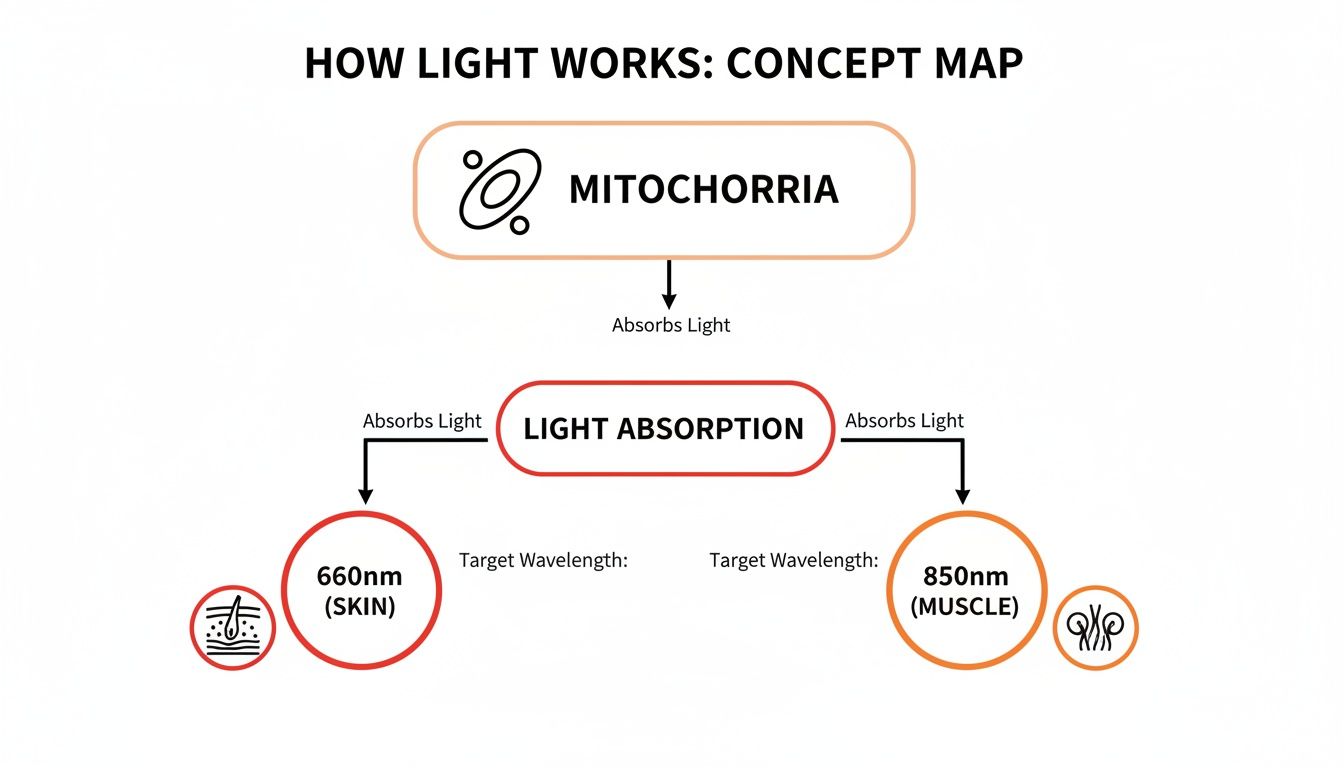
Using both wavelengths at once means you're getting a comprehensive treatment that works on surface-level issues and supports the deeper structures at the same time.
Supporting a Healthy Scalp Environment
You can’t have healthy hair without a healthy scalp—it’s the foundation for everything. When your scalp is dealing with issues like inflammation or poor blood flow, your hair follicles can't perform at their best. A mini red light therapy device gets right to the heart of this by delivering targeted light energy.
This is where having two wavelengths really shines:
- 660nm Red Light: This wavelength gets to work on the surface. It helps calm the irritation and inflammation that can disrupt the delicate environment around each follicle, creating a more balanced and supportive setting for hair to thrive.
- 850nm Near-Infrared (NIR) Light: This light reaches deeper to improve circulation. Better blood flow is a game-changer because it delivers more oxygen and essential nutrients directly to the hair follicles, giving them the fuel they need to function properly.
Sticking with a consistent routine helps maintain this well-nourished, balanced state. For anyone concerned about hair thinning, this is incredibly valuable. It helps create the ideal conditions for your hair to maintain its natural strength and density.
Revitalizing Your Skin's Appearance
While a cap is designed for your scalp, the skin on your forehead and temples gets a healthy dose of light during every session, too. Red light therapy has a well-earned reputation for its skin-rejuvenating effects, helping to soften common signs of aging and boost overall radiance.
Research has repeatedly shown that red light can encourage collagen production, the protein that gives your skin its firmness and bounce. With regular use, many people notice a smoother skin texture and a brighter, more even complexion. Here again, the two wavelengths work as a team. The 660nm red light addresses surface concerns like tone and fine lines, while the 850nm NIR light works below the surface to support the skin's underlying structure.
This idea of using light for healing isn't some new trend; it has a rich history. The journey to the convenient mini devices we use today started more than a century ago. A pioneer named Niels Ryberg Finsen began successfully treating skin lesions with concentrated electric light way back in 1896, work that eventually won him a Nobel Prize. His research laid the groundwork for decades of innovation, including NASA's famous studies on wound healing.
Today, this proven technology has been refined into devices that fit our modern lives, growing into a $361.5 million at-home market. If you're curious, you can learn more about this fascinating evolution from its early days to now by exploring this detailed timeline on AvantiBody.com.
How to Choose the Right Mini Red Light Device
When you start looking for a mini red light therapy device, it’s easy to get lost in a sea of technical specs and marketing hype. So, let’s cut through the noise. The best device for you is one that actually fits into your life—making your sessions effective, convenient, and something you can stick with.
Think of it less like a complex purchase and more like finding the right tool for the job. You need something that’s not only powerful but also practical. After all, a great device should make your wellness routine easier, not add another chore to your list.
Let's break down what really matters, from genuine portability to the technology that powers your results.
Focus on True Portability
The whole point of a "mini" device is freedom. But not all portable gadgets are created equal. True portability means you aren't chained to a wall outlet, which completely changes how and when you can use your device.
-
Cordless Design: This is the big one. A built-in rechargeable battery is non-negotiable for a modern, portable unit. It's the difference between doing your session wherever you want—on the couch, at your desk, even during your commute—and having to find a plug and sit still.
-
Cap-Compatible Fit: Let’s be honest, discretion is a huge plus. The most practical designs are thin, flexible panels that you can slip inside any hat or beanie. This turns downtime into treatment time without anyone noticing.
-
Lightweight and Travel-Friendly: A bulky device will get left behind. Look for something compact and light enough to toss in your gym bag or carry-on, so you never have to miss a session, whether you're on a business trip or vacation.
Choosing the right device comes down to matching its features with your lifestyle. The following table highlights the essential features to look for and explains why they're so important for a seamless experience.
Essential Features for a Portable Red Light Therapy Device
| Feature | Why It Matters | Ideal for Users Who... |
|---|---|---|
| Cordless with a Rechargeable Battery | Provides total freedom of movement. You're not tied to a power outlet, making it easy to use anywhere. | Have a busy, on-the-go lifestyle and want to multitask during sessions. |
| Cap-Compatible, Flexible Panel | Allows for discreet, hands-free use. Simply slide it into your favorite hat and carry on with your day. | Value convenience and privacy, and want to integrate therapy into daily activities. |
| Dual-Wavelength LEDs (660nm & 850nm) | Delivers a comprehensive treatment by targeting both the skin's surface and deeper tissues for better results. | Are seeking both skin health and deeper circulatory benefits for scalp wellness. |
| Breathable, Ventilated Design | Prevents heat and sweat buildup, ensuring the scalp stays cool and comfortable during the session. | Have sensitive skin or plan to use the device for the full recommended session time. |
| Simple, One-Button Controls | Makes operation effortless. No complicated settings or confusing modes to deal with. | Prefer a straightforward, user-friendly experience without a learning curve. |
| Automatic Session Timer | Ensures you get the perfect treatment duration every time without having to watch the clock. | Want to "set it and forget it" and ensure consistent, effective sessions. |
By prioritizing these features, you’re not just buying a gadget; you’re investing in a consistent, effective, and enjoyable wellness routine.
Evaluate the Technology Inside
Once you’ve nailed down portability, it’s time to look under the hood. The real engine of any red light therapy device is its LEDs. The quality, wavelengths, and delivery of light are what ultimately drive your results.
A device's true power lies in its ability to deliver the right wavelengths of light uniformly and safely. High-quality LEDs are the cornerstone of effective photobiomodulation, ensuring every session provides consistent energy to your cells.
Here are the technical specs that make a real difference:
Dual-Spectrum LED Array A top-tier mini red light therapy device should feel like a two-in-one treatment, offering both red and near-infrared (NIR) light. These two wavelengths work in synergy to give you the best of both worlds.
- 660nm (Red Light): This wavelength stays closer to the surface. It’s fantastic for supporting skin health and helping to create a balanced environment for your hair follicles to thrive.
- 850nm (Near-Infrared Light): This one is invisible to the naked eye and penetrates deeper. Its main job is to boost circulation and support the underlying cellular structures that are vital for scalp wellness.
Using both together gives you a multi-layered approach that addresses scalp health from the surface all the way down to the deeper tissues. It's a combination that is far more effective than a single wavelength alone. If you're curious to learn more, our guide on different types of red LED panels explains this in greater detail.
Breathable and Comfortable Materials You’re going to be wearing this thing for 15-20 minutes at a time, so it has to be comfortable. A device made from flexible materials will mold to your head without creating annoying pressure points. Good ventilation is also a must-have to prevent your head from getting hot and sweaty, keeping your scalp cool and happy.
Simple Controls and Auto-Timers The best tech is the kind you don’t have to think about. Look for a simple, one-button design and a built-in automatic timer. An auto-off function is a game-changer—it guarantees you get the perfect dose of light every single time without constantly checking your watch. It’s a small detail that makes sticking to your routine incredibly easy.
Integrating Red Light Therapy Into Your Routine
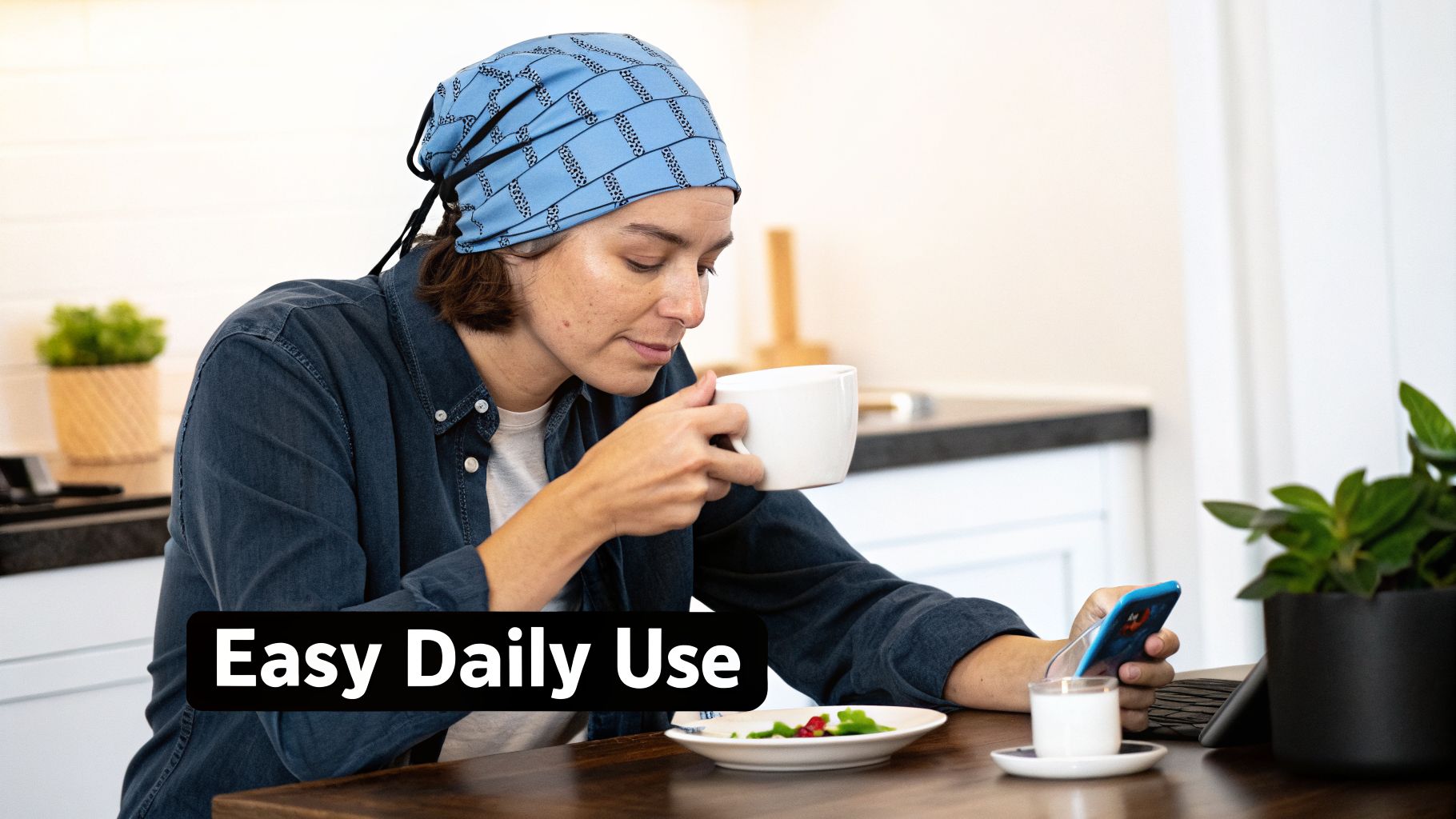
So, you’ve got your device. Now comes the part that truly makes a difference: building a routine. With red light therapy, consistency is everything. Think of it less like a sprint and more like a marathon—steady, regular effort delivers the best results over time.
The beauty of a portable, hands-free device is that it makes consistency feel effortless. You don’t need to carve out a huge, dedicated block of time. Instead, you can weave your sessions into the small pockets of your day you already have.
Building Your Session Schedule
A red light therapy session is refreshingly straightforward. For most people, a session time of 15 to 20 minutes is the perfect window to deliver an effective dose of light energy without overdoing it.
To really see a change, aim for several sessions a week. Starting with 3 to 5 times per week is a great rhythm that gives your body’s cells the steady encouragement they need to respond.
The goal is to make red light therapy a habit, not a chore. The more seamlessly it fits into your life, the more likely you are to stick with it and see the benefits you’re looking for.
Think about where you can find a spare 20 minutes. With a cap-style device, the possibilities are endless:
- Your morning ritual: Wear it while sipping your coffee and scrolling through the news.
- A midday reset: Pop it on during a work break or while you’re clearing out your inbox.
- Winding down at night: Use it while you read a book, listen to a podcast, or just relax on the couch.
It’s amazing to think this kind of convenient, at-home wellness has its roots in outer space. Back in 1993, NASA researchers stumbled upon red light’s healing properties while trying to figure out how to grow plants on space missions. By 2001, they were studying its effects on US Navy SEALs, finding it sped up wound healing by an incredible 40%. Today, that same technology has fueled a $361.5 million market for home devices. You can discover more insights about the history of red light therapy on MitoRedLight.com.
Preparing for a Successful Session
Getting ready for a session couldn’t be easier, but a few quick steps will help you get the most out of it. Make sure your scalp and skin are clean and dry before you start. This just gets rid of any oils, creams, or hair products that might block the light from getting to your cells.
If you’re using a flexible panel that fits inside a hat, double-check that it’s sitting right over the area you want to treat. It should feel snug, but not uncomfortably tight. A well-designed unit will be made with breathable materials to keep things from getting too hot, making the whole experience comfortable from start to finish. For more tips, check out our guide on how to use red light therapy.
Understanding the Safety of LED Devices
It’s completely normal to have questions about safety, especially with new technology. Fortunately, high-quality LED red light therapy is widely considered safe, with very few side effects.
Here’s the most important thing to know: these devices do not use UV light. The specific red and near-infrared wavelengths used for photobiomodulation are nothing like the damaging rays from the sun or a tanning bed. This is why they don’t carry a risk for skin damage or cancer. In fact, the American Academy of Dermatology Association has stated that FDA-cleared home-use devices pose a low risk to the public.
What about eye safety? The red light is bright, but a cap-style device is designed to point the light down onto your scalp, which keeps it out of your direct line of sight. Still, it’s always a good idea to avoid looking straight into the LEDs while they’re on. When in doubt, following the manufacturer’s instructions is your best bet for a safe and effective treatment every single time.
Your Top Questions About Mini Red Light Therapy
Thinking about trying a mini red light therapy device? Great! It’s smart to have a few questions before you start. Let's tackle the most common ones we hear from people just like you.
How Long Until I See Results?
This is the big question, isn't it? The honest answer is that it depends, but the single most important factor is consistency. Red light therapy isn't a one-and-done fix; think of it more like starting a new workout routine for your cells.
Most people begin to feel subtle changes—like a calmer scalp or softer-feeling skin—within the first few weeks of using their device 3-5 times per week.
The more visible improvements, like better skin texture or a healthier scalp environment, really start to shine through after about 2 to 3 months of sticking with it.
It all comes down to patience. You're giving your body the support it needs to power its own natural renewal processes, and that takes a little time. A regular schedule is your best bet for seeing real, lasting results.
Is This Technology Safe For My Skin and Eyes?
Absolutely, and it’s a great question to ask. When you get a high-quality device, LED red light therapy is considered very safe for home use. The most important thing to know is that it does not use any harmful UV light.
The light from a mini red light therapy device is a specific, narrow band of red (660nm) and near-infrared (850nm) light. This is completely different from the damaging UV rays you get from the sun or a tanning bed, so it doesn't come with the same risks.
As for your eyes, a cap-style device is designed to point the light down at your scalp, which keeps it out of your direct line of sight. The light is bright, so you shouldn't stare into it, but it's not intended for that anyway. Just follow the instructions that come with your device, and you'll be all set.
Can I Use It With My Skincare or Hair Products?
Yes, you can, but the order of operations matters. To get the most out of every session, you want the light to have a clear path to your cells. That means using it on clean, dry skin and scalp.
Here’s the simple routine we recommend:
- Cleanse First: Wash your face or make sure your hair is clean and free from any heavy serums, oils, or leave-in products.
- Use Your Device: Do your 15–20 minute red light therapy session.
- Apply Products After: Once you're done, go ahead with your normal skincare or hair care routine. Applying moisturizers, serums, or scalp treatments afterward is perfect.
Following this order helps your cells soak up as much light energy as possible, making every minute of your session count.
What Is the Difference Between Red and Near-Infrared Light?
This gets to the heart of what makes these devices so effective. Even though they work together, red and near-infrared light are two different things, and they do different jobs.
-
Red Light (660nm): This is the light you can actually see. It has a shorter wavelength that works closer to the surface. It's fantastic for targeting skin texture and supporting the health of the hair follicles.
-
Near-Infrared Light (850nm): You can't see this light with your eyes. Its longer wavelength can penetrate more deeply, helping to improve circulation and get more oxygen and nutrients to the tissues beneath the skin.
By combining both in one device, you get a comprehensive approach that works from the surface all the way down to the foundational layers of your tissue.
Ready to make consistent, effective red light therapy a part of your daily life? The Prospek was designed with a cordless, cap-compatible panel to give you the freedom to support your scalp and skin wellness anytime, anywhere. Learn more and upgrade your routine today at ProspekThera.com.