

So, what exactly are these red LED panels you've been seeing everywhere? Simply put, they are your personal, at-home light therapy devices. They use specific, gentle wavelengths of light from light-emitting diodes (LEDs) to give your skin and scalp the kind of support that was once reserved for expensive clinic visits.
The Rise of At-Home Red Light Therapy
Not so long ago, if you wanted red light therapy, you had to book an appointment with a high-end dermatologist or a specialized wellness center. It meant time off work, a significant hit to your wallet, and sitting in front of large, clunky machines. Thankfully, that entire model has been upended by the arrival of powerful, portable red LED panels.
Think about how home fitness has changed. It used to be that a "real" workout meant schlepping to a gym full of bulky equipment. Now, you can get a world-class workout in your living room. Red light therapy has made the exact same leap—it's moved from a niche professional service to a wellness tool you can use every single day.
A New Era of Convenience
Let's be real—our schedules are packed, and carving out time for self-care is tough. This is where modern red LED panels shine. They’re designed to slot right into your life, not disrupt it. Most are lightweight, many are cordless, and you can easily use one while catching up on a show, reading a book, or even answering emails.
This incredible accessibility is what makes consistent treatment possible. Instead of just a handful of pricey clinic sessions, you can build a steady routine. And with light therapy, consistency is where the real magic happens, allowing the benefits for your skin and scalp to build on each other over time.
If you're wondering just how popular this trend has become, the numbers speak for themselves. The global red light therapy panel market was valued at $0.83 billion in 2024. It’s expected to more than double, reaching a projected $1.70 billion by 2029. You can dive deeper into the market's explosive growth in this comprehensive industry report.
Why Now Is the Perfect Time
The simple truth is that the technology has finally caught up with what people actually need. Recent breakthroughs have made it possible to build devices that are small enough to pack in a suitcase but still powerful enough to deliver clinically relevant doses of light energy. This is a game-changer, especially for busy professionals and frequent travelers who don't want to compromise on their wellness routine.
Today’s devices are focused on delivering practical results for common goals, like:
- Helping to rejuvenate the skin for a more youthful look.
- Promoting a healthy scalp environment to support hair vitality.
- Offering a non-invasive, drug-free approach to wellness.
By bringing this powerful technology into your home, red LED panels give you the ability to take charge of your own skin and scalp health. It’s a new standard for self-care, proving that convenience and consistency are the true keys to getting visible, long-lasting results. We'll explore exactly how they work and what to look for next.
How Red and NIR Light Rejuvenate Your Cells
To get a handle on how a red LED panel works, you really don't need a degree in biology. The whole idea is actually pretty straightforward. Think of it this way: your body is a bustling city, and your cells are all the individual homes and businesses keeping things running. Just like any home, each cell needs a steady supply of power to do its job, whether that's building fresh skin tissue or nurturing a hair follicle.
This is where red light therapy, a process known as photobiomodulation (PBM), steps in. It’s like giving your cellular city a direct infusion of clean, highly efficient energy. In the same way sunlight gives plants what they need to grow, specific wavelengths of light can give your cells the fuel to repair themselves and get back to peak performance.
The Cellular Power-Up
Inside almost every cell you have are tiny power plants called mitochondria. Their primary role is to take the food you eat and the oxygen you breathe and turn it into an energy molecule called adenosine triphosphate (ATP). This ATP is the universal fuel that powers literally everything your cells do.
But when your cells get stressed out, damaged, or just plain tired, their mitochondria can become sluggish and start producing less ATP. This creates a mini energy crisis at the cellular level, which you might see as dull skin, inflammation, or a scalp environment that isn't great for hair growth.
Red and near-infrared (NIR) light from an LED panel acts like a set of jumper cables for these little engines. The light particles are absorbed directly by the mitochondria, which helps them get back to work efficiently, churning out more ATP. With plenty of energy on hand, your cells can get back to what they do best: healing, rebuilding, and thriving. This is the fundamental science that makes these panels so effective.
The Two Key Wavelengths
It’s important to know that not just any light will do the trick. Modern red LED panels are carefully designed to emit two specific wavelengths that have been studied for years for their health benefits. Each one plays a unique role because it travels to a different depth within your body's tissue.
This combination of a shallower and a deeper-reaching wavelength is what makes these devices so versatile. Let's break them down.
Dual-Spectrum Wavelengths and Their Benefits
| Wavelength | Type | Depth of Penetration | Primary Benefits |
|---|---|---|---|
| 660nm | Visible Red Light | Targets the skin's surface and upper layers | Stimulates collagen production, improves skin tone and texture, and reduces the appearance of fine lines. |
| 850nm | Invisible Near-Infrared | Penetrates deeper into soft tissue, muscle, and bone | Soothes inflammation, improves circulation to areas like the scalp, and supports tissue repair. |
The 660nm red light focuses its energy on the surface, helping with visible signs of aging. Meanwhile, the 850nm NIR light goes deeper to calm underlying inflammation and improve circulation, which is crucial for areas like the hair follicles on your scalp.
The real-world impact of this cellular energy boost is pretty impressive. Studies have shown that the 660nm wavelength found in red LED panels can increase a cell's ATP production by up to 150%. That energy surge has been shown to speed up wound healing and even shorten recovery times for post-surgery patients by 20-30%. It’s no surprise the market for these devices is expected to grow from $361.5 million in 2024 to $660.8 million by 2031. You can read more on those projections in the full market research report.
From Science to Real-World Results
So, what does all this—the increased ATP and the dual-wavelength approach—actually mean for you? It all translates directly into the visible, tangible results people are looking for.
-
For Your Skin: When your skin cells are properly energized, they kickstart the production of collagen and elastin—the two proteins responsible for keeping your skin firm and bouncy. The result? Smoother, plumper skin and a noticeable reduction in fine lines and wrinkles.
-
For Your Scalp: The 850nm NIR light is a game-changer here. It enhances blood flow directly to the scalp, delivering a fresh supply of oxygen and nutrients right to your hair follicles. At the same time, it helps quiet down inflammation, creating a much healthier and more balanced environment for strong hair to grow.
At its core, red light therapy isn't a cosmetic cover-up. It works by giving your cells the fundamental resources they need to function at their best. It's a supportive treatment that simply empowers your body's own natural healing and regeneration cycles. To go a little deeper, you can learn more by checking out our in-depth guide on LED light therapy. Once you understand the science, you can truly appreciate the results you see in the mirror.
What This Means for Your Skin and Scalp
Alright, we’ve covered the science. Now for the exciting part: how all that cellular activity translates into real-world results you can actually see in the mirror. Using red LED panels consistently isn't about a temporary, surface-level fix. It's about building healthier skin and scalp tissue from the ground up.
I like to use a garden analogy. You can't just spritz the leaves of a wilting plant and expect it to flourish. You have to nourish the soil. Red light therapy works the same way—by improving the fundamental health of your tissue, you get visible, long-lasting benefits.
For Your Skin: A Smoother, More Youthful Look
One of the biggest reasons people turn to red LED panels is for skin rejuvenation, and for good reason. As the years go by, our natural production of collagen and elastin—the proteins that form our skin's scaffolding—starts to decline. That’s what leads to fine lines, wrinkles, and that feeling of lost firmness.
By bathing your skin in 660 nm red light, these panels give a direct energy boost to your fibroblast cells. These are the little factories responsible for producing new collagen and elastin. With that renewed energy, your skin can get back to work rebuilding its own support structure. The result? A complexion that feels plumper, smoother, and far more resilient.
Here’s what that looks like in practice:
- Fewer Fine Lines and Wrinkles: With collagen production back in gear, those lines begin to fill in, restoring a smoother texture.
- Brighter, More Even Skin Tone: Better circulation helps flush out toxins and deliver nutrients, leading to a brighter, less blotchy complexion.
- Improved Firmness and Elasticity: By kick-starting both collagen and elastin, red light helps your skin get its youthful bounce back.
For Your Scalp: Building the Foundation for Healthy Hair
The benefits of red LED panels don’t stop at the hairline. Your scalp is an extension of your skin, and it's the foundation for healthy hair. A healthy scalp needs two things above all else: great blood flow and minimal inflammation.
This is where a panel with both red and near-infrared light really shines. The 850 nm near-infrared wavelength penetrates deeper than red light, right down to the scalp tissue and hair follicles. It boosts circulation, making sure your follicles get a steady supply of the oxygen and nutrients they need to thrive. At the same time, it helps calm the kind of low-grade inflammation that can disrupt the hair growth cycle and lead to shedding.
This blend of 660 nm red light and 850 nm near-infrared light is incredibly effective. Clinical settings have seen up to 40% faster muscle recovery in athletes using this combination. Studies also show a 25-35% reduction in inflammation and a major collagen boost after just 12 weeks of use. It’s this dual-action approach that tackles both surface skin and deeper tissue issues at once.
This process doesn't magically create new hair follicles. What it does do is create the absolute best environment for the follicles you already have to perform at their peak. You're fostering a calm, well-fed scalp, which is critical for supporting the natural vitality and strength of your hair. You can learn more about the specific advantages of near-infrared light therapy in our other articles.
Ultimately, this isn't about a quick fix. It's about supporting your body’s own powerful ability to heal and regenerate. Whether your goal is a radiant complexion or a healthier scalp, a quality red LED panel puts the power of long-term wellness and confidence back in your hands.
How to Choose the Right Red LED Panel
Diving into the market for red LED panels can feel like a lot. With a dizzying number of options out there, how do you sort the genuinely effective devices from the noise? The trick is to look past the flashy marketing and zero in on the technical specs that actually drive performance.
When you know what to look for, you can make a smart investment that delivers real results. It's not about finding the biggest or priciest panel; it's about finding the right one for your specific goals, whether that’s boosting your skin's glow or creating a better environment for your hair.
A good starting point is to simply ask: what am I trying to achieve? This little decision tree makes it easy to see how your primary goal—skin or scalp—shapes your choice.
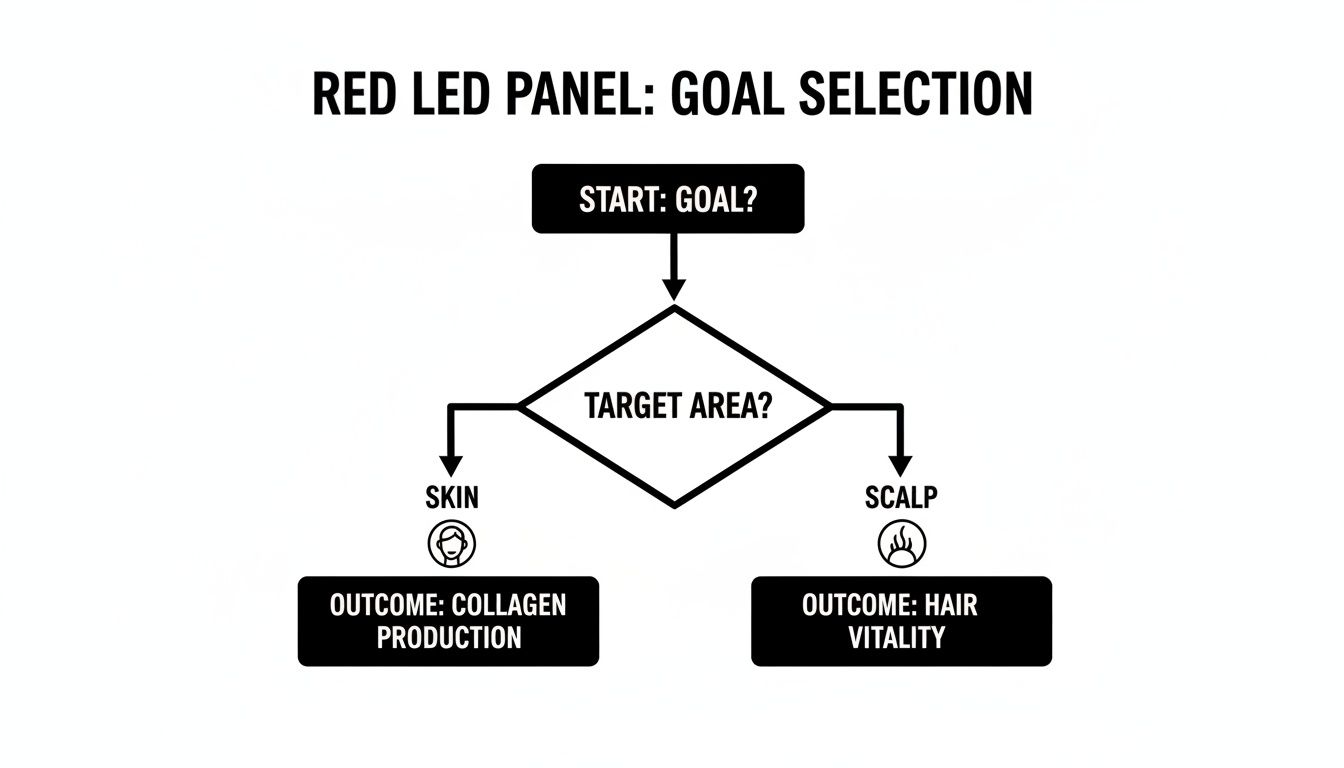
As you can see, once you know whether you're targeting collagen production for your skin or vitality for your scalp, you can start narrowing down the features that matter most.
Decode the Tech Specs That Matter
It's easy to get lost in the jargon when you start comparing red LED panels. Let’s cut through the confusion and focus on the three metrics that really count: irradiance, wavelength, and portability.
1. Irradiance: The Power Behind the Light
Think of irradiance as the "strength" or "dose" of light your body gets. It's measured in milliwatts per square centimeter (mW/cm²) and tells you how much light energy is actually hitting your skin. A device with low irradiance is like trying to get a tan on a cloudy day—it just doesn't have enough power to make a difference.
To see real therapeutic benefits, you need a device that delivers a meaningful dose. Higher irradiance means you can get the job done in a shorter amount of time, which makes sticking with your routine so much easier.
When you're shopping around, look for companies that are upfront about their irradiance numbers. Any brand that’s proud of its device’s power will display this figure clearly. It's a direct measure of effectiveness.
2. Wavelength: Getting the Right Kind of Light
As we've covered, the magic of red light therapy happens at very specific wavelengths. For skin and scalp health, the two most studied and proven wavelengths are 660nm (red light) and 850nm (near-infrared light).
- 660nm Red Light: This is the wavelength for surface-level skin goals. It's fantastic for things like encouraging collagen production and evening out skin tone.
- 850nm Near-Infrared (NIR) Light: This wavelength is invisible to the eye and penetrates deeper. It's crucial for reducing inflammation and boosting circulation, which is exactly what your scalp needs to thrive.
A quality device will deliver these precise wavelengths. Be skeptical of panels that list vague ranges or don't specify their wavelengths at all—they probably won't deliver the targeted benefits you're after.
The Advantage of LED Technology
It’s also helpful to understand why LEDs are the go-to technology for at-home therapy, especially for larger areas like the face or scalp. LEDs provide a broad, even blanket of light, ensuring that every cell in the treatment area gets a consistent and safe amount of energy. There are no intense "hot spots."
This uniform coverage is what makes the experience so comfortable and soothing. The gentle nature of LED light is what makes red LED panels such a great tool for anyone wanting a reliable, non-invasive way to support their wellness from home.
Portability and Fitting It Into Your Life
Finally, think about how a device will actually fit into your daily routine. The most powerful panel on the market is useless if it’s a pain to use. This is where modern, portable designs really shine.
Here are a few things to look for:
- Cordless Freedom: A device with a built-in rechargeable battery, like the Prospek cap, means you're not stuck next to a wall outlet. You can move around and live your life during your session.
- Wearable Design: If a panel can be worn discreetly under a hat or beanie, you can easily multitask. Treat your scalp while you work, read, or just relax on the couch.
- Lightweight and Travel-Friendly: For those who travel, a compact and light device means your routine doesn't get left behind when you pack your bags.
At the end of the day, the best red LED panel is the one you’ll actually use consistently. By matching the right tech specs with a design that works for your lifestyle, you're setting yourself up for long-term success.
Getting the Most from Your Red Light Therapy
So, you’ve got your new red LED panel. Now what? The biggest question most people have is how to actually fit it into an already busy life. The answer is surprisingly simple, and it really comes down to two things: finding the right schedule and, most importantly, being consistent.
I like to compare it to watering a plant. You can't just splash it with water once and expect it to flourish. It’s that steady, regular watering that helps it grow strong. Red light therapy is the exact same principle—those repeated sessions are what allow the benefits to build up at a cellular level, leading to the healthy scalp and vibrant skin you’re looking for.
Building Your Weekly Routine
For most people, a great place to start is using your red LED panel three to five times per week. That frequency gives your cells a consistent dose of light energy without overdoing it.
Aim for sessions that last between 15 and 20 minutes. This seems to be the sweet spot for delivering a therapeutic amount of light that really gets the job done.
To give you a clearer picture, here’s a straightforward protocol you can adapt to your own life.
Sample Weekly Red Light Therapy Protocol
This simple schedule is designed to help you build a sustainable routine for your scalp and skin wellness.
| Day | Focus Area | Session Duration | Notes |
|---|---|---|---|
| Monday | Scalp and Skin | 15 minutes | A great way to start the week with a full-coverage session. |
| Wednesday | Scalp and Skin | 15 minutes | Mid-week boost to maintain momentum and support cellular activity. |
| Friday | Scalp and Skin | 20 minutes | A slightly longer session before the weekend to lock in the benefits. |
| Weekend | Optional | 15 minutes | Add a fourth or fifth session if your schedule allows. |
The real key, though, is to weave it into things you already do. With a hands-free, wearable device, you can easily treat your scalp and skin while catching up on emails, reading a book, or just relaxing on the couch. That’s how it stops feeling like a chore and becomes just another part of your day. For more ideas, you can dive into our complete guide on how to use red light therapy.
Safety and Peace of Mind
It’s completely normal to have questions about safety when you're trying something new. The good news is that high-quality red LED panels are built from the ground up with user safety and comfort in mind. One of the first questions I often hear is whether the light is anything like harmful UV radiation from the sun.
The answer is a definite no. Red and near-infrared light operate on a totally different part of the light spectrum.
Unlike ultraviolet (UV) light, which can damage DNA and cause skin cancer, the wavelengths used in photobiomodulation are non-invasive and have not been shown to cause harm. Reputable devices are FDA-cleared, meaning they have been evaluated for low risk to the public.
This is what makes LED therapy such a gentle and well-tolerated approach for most people. The feeling should be pleasant—many describe it as a gentle, soothing warmth, but it should never feel hot or cause any pain.
While red light therapy is safe for the vast majority, there are a few instances where you'll want to exercise caution. If you have any condition that causes photosensitivity or if you take medications known to increase light sensitivity, it's always a good idea to check with your doctor first. That quick conversation can give you total peace of mind. As long as you follow the guidelines and listen to your body, red light therapy can be a powerful and incredibly safe addition to your wellness routine.
Frequently Asked Questions About Red LED Panels
It’s completely normal to have a few questions before getting started, even when the science is solid and the benefits are clear. Let’s tackle some of the most common ones so you can feel confident about using a red led panel.
How Long Until I See Results from Red LED Panels?
This is the big one, and the honest answer is: it depends. Your results are tied to your body, what you’re trying to achieve, and most importantly, how consistent you are. It’s a lot like starting a new fitness routine—you don’t see a six-pack after one trip to the gym.
- For skin rejuvenation: Many people notice their skin looking healthier and more radiant within a few weeks. For deeper changes, like softening fine lines and improving skin texture, you’ll want to give it 8 to 12 weeks of consistent use, about 3-5 times per week.
- For scalp and hair wellness: Patience is key here. The hair growth cycle is a slow and steady process, so you should plan on sticking with it for at least 3 to 6 months before looking for real improvements in hair thickness and health.
Can I Use Red LED Panels with My Skincare Products?
The short answer is yes, but timing is everything. For the light to do its job properly, it needs a clear path to your skin. Always use your red LED panel on a clean, freshly washed face. This ensures nothing is blocking the light from penetrating your tissue and energizing your cells.
After your session is a great time to apply serums and moisturizers. The boost in circulation from the treatment can actually help your skin absorb them more effectively. Just be careful with products that cause photosensitivity, like retinoids—it's best to avoid using those right before a session. A quick look at the product label is always a smart move.
Is It Uncomfortable or Hot to Use a Red LED Panel?
Not at all. A well-made red led panel, particularly a wearable one, should never feel uncomfortably hot. The high-quality LEDs in modern devices are designed to deliver targeted light energy with very little heat.
You might feel a gentle, soothing warmth, which most people find very relaxing. This isn't a harsh, high-heat treatment; it’s meant to be a comfortable and easy part of your daily routine.
One of the biggest myths is that at-home devices are weak. The truth is, a device's effectiveness isn't about its size—it's about its technical specs. The real game-changers are irradiance (power density) and precise wavelengths (like 660nm and 850nm).
Are Portable Red LED Panels as Powerful as Clinical Units?
Absolutely. A quality portable panel can deliver a clinically effective dose of light exactly where you need it. But the real power of a portable device is that it makes consistency possible.
Think about it: a clinical machine you might use once a month can't compete with a high-quality portable device you use several times a week at home. It’s that regular, repeated exposure that triggers real, lasting biological changes. That's where a convenient, modern red led panel really makes a difference.
Ready to experience the convenience and effectiveness of at-home red light therapy? Discover the Prospek cap and see how easy it is to build a consistent routine for your scalp and skin wellness. Learn more and upgrade your self-care at https://prospekthera.com.