

Ever wondered how light can heal? Think of it like a biological "superfood" for your cells. That's essentially what commercial red light therapy (RLT) is—a professional-grade treatment that uses specific, high-powered light to kickstart the body's own natural repair mechanisms. You'll find these advanced systems in leading clinics, spas, and wellness centers.
Unlocking Cellular Energy with Light
It's a fascinating process. Just as plants rely on sunlight for photosynthesis to create energy, our bodies can absorb certain wavelengths of light to fuel our cells. This biological phenomenon, known as photobiomodulation, is the scientific backbone of red light therapy. Professional-grade systems are engineered to send concentrated red and near-infrared light deep into your body's tissues where it can do its work.
This therapeutic light gets soaked up by the mitochondria, which you might remember from biology class as the 'powerhouses' of our cells. When these tiny organelles absorb the light, they get a major boost and start producing more Adenosine Triphosphate (ATP)—the fundamental energy currency for just about everything your body does. This flood of cellular energy is what triggers the powerful results we see in clinical and wellness settings.
The Power of Advanced LED Technology
Today's professional red light therapy devices are almost exclusively built around advanced LED technology. This is a big deal, because LEDs hit a sweet spot of safety, power, and precision that makes them perfect for a business environment.
Unlike older technologies or less powerful light sources, high-quality LEDs can emit very specific, clinically proven wavelengths without putting out a lot of heat. This not only makes the experience safe and comfortable for the client but also guarantees a consistent, measurable dose of light energy every single time.
The goal of commercial RLT is to stimulate, not to damage. Professional LED systems are all about delivering helpful light energy that supports the body's own functions—from calming inflammation and building new collagen to boosting circulation and speeding up recovery.
Why Businesses Are Adopting Red Light Therapy
Red light therapy is quickly moving from a niche treatment to a mainstream staple in the wellness and aesthetic industries. It's incredibly versatile and taps into a strong, growing market, making it a smart addition for any business wanting to offer high-value, non-invasive services. The global light therapy market, where RLT is the dominant player with a 34% share, was valued at USD 1.16 billion in 2023 and is on track to hit USD 1.72 billion by 2035.
This impressive growth comes from RLT's proven track record in addressing a wide range of common client concerns:
- Muscle Recovery: Rehab centers and athletic trainers use it to help clients bounce back faster, sometimes cutting recovery times by as much as 50% after an injury.
- Skin Rejuvenation: Medspas and dermatology clinics offer RLT sessions to boost collagen, soften fine lines, and give skin a healthier, more even tone.
- Hair and Scalp Wellness: Devices that deliver precise wavelengths like 660 nm are used to energize hair follicles and promote the appearance of thicker, fuller hair.
This gives you a solid foundation for understanding how commercial red light therapy works and why its potential for businesses keeps expanding. To see the numbers for yourself, you can check out this detailed industry report from Precedence Research. In the next sections, we'll get into the specific science, applications, and practical steps for bringing this technology into your own practice.
The Science That Makes Light Therapy Effective
To really get why commercial red light therapy works so well, we have to look under the hood at the science powering it. These aren't just fancy flashlights; professional systems are built on a few key technical pillars that separate a truly therapeutic device from an expensive gadget. Getting a handle on these concepts—wavelength, irradiance, and mode—is the first step.
The most critical factor is wavelength, which we measure in nanometers (nm). Think of different wavelengths as different "flavors" of light. Each one has a unique way of interacting with the body, and in the world of light therapy, two specific wavelengths have become the gold standard because they consistently get results.
-
Red Light (660 nm): This is a shorter wavelength that works its magic closer to the surface. It’s absorbed mostly by your skin, making it perfect for tackling visible concerns like fine lines, uneven texture, and even stimulating collagen and hair follicles.
-
Near-Infrared Light (850 nm): This longer wavelength is invisible to our eyes and travels much deeper into the body. It can reach muscles, joints, and connective tissues, which is why it's the go-to for reducing inflammation, speeding up muscle recovery, and easing deeper aches and pains.
Power and Dosage Matter
Wavelength tells you where the light is going, but irradiance tells you how much power is actually getting there. Irradiance is simply the power density of the light, measured in milliwatts per square centimeter (mW/cm²). It's all about the concentration of light energy hitting the treatment area.
Think of it like watering a garden. A leaky, low-pressure hose might eventually get the job done, but it’ll take forever. A high-pressure nozzle, on the other hand, delivers the right amount of water quickly and effectively. High irradiance does the same thing for your cells, delivering a therapeutic dose of light in a much shorter, more efficient session.
This brings us to dosimetry, which is the total amount of energy delivered during a single treatment. It’s a simple calculation: irradiance (power) multiplied by time. A professional-grade system is engineered to deliver an optimal dose within a reasonable timeframe—usually 10-20 minutes—so clients can get consistent results without spending all day under the light.
If you want to go a bit deeper into the mechanics, you can learn more about how LED light therapy actually works at the cellular level.
The process at its core is surprisingly straightforward. The right light gives your cells the energy they need to perform better.
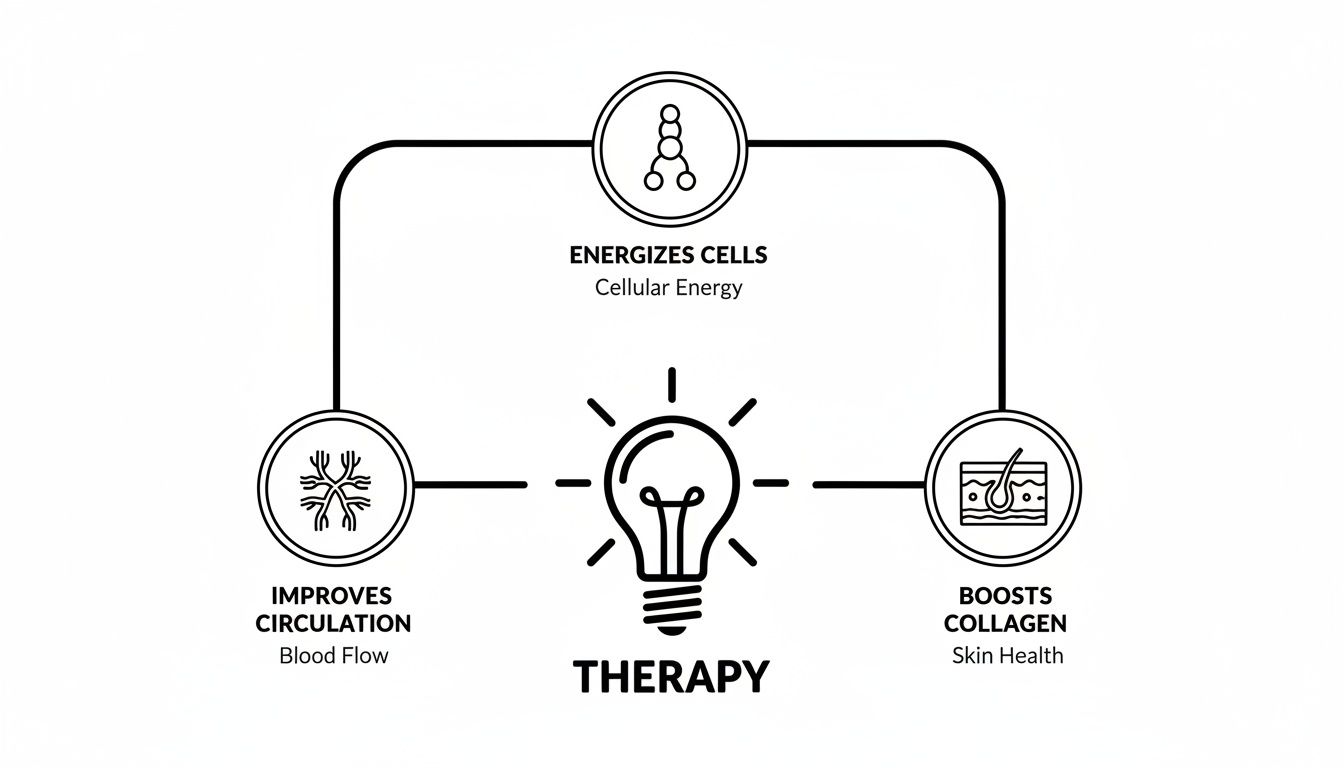
As you can see, this cellular boost leads to better circulation, more collagen, and healthier tissue overall.
Continuous vs. Pulsed Light
Finally, most commercial systems give you a choice between two delivery modes: continuous wave or pulsed light. Each one has a specific role in a clinical or wellness setting.
-
Continuous Wave (CW): This is the default setting for most applications. The LEDs emit a steady, unbroken stream of light, which is fantastic for general wellness, skin rejuvenation, and delivering a consistent dose of energy.
-
Pulsed Mode: Here, the light flashes on and off very rapidly. Some studies suggest that pulsing the light can create a different kind of biological response, potentially improving how cells react or helping manage tissue temperature during longer sessions.
At the end of the day, the best commercial systems are built around high-quality LEDs that can deliver these precise wavelengths and power levels reliably. Modern LEDs ensure the light coverage is uniform and consistent, all without the intense heat or safety risks of older light technologies. This makes them the obvious choice for any professional setting.
Commercial Systems vs. At-Home Devices: What’s The Real Difference?
You’ve probably seen them: massive, futuristic-looking red light beds at your local spa or physical therapy clinic. Then you see small, portable caps and wands you can use while watching TV. It’s all red light therapy, but these two worlds—commercial systems and personal devices—are built for completely different purposes.
Figuring out which is right for you, whether you’re a business owner or just someone looking for results, comes down to understanding the trade-offs between power, coverage, and convenience.
The Big Guns: Commercial Red Light Therapy
Think of commercial red light therapy systems—the large panels and full-body beds—as the heavy machinery of the wellness world. They are designed for one thing: delivering a powerful dose of light to a huge surface area in the shortest time possible. This is their superpower.
In a busy spa or clinic, time is money. These machines can treat a client from head to toe in a quick 10-to-20-minute session. That efficiency is what makes them a smart investment for businesses that need to cycle through appointments all day. They’re built to be workhorses, which is why they come with a hefty price tag.
The Rise Of The Personal Powerhouse
On the other end of the spectrum, you have at-home devices. A few years ago, most of these were little more than toys—underpowered and underwhelming. But that’s changed. A new generation of personal devices has arrived, packing serious, clinical-grade technology into designs that actually fit into your life.
Instead of blasting the whole body, modern personal devices are all about targeted and consistent treatment. They focus a precise dose of light on a specific area, like the scalp or face, which is exactly what you need for goals that depend on regular, sustained use. After all, results often come from what you can do day in and day out, a point we dive into in our guide to at-home red light therapy.
While commercial systems deliver a powerful, all-in-one clinical session, today's best personal devices offer a targeted, convenient, and consistent way to get results by integrating right into your daily routine.
This shift toward effective, accessible solutions is fueling incredible growth. The market for commercial red light therapy and personal devices shot up from USD 533.8 million in 2025 and is projected to hit USD 1,133.1 million by 2033. Why the boom? People are hungry for non-invasive options for skincare, pain management, and hair health—and that’s where high-quality personal devices are really starting to shine. You can read the full research on red light therapy's growth to see the data for yourself.
A Head-to-Head Comparison
To help you visualize the key differences, we've put together a simple comparison. Think of this as the spec sheet for deciding between a professional-grade system and a modern personal device.
Commercial RLT Systems vs. Personal At-Home Devices
| Feature | Commercial Systems (e.g., Beds, Panels) | Personal Devices (e.g., Prospek Cap) |
|---|---|---|
| Primary Use Case | Full-body treatments in a professional setting with high client turnover. | Targeted, consistent treatments for specific areas like the scalp or face. |
| Power & Coverage | Very high irradiance over a large surface area (full body). | Optimized irradiance focused on a smaller, targeted area. |
| Convenience | Requires an appointment at a clinic or spa; not portable. | Highly portable and can be used anytime, anywhere, fitting into a daily routine. |
| Cost | High initial investment, typically thousands to tens of thousands of dollars. | Much lower upfront cost, making it accessible for individual use. |
| Consistency | Dependent on a client's ability to schedule and attend regular appointments. | Enables easy, daily consistency at home, which is critical for long-term results. |
So, which is "better"? It’s not a fair question. The better option is the one that fits the job. For a business offering a broad menu of wellness services, a commercial system is a must-have.
But for an individual with a specific goal, like promoting healthier hair, a high-quality personal device like the Prospek cap delivers the perfect blend of clinical-grade tech, everyday convenience, and affordability. It's the key to achieving real, long-term success on your own terms.
Key Applications for Clinical and Wellness Businesses
Ultimately, any new technology is only as good as the results it delivers for your clients. For clinics and wellness centers, this is where commercial red light therapy really proves its worth, offering effective, non-invasive answers to some of the most common issues people face. Its versatility allows you to build out a service menu that not only gets results but also drives revenue.
By understanding how specific wavelengths translate to real-world benefits, you can create compelling packages that attract new clients and keep them coming back. The most successful applications tend to fall into three main categories that line up perfectly with what customers are already looking for.
Scalp Health and Hair Restoration
For many people, thinning hair is a major source of concern. This is an area where red light therapy can make a real difference, providing a science-backed, supportive treatment. The therapy uses specific wavelengths of red light, usually around 660 nm, to energize the cells within and around the hair follicles.
This boost of energy helps improve circulation right at the scalp. Better blood flow means more oxygen and nutrients can get to the base of the follicles, creating a healthier environment for hair to grow. In fact, studies have shown red light can increase scalp circulation by 30-50%—a significant jump for anyone hoping to support their hair's health and vitality.
By reawakening dormant or underperforming follicles, red light therapy can help promote the appearance of thicker, fuller hair over time. It's an excellent addition for medi-spas, hair restoration clinics, and even high-end salons looking to offer a modern solution for scalp wellness.
Skin Rejuvenation and Aesthetics
The anti-aging market is enormous, and red light therapy has quickly become a go-to service for aesthetic practices. It provides a gentle yet powerful way to address the visible signs of aging by getting to the root of the problem—on a cellular level. When red and near-infrared light penetrate the skin, they directly stimulate fibroblasts, which are the tiny "factories" that produce collagen and elastin.
Think of it as a workout for your skin cells. The light gives them the energy they need to ramp up collagen production, a process that naturally slows down as we get older. The result is skin that looks and feels firmer, smoother, and more resilient.
This cellular jump-start leads to visible changes that clients absolutely love. A consistent series of red light therapy sessions can help:
- Visibly soften the appearance of fine lines and wrinkles.
- Improve overall skin tone and texture, giving it a more youthful glow.
- Minimize the look of age spots and hyperpigmentation.
With 70% of users reporting better skin texture after just 12 weeks of treatment, it’s easy to see why anti-aging makes up over 40% of all red light therapy applications. It’s a dependable service that delivers the kind of results people are happy to invest in.
Pain Management and Athletic Recovery
Beyond skin deep, commercial red light therapy is also a game-changer for pain management and athletic recovery. By using deeper-penetrating near-infrared wavelengths like 850 nm, this treatment helps tackle inflammation, a key culprit behind chronic pain and post-workout soreness.
The light energy works to soothe aching joints and speed up the natural repair process in muscles and connective tissues. This makes it an incredibly valuable service for a wide range of businesses:
- Physical therapy clinics helping patients manage chronic conditions like arthritis.
- Sports medicine centers assisting athletes with faster recovery times.
- Wellness studios and gyms offering effective post-workout recovery options.
The demand is clearly growing. The market for red light therapy beds, a cornerstone of commercial offerings, was valued at USD 162.3 million in 2024 and is on track to nearly triple by 2033. To get a better handle on these market forces, you can discover more insights about red light therapy market trends on LightTherapyInsiders.com. Together, these three pillars—hair, skin, and pain—show just how powerful and versatile red light therapy can be as a high-value service.
How to Integrate Red Light Therapy Into Your Business
Bringing a new service into your clinic or spa is a big move. It’s not just about unboxing a new piece of equipment; it’s about strategically building an offering that your clients will love and that actually boosts your bottom line. To successfully add commercial red light therapy, you need a solid game plan covering everything from the numbers to client education.
The first thing to tackle is the math. You have to figure out your potential return on investment (ROI). Start by adding up the upfront cost of a professional-grade LED system, any clinic space modifications you might need, and the ongoing costs like electricity and the staff time required for each session.
With those numbers in hand, it’s time to look at pricing. See what other wellness centers or spas in your area are charging. You can always offer single sessions, but creating tiered packages is often the key to creating predictable revenue and giving your clients better value.
Creating Compelling Treatment Packages
This is where you can get creative and show clients you understand what they’re looking for. Instead of just listing "red light therapy" on your menu, frame your services around the results people want. It makes the benefits feel more real and much more attractive.
Here are a few ideas to get the wheels turning:
- The Anti-Aging Light Facial: Pair a 15-minute red light session with a hydrating facial to create a premium skin rejuvenation experience.
- The Hair Wellness Program: Design a multi-session package focused on scalp health for clients aiming to improve hair vitality over several months.
- The Athlete's Recovery Add-On: Market a quick 10-minute near-infrared session as the perfect add-on after a workout or massage to help soothe sore muscles.
A successful launch comes down to making the benefits crystal clear and the service easy to say "yes" to. By bundling RLT with services your clients already use, you create an offer that encourages them to try it out and stick with it for the long run.
Operational Success and Marketing
Once your financial plan and service packages are ready, it's time to focus on your team and your marketing. Your staff are your best advocates, so don't skimp on training. They need to understand the science, confidently answer client questions, and operate the equipment safely.
Educating your clients is just as crucial. Develop simple, easy-to-digest materials—like brochures, website FAQs, or small posters in your waiting area—that explain what red light therapy is and what they can expect. When you demystify the technology, you build trust.
Finally, you have to spread the word. A strong launch needs a targeted marketing push.
- Launch Promotions: Kick things off with an introductory discount for first-timers or a "buy five, get one free" package to generate some initial buzz.
- Social Media Content: Share before-and-after photos (always with permission!), short videos of the device in use, and client testimonials to show real results.
- Email Campaigns: Let your existing clients know about your exciting new service and explain how it can enhance the treatments they already love.
By focusing on these practical business pillars, you're doing more than just adding a machine. You're building a profitable service that delivers real results, keeps clients happy, and positions your business as a leader in the wellness space. For a closer look at the equipment itself, check out our guide on red LED panels.
Choosing the Right Personal Red Light Therapy Device
While the powerful commercial red light therapy systems are the gold standard for clinics, the good news is you no longer need a professional setup to get real benefits. The technology has made its way into our homes, but that also means the market is flooded with options.
Making a smart choice isn't about falling for flashy marketing. It's about understanding what makes a device truly effective. A high-quality personal device can be a game-changer, especially for goals like improving hair and scalp health, where daily consistency is everything.
So, how do you separate the serious therapeutic tools from the gimmicky gadgets? It all comes down to a few non-negotiable technical details. Getting these right ensures the device you buy is both safe and actually capable of delivering the results you’re after.
Your At-Home Device Checklist
When you're comparing devices, ignore the hype and focus on these core features.
-
FDA Clearance: Is the device an FDA-cleared Class II medical device? This is a critical first check. It means the product has passed a review for safety and is considered low-risk when used correctly. Think of it as a fundamental stamp of trustworthiness.
-
Clinically Proven Wavelengths: The most effective devices don't guess. They use the two wavelengths with the most scientific backing: 660nm (red) and 850nm (near-infrared). The 660nm light works on the surface for skin and follicle health, while the 850nm light penetrates deeper to improve circulation and reduce inflammation.
-
Sufficient Irradiance (Power): A device needs enough power to deliver a therapeutic dose of light in a reasonable time, usually around 15-20 minutes. If the irradiance is too low, you could sit there forever and never get the cellular response needed to see a difference.
-
Comfort and Convenience: This is the factor most people overlook. Results come from consistent use. If a device is heavy, uncomfortable, or keeps you tied to a wall outlet, you simply won't stick with it. The best personal device is one that fits effortlessly into your life.
An Example of Smart Design
A perfect illustration of these principles in action is the Prospek cap. It was clearly designed to solve the biggest problem with at-home therapy: consistency. Because it's cordless, lightweight, and fits discreetly under any hat, you can wear it while working, running errands, or just relaxing. There are no cords and no interruptions to your day.
The most important feature of any personal wellness device isn't just its power—it's whether the design encourages you to use it consistently. Convenience is what transforms good technology into real-world results.
By using dual-wavelength LEDs that deliver both 660nm and 850nm light, it provides the comprehensive treatment needed to support both scalp stimulation and deeper tissue health. This kind of thoughtful engineering makes daily use practical, not a chore.
When you focus on these core principles of safety, proven wavelengths, adequate power, and user-friendly design, you can confidently choose a device that will deliver effective and convenient therapy for years to come.
Frequently Asked Questions About Red Light Therapy
Diving into red light therapy, whether for your business or your own wellness routine, always brings up a few key questions. Let's walk through some of the most common ones so you can feel confident about how this technology works and what to expect.
What Is the Difference Between Red and Near-Infrared Light?
Think of red and near-infrared (NIR) light as two different tools for two different jobs. They work together, but they target different depths.
Red light, which you'll typically find around the 660 nm wavelength, stays close to the surface. It's fantastic for anything skin-deep, like waking up dormant hair follicles or encouraging your skin to produce more collagen for a smoother, healthier look.
Near-infrared light, on the other hand, operates at a higher wavelength, usually around 850 nm. It’s invisible to our eyes and its real power lies in its ability to penetrate deep into the body to reach muscles, joints, and other tissues. This is where it does its heavy lifting to ease inflammation and speed up recovery. That’s why you’ll see top-tier systems, from commercial red light therapy beds to personal devices, using both wavelengths for the best of both worlds.
Is LED Therapy as Effective as Laser Therapy?
Absolutely. In fact, for the vast majority of therapeutic and aesthetic uses, modern LEDs are actually the better choice. While a laser provides a single, highly focused beam of light, medical-grade LEDs can distribute that same powerful, therapeutic light over a much wider area.
This broader coverage means you get a consistent dose of energy without the intense, focused heat that lasers produce. It's what makes LED-based devices so safe, reliable, and effective for regular use.
For almost any application you can think of—professional or personal—advanced LEDs have become the gold standard. They deliver precise light energy safely and efficiently, which is why the best devices on the market, from full-body beds to personal caps, are all built with this proven technology.
How Long Does It Take to See Results from RLT?
This is the big question, and the honest answer is: it depends. Your results will vary based on your body, what you're trying to achieve, and—most importantly—how consistent you are. Some people feel a sense of relief from inflammation almost immediately, but the more visible, lasting changes take time to build up.
As a general rule, you should commit to several weeks of regular sessions before expecting to see significant improvements. For example, clinical studies focusing on skin rejuvenation often track progress over a 12-week period. For hair health, it might take three to six months of consistent use to see a noticeable difference. Patience and consistency are key.
Is Red Light Therapy Safe for All Skin Types?
Yes, red light therapy has an excellent safety profile and is considered safe for all skin types. Unlike the UV rays from the sun, the specific red and near-infrared wavelengths used in therapy don't cause harm to your skin. It’s a completely non-invasive treatment that simply gives your body’s own natural healing processes a gentle nudge.
Of course, if you have a pre-existing skin condition or any specific health concerns, it's always smart to have a quick chat with your dermatologist before you start. They can give you personalized advice and confirm it’s a good fit for you.
Ready to make consistent, effective red light therapy part of your daily life? The Prospek cap is engineered for convenience and results, delivering powerful dual-spectrum light in a comfortable, cordless design you can wear anywhere. Upgrade your routine with Prospek today.