

Let's clear something up right away: red light goggles aren't like the sunglasses you wear to block out the sun's harmful UV rays. Think of them more like specialized safety gear designed for one specific purpose: to protect your eyes from the sheer power of modern red light therapy devices. They’re all about making your sessions comfortable and safe.
Why Red Light Goggles Are a Smart Choice
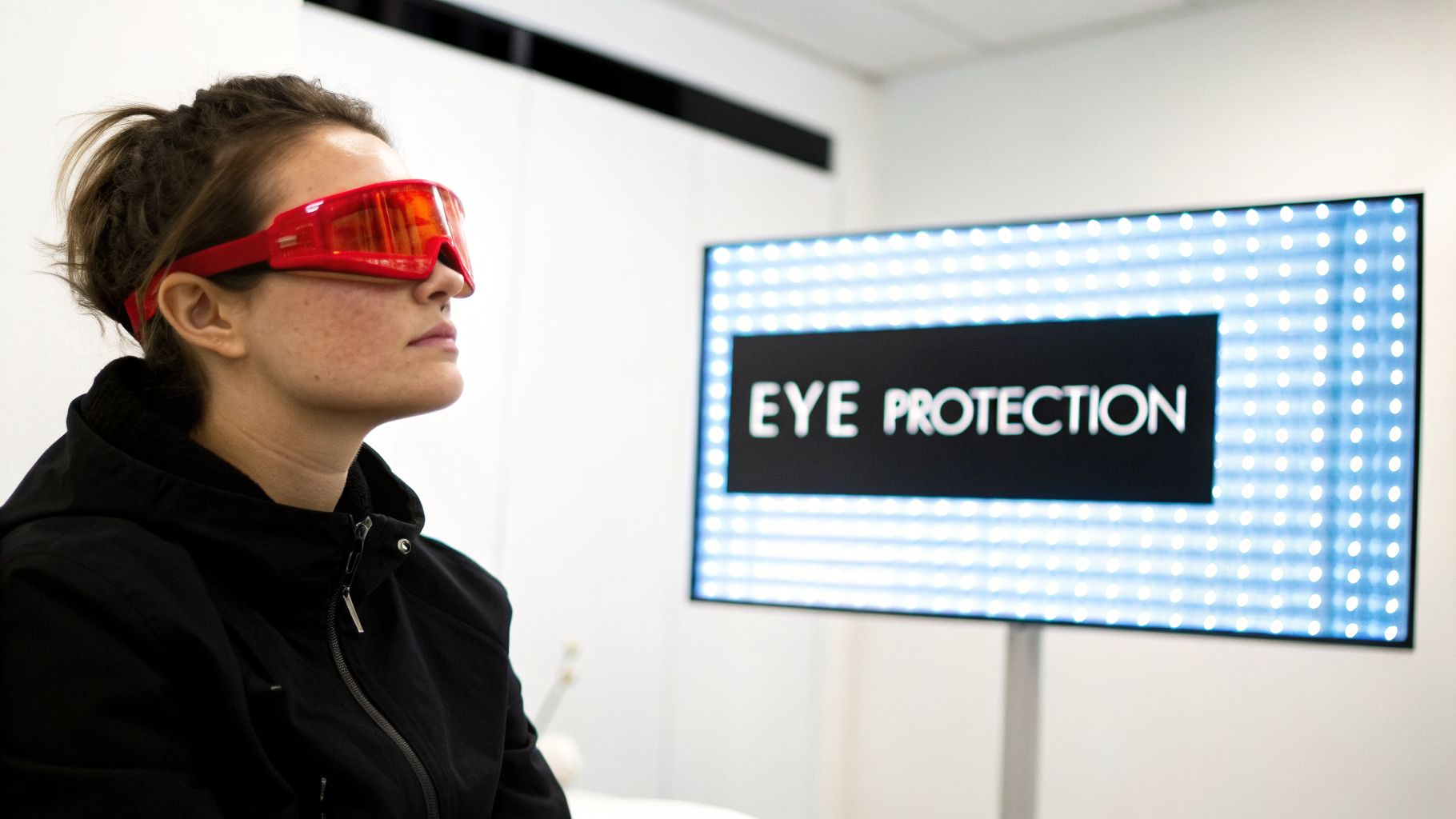
When you fire up a high-quality red light therapy device, you're working with incredibly focused, high-output LEDs. While those specific wavelengths of light are fantastic for your skin and scalp, that level of intensity can be a lot for your eyes to handle.
It's not that the light itself is "bad" for your eyes—high-quality red and near-infrared light is widely considered safe. The real issue is the brightness. Trying to relax while staring into a panel of powerful LEDs can cause temporary spots in your vision, eye strain, or just general discomfort. This is especially true when you're using a device near your face.
The Key to a Comfortable Session
Imagine trying to meditate while someone shines a bright spotlight directly at you. You wouldn’t get very far, would you? That’s essentially what you’re asking your eyes to do without protection. Red light goggles solve this problem instantly by filtering out that intense brightness.
They act as a simple but crucial barrier, allowing you to completely relax and enjoy your session without squinting or feeling overwhelmed. This small step can turn what might be a slightly uncomfortable chore into a truly restorative wellness practice. For anyone serious about sticking with their routine, eye protection is non-negotiable.
Key Takeaway: The primary job of red light goggles isn't to shield you from "harmful" light, but to manage the intense brightness of modern LED devices. This ensures your sessions are always comfortable and free from eye strain.
Making eye protection a habit is easy. For instance, when using a device like a red light therapy mask, the LEDs are positioned just inches from your eyes. You can find more tips in our guide on how to use a red light therapy mask. Goggles ensure that even with the light source so close, your eyes remain completely protected and relaxed.
More Than Just Comfort
Beyond simply feeling more comfortable, using red light goggles gives you complete peace of mind. This is particularly important if you're someone who is naturally sensitive to bright light. When you eliminate any chance of overstimulation, you can just focus on the benefits of the therapy itself without a second thought.
Here’s exactly why they are an essential part of your kit:
- Prevents Eye Strain: They cut down the powerful glare from high-output LEDs, stopping the temporary spots and discomfort that come from staring into a bright light.
- Ensures Consistency: Let's be honest—if your sessions are uncomfortable, you're far less likely to do them regularly. Comfort is key to getting the results you want.
- Offers Total Peace of Mind: They provide a reliable safeguard, especially for face and scalp devices where light can easily shine into your eyes.
Ultimately, adding red light goggles to your routine is a small, simple change that pays huge dividends. It lets you use your device with confidence, knowing that safety and comfort are built right into your light therapy journey.
The Surprising Military History of Red Lenses
The sophisticated tech in your red light therapy goggles didn't just pop up in a wellness lab. Its roots stretch all the way back to the battlefields of World War II, where seeing in the dark could mean the difference between life and death. This battle-tested origin story gives us a fantastic insight into how red light works with our eyes.
It all started with a major problem for pilots and anti-aircraft crews: preserving night vision. Stepping out of a brightly lit briefing room and into total darkness, the human eye needs up to 45 minutes to fully adjust. In the middle of a war, that kind of delay was a huge liability.
Military strategists had to find a way for personnel to read their maps, check instruments, and get ready for missions without blowing out their night vision. The solution they landed on was brilliant and surprisingly simple: red light.
The Science of Seeing Red
The magic behind this idea is rooted in the biology of the human eye. We have two kinds of photoreceptor cells—cones and rods. Cones handle color and sharp details in bright light. Rods, on the other hand, are our low-light specialists, but they don't really see in color.
Here's the crucial part: our rod cells are almost completely blind to long-wavelength red light. This little biological quirk turned into a massive tactical advantage.
By outfitting briefing rooms and instrument panels with red light, soldiers could use their cone cells to see everything perfectly. At the same time, their rod cells remained completely unstimulated, essentially kept in "dark mode" and ready to go the second they stepped outside.
This clever hack meant they could walk out of a red-lit space and into the night with their dark adaptation totally intact. They could spot enemy planes or navigate tricky terrain immediately, without that dangerous waiting period. It was a perfect demonstration of how red light can be used to work with our biology, not against it.
From Battlefields to Modern Wellness
This principle became a cornerstone of military readiness. During WWII, red light goggles became a key piece of gear for preserving the night vision of U.S. troops. By 1942, companies like the Rochester Optical Manufacturing Company were mass-producing special red-lens glasses just for the war effort. The science was solid: rod cells don't react to red light wavelengths longer than 600 nm, so personnel could work under red lights without resetting the 30-45 minutes it took to adapt to the dark. You can learn more by reading about Rochester Optical's historical contribution to the WWII effort.
Fast forward to today, and the core principle is the same, even if the context has changed completely. The powerful LEDs in modern therapy devices, like those from Prospek, are engineered to emit specific wavelengths for health and wellness. They're far more concentrated and intense than the simple red bulbs of the 1940s.
The connection is direct: just as red lenses protected a soldier's most valuable visual tool, modern red light goggles protect your comfort and safety during a therapy session.
This history really drives home two things. First, red light has a truly unique relationship with our eyes, allowing us to use it strategically to get a specific biological result. Second, managing light exposure is key. The military wasn't blocking "bad" light; they were using a specific type of light to preserve a critical ability. In the same way, we use goggles to manage the intensity of today's powerful and beneficial light.
It's a fascinating journey from a wartime tool to a modern wellness accessory. It proves that understanding how light affects our bodies is nothing new. We're just applying that knowledge with more precision now, using advanced LEDs for targeted benefits while still relying on the same basic principles of eye protection proven effective over 80 years ago.
What Your Eyes Actually See (And Don't See) During Therapy
To truly get why red light goggles are such a game-changer, we need to talk about what’s happening when you flip the switch on your device. The light you see—and the light you don't—interacts with your eyes in very specific ways. This isn't like staring into the sun; the science is different for therapeutic wavelengths like 660 nm red light and 850 nm near-infrared (NIR) light.
The key thing to grasp is the difference between visibility and energy. Your eyes are tuned to a specific range of light, and the 660 nm wavelength sits right in that sweet spot. It’s that brilliant, intense red glow you can't miss.
But the 850 nm near-infrared light is a whole different ballgame. It exists just beyond what the human eye can perceive. This is why you might look at your device and think some of the LEDs are broken—they’re not! They are hard at work, pumping out powerful, invisible NIR light.
Red Light vs. Near-Infrared: A Tale of Two Wavelengths
Think of the visible 660 nm red light like a fire alarm—it’s loud, impossible to ignore, and designed to get your attention. The sheer brightness from a high-quality LED panel can be overwhelming. While this intensity is fantastic for your skin and tissues, looking right at it can leave you seeing spots or feeling a bit of eye strain.
The main concern with modern LED therapy isn't damage in the way we think about UV light. It's about managing the intense brightness to avoid temporary discomfort and overstimulation.
Now, think of the 850 nm near-infrared light as a deep, low-frequency bass you feel in your chest at a concert. You can't "see" the sound, but you know the energy is there. Your eyes don't register NIR light, so you won’t perceive any brightness from those diodes. Still, it’s a potent form of light energy, and managing your exposure to any high-intensity light is just smart practice. Top-tier devices from brands like Prospek are built with safety as a priority, but a little protection goes a long way. You can dive deeper into the mechanics in our article about how LED light therapy works.
It’s All About Comfort and Peace of Mind
Even with the established safety of these wavelengths, slipping on a pair of red light goggles simply makes for a better session. Think of them as a comfort tool. Especially if you're sensitive to bright lights, they block the intense glare and let your eyes—and your whole body—truly relax.
This one simple action eliminates any chance of squinting, distraction, or visual overload. It lets you use your device with total confidence, knowing you’re getting every last benefit without a hint of discomfort.
To make it crystal clear, here’s a quick guide to what your eyes are dealing with.
Wavelength Safety and Your Eyes at a Glance
This table breaks down how your eyes perceive the different therapeutic wavelengths and our common-sense recommendation for each.
| Wavelength | Visibility | Primary Consideration | Goggle Recommendation |
|---|---|---|---|
| 660 nm Red | Highly Visible | The intense brightness can cause temporary discomfort or eye strain. | Recommended to filter glare and ensure total comfort. |
| 850 nm NIR | Invisible | Light energy is present, even if not seen. | Best Practice to block all peripheral light and ensure peace of mind. |
Ultimately, wearing goggles isn't about protecting yourself from a known danger; it's about optimizing your experience for the best results. It’s like wearing noise-canceling headphones to meditate—you’re not in a loud place, you’re just creating the perfect environment. Blocking the visual "noise" helps you stay consistent with your routine, and consistency is everything. It’s a simple, effective step to make every session a comfortable and restorative escape.
How to Choose the Right Red Light Goggles
Picking the right red light goggles is more than just grabbing the first pair you see online. With so many options out there, it's easy to get lost. But when you're working with powerful LED devices, certain features become absolutely non-negotiable for your safety and comfort. Let's walk through what really matters, so you can find the perfect protection for your sessions.
Think of it this way: you wouldn't wear your favorite fashion sunglasses to do some welding, right? The same logic applies here. Regular sunglasses are built to block UV light, not the specific, intense red and near-infrared wavelengths your therapy device uses. Making a smart choice means you get total protection, letting you kick back, relax, and let the light do its job.
This simple decision tree can help you figure out when eye protection is most critical.
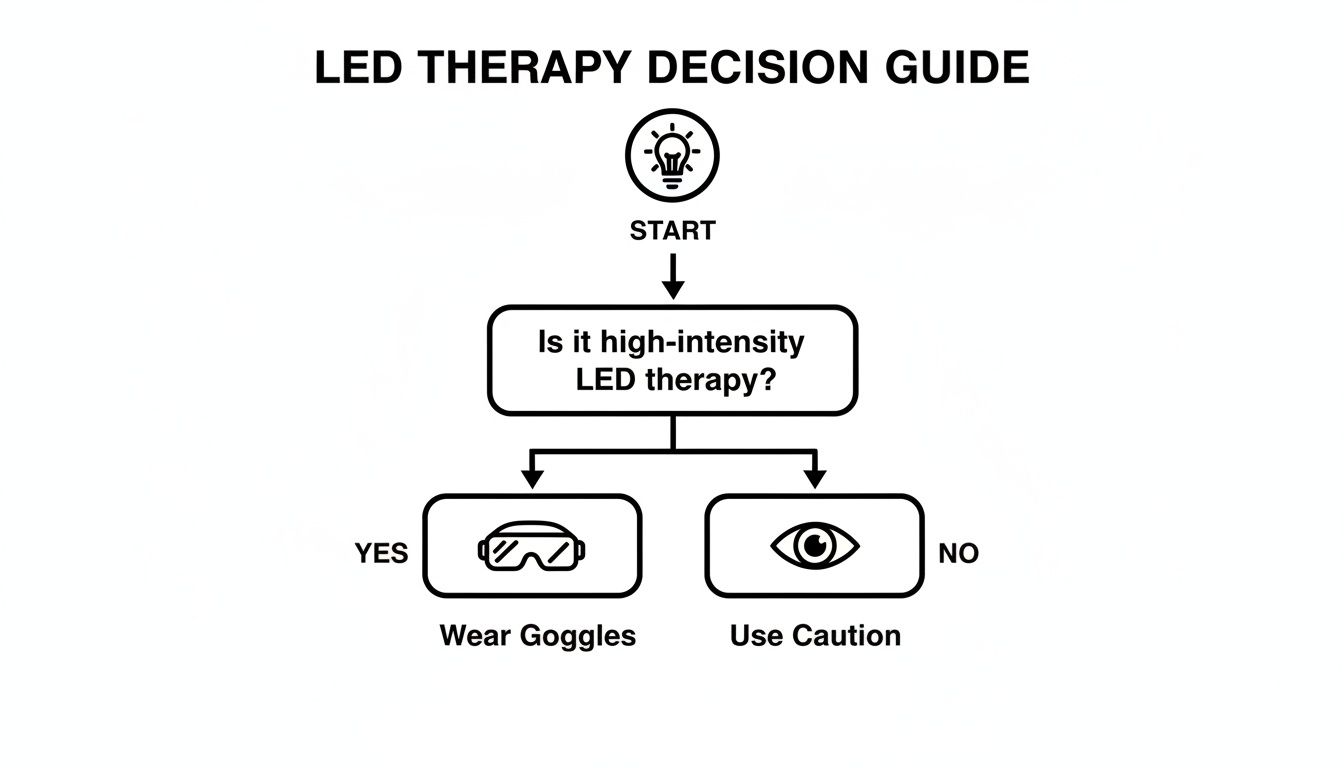
As you can see, for any high-intensity LED therapy, slipping on a pair of goggles is always the safest and most comfortable route.
Prioritize a Secure and Snug Fit
The single most important feature—and the one people most often forget—is the fit. The most advanced lenses in the world are useless if light can just leak in around the edges. That peripheral light can be just as distracting and uncomfortable as looking straight into the LEDs.
Look for goggles that create a gentle but firm seal around your eye sockets. The best ones often use soft, flexible silicone that molds to the unique shape of your face. This is especially important when you're using a face mask or a scalp device like the Prospek cap, as it ensures no stray light creeps in while you're getting your treatment.
An adjustable strap is another must-have. It lets you find that sweet spot—a fit that's secure enough to stay put but not so tight it causes a headache. A good fit means you can move around naturally without having to constantly readjust or worry about creating gaps.
Understand Optical Density Ratings
As you start comparing goggles, you’ll run into a spec called Optical Density (OD). The easiest way to think of OD is like an SPF rating, but for light-blocking power. It’s a number that tells you exactly how much light the lenses block at specific wavelengths. The higher the OD, the more protection you get.
For the LED devices most of us use at home, an OD of 2+ is the gold standard. It's more than enough to handle the intensity. Here’s what those numbers actually mean in practice:
- OD 2: Blocks 99% of the targeted light.
- OD 3: Blocks 99.9% of the targeted light.
- OD 4: Blocks 99.99% of the targeted light.
For the powerful consumer-grade LED devices on the market in 2026, an OD 2+ rating provides all the protection you need for a safe and comfortable session. It filters out that intense brightness, so you can get through your treatment without any eye strain.
Just make sure the product page or packaging clearly states which wavelengths the goggles are rated for. You want to see that they cover the specific output of your device.
Check for Comprehensive Wavelength Blocking
Your red light therapy device probably uses a combination of visible red light (like 660 nm) and invisible near-infrared light (like 850 nm). It's absolutely crucial that your goggles are rated to block both. You can't see near-infrared light, but it's a potent energy source, and protecting your eyes from it is just smart practice.
Reputable manufacturers will be upfront about the wavelength range their goggles cover. Look for a clear marking like "190-2000nm" or something similar that indicates broad-spectrum blocking. This is vital for devices like the Prospek cap, which relies on both 660 nm and 850 nm light to work effectively.
By focusing on these three things—a snug fit, an OD 2+ rating, and full wavelength blocking—you can confidently pick goggles that offer real protection. This little bit of due diligence makes all the difference, turning your light therapy from something you just tolerate into an experience that’s genuinely safe, comfortable, and restorative.
When and How to Use Goggles in Your Routine
Making eye protection a habit is the single best thing you can do to ensure every red light session is safe and effective. You want it to become second nature, like brushing your teeth. But when, exactly, do you need to reach for those goggles?
Here’s the simplest rule I tell everyone: if a high-intensity LED device is running anywhere near your head, the goggles go on. It doesn't matter if you're using a facial mask, a large panel, or a scalp device like the Prospek cap. It's easy to assume a scalp device isn't a direct threat, but indirect and reflected light can still cause significant eye strain and discomfort.
Integrating Goggles into Your Therapy Sessions
Building a safe routine is all about a simple, repeatable process. The key is to make putting your goggles on the very first thing you do and taking them off the very last.
Think of it as a pre-flight checklist for your therapy session:
- Prepare Your Space: First, get your device set up and find a comfortable spot where you can relax.
- Goggles On First: Put on your red light goggles and check for a snug fit. You shouldn't see any light leaking in from the sides.
- Power Up Your Device: Only after your eyes are protected should you turn on your device and begin your session.
- Complete the Full Session: Resist the temptation to peek! Keep the goggles on for the entire treatment.
- Power Down, Then Goggles Off: After the timer goes off, turn the device off completely. Then, and only then, you can remove your goggles.
This small ritual takes the guesswork out of eye safety. It becomes an automatic habit, letting you relax and enjoy the session with complete peace of mind.
This focus on how light affects our biology isn't new. For instance, people often mistakenly believe the red-tinted goggles from the Vietnam War were for night vision. In reality, that's a myth blending two different technologies. The actual NVGs of that era used green phosphors. The red-lensed goggles were a holdover from WWII, used before a mission to help pilots' eyes adapt to the dark by preserving their rod cells. This history is a powerful reminder of how specific light wavelengths impact our bodies—the same principle behind a modern Prospek cap using 660 nm LEDs to stimulate hair follicles. In fact, studies have shown that consistent use can lead to a 37% increase in hair density after just 16 weeks. It's amazing how light technology has evolved from the battlefield to our bathrooms. You can dive deeper into these fascinating insights into light technology's history and see how far we've come.
When Goggles Are an Absolute Must
While I recommend them for any nearby LED use, some situations make goggles completely non-negotiable.
Rule of Thumb: Any time you are treating your face or scalp, eye protection is mandatory. The LEDs are simply too close to take any chances.
- Facial Therapy: When you're using an LED mask or a panel pointed at your face, the lights are just inches from your eyes. Closing them isn't enough—your eyelids are thin and can't block the sheer intensity of the light.
- Scalp Treatments: With devices like the Prospek cap, powerful LEDs are positioned all around your head. Light can easily reflect off surfaces in the room or enter your peripheral vision, causing immediate strain.
By sticking to these guidelines, you're creating a circle of safety around every treatment. If you want to learn more about the fundamentals, check out our complete guide on how to use red light therapy. Ultimately, treating your red light goggles as an essential part of your kit is what allows you to get the best results with total confidence.
A Few Common Questions About Red Light Goggles
Even after you’ve got the science down, a few practical questions almost always come up. Let's tackle the most common ones I hear so you can start your sessions with total confidence.
Can I Just Use Regular Sunglasses Instead?
This is a big one, and the answer is a hard no. Your everyday sunglasses are built to do one job: block broad-spectrum UV rays and cut down on general glare. They’re fantastic for a sunny day, but that's where their utility ends.
They offer zero protection against the specific, concentrated wavelengths found in red light therapy devices, like 660 nm red and 850 nm near-infrared light. You need goggles specifically rated to filter out these exact frequencies to keep your eyes comfortable and safe.
What If I Just Squeeze My Eyes Shut?
It might seem like a good-enough solution, but just closing your eyes won't cut it. Your eyelids are incredibly thin and can't fully block the intense, focused light coming from a modern LED panel, especially when it's just inches from your face or scalp.
Think of it this way: you can still see bright light through your eyelids when you look toward the sun. It's the same principle here, only the light source is much closer and more direct. Certified goggles are the only way to get a true "blackout" effect and ensure your eyes are completely protected.
Do I Really Need Goggles for a Scalp or Body Device?
Yes, and it's a habit you should make non-negotiable. Even if the device isn't aimed directly at your face, that light is incredibly bright and bounces off every surface in the room—walls, mirrors, you name it.
This scattered, indirect light is more than enough to cause eye strain, trigger headaches, or just make the whole experience unpleasant. Popping on your goggles every single time eliminates that risk entirely. It’s a simple step that makes sure your sessions are always comfortable.
Expert Insight: My rule of thumb is simple: if the LEDs are on and anywhere near your head, the goggles go on. It takes all the guesswork out of the equation and guarantees you're putting safety first.
How Should I Clean and Care for My Goggles?
Taking good care of your goggles is just as important as wearing them. A little maintenance goes a long way in keeping them effective.
- Cleaning: Use a soft, dry microfiber cloth to gently wipe the lenses. This is the best way to avoid tiny scratches that could mess with the protective coating. For a deeper clean, reach for a solution made specifically for polycarbonate lenses—never use harsh household chemicals.
- Storage: When you're done, always put your goggles back in their protective case. This keeps them from getting scratched, crushed, or otherwise damaged, preserving their ability to block light.
Ready to make your red light therapy sessions safer and more comfortable? The Prospek system is designed for a seamless, effective routine from head to toe. Experience the difference of a device built for consistency and real-world use. Explore the Prospek cap and upgrade your wellness journey today.