

The different colors in LED light therapy aren't just for show. They're actually the most important part of the treatment.
Put simply, each color is a specific wavelength of light that travels to a different depth within your skin and scalp. Think of it like this: blue light is for surface-level concerns, while red light works on a much deeper level.
What Do LED Light Colors Actually Mean?
Understanding what each color does is your first step to getting real, targeted results from your LED device. The color you see is a visual cue for the light's wavelength, which is the single factor that determines how deeply it penetrates your tissue.
Shorter wavelengths, like blue, stay close to the surface. Longer wavelengths, like red and near-infrared, can reach much deeper.
This is the central idea behind photobiomodulation—the scientific term for how our cells absorb light and kickstart positive biological processes. By choosing the right color, you’re essentially telling your body which problem to focus on.
Wavelength Determines the Benefit
The "meaning" of each color really comes down to its specific job, which is dictated by its wavelength, measured in nanometers (nm).
Here’s a quick rundown of what that means for your skin and scalp:
-
Blue Light (~415 nm): This is a shorter wavelength that works right at the skin's surface. It’s perfect for calming irritation and balancing the scalp’s microbiome without affecting the deeper layers of tissue.
-
Red Light (~660 nm): With its longer wavelength, red light can push past the surface and get down into the dermis. This is where it energizes your cells, boosts circulation, and helps create a healthier environment for your hair follicles to thrive.
-
Infrared Light (~850 nm): As the longest wavelength in this group, infrared light is actually invisible to the naked eye. It reaches deep into the subcutaneous tissue, working to dial down inflammation and support cellular repair from the inside out.
This image is a great way to visualize how these different light waves penetrate the scalp to deliver their unique benefits.
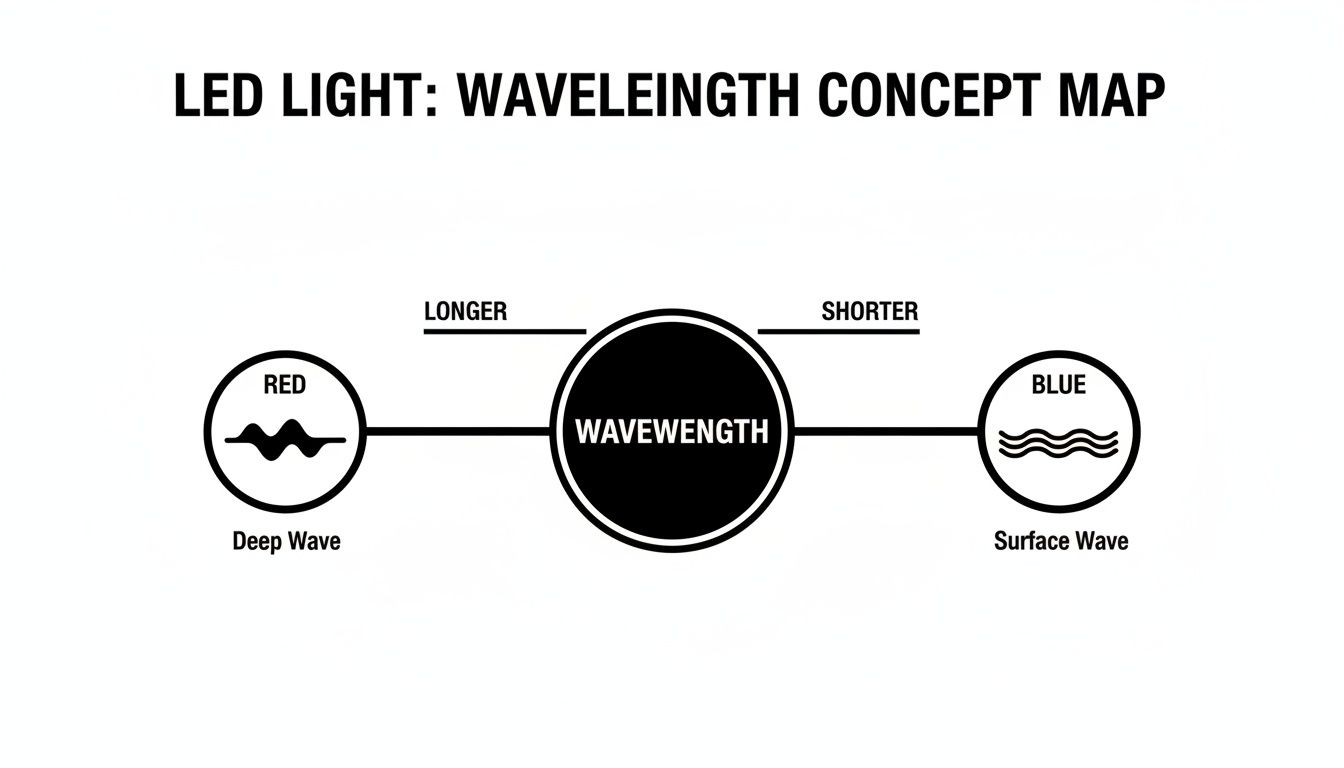
As you can see, the longer the wave, the deeper it goes. This simple principle is why having a device with multiple light modes is so valuable—it gives you the right tool for every job, from surface blemishes to deep-seated inflammation.
If you want to dive deeper into the science, our guide on how LED light therapy works is a great next step.
To make things even easier, here's a quick cheat sheet you can reference.
LED Light Color Cheat Sheet
This table provides a quick summary of what each LED light color means for your skin and scalp wellness.
| Light Color | Primary Meaning | Wavelength | Best For |
|---|---|---|---|
| Red | Deeper Rejuvenation | ~660 nm | Energizing follicles, boosting circulation |
| Blue | Surface Purification | ~415 nm | Calming irritation, balancing scalp |
| Infrared | Deep Repair | ~850 nm | Reducing inflammation, supporting recovery |
| Combo | Comprehensive Care | All | Targeting multiple concerns at once |
Think of this as your quick-start guide to choosing the right light for your goals.
Energize Your Scalp with Red Light Therapy
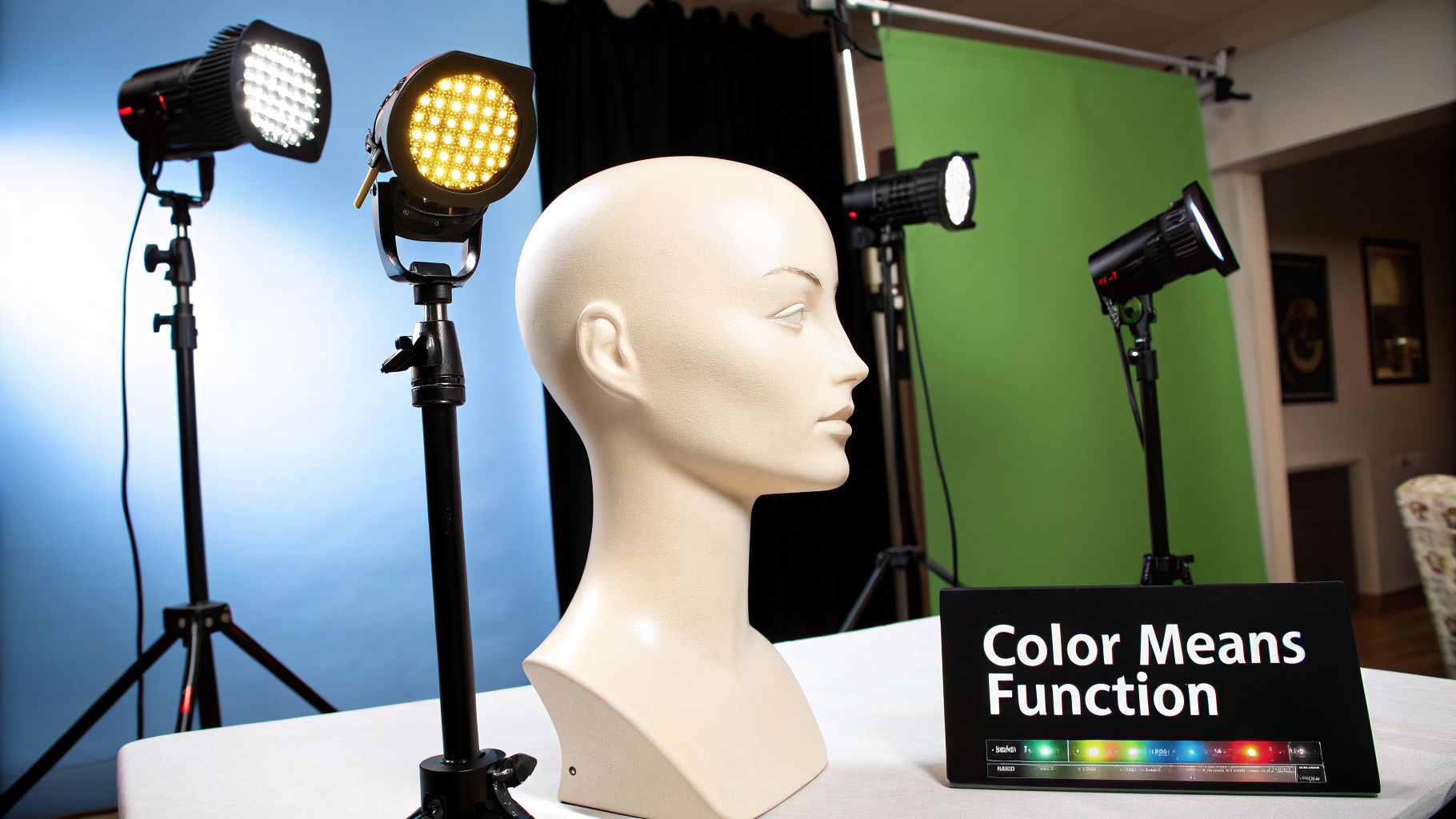
When you think of red light, think "rejuvenation." This isn't just any red light, though. We're talking about a very specific wavelength, primarily around 660 nanometers (nm), that has the unique ability to penetrate your skin and get to work on a cellular level.
Imagine your cells are like tiny, rechargeable batteries. Over time, stress and age can drain their power, causing them to slow down. Red light therapy acts like a high-tech charging station, reaching deep into the scalp to energize the mitochondria—the powerhouses inside every cell.
When these mitochondria absorb the 660 nm light, they kick into high gear, producing more energy. This gives your cells the fuel they need to repair themselves and function at their peak. For your scalp, that's a total game-changer.
Fueling Healthier Hair Follicles
So, what does all this cellular energy actually do? For starters, it dramatically improves circulation. With your cells firing on all cylinders, blood flow increases, delivering a fresh supply of oxygen and essential nutrients directly to your hair follicles.
This creates the perfect environment for a healthy growth cycle, helping to strengthen the hair you have and support new growth. Best of all, it’s a completely non-invasive way to fortify your scalp's foundation without any harsh chemicals or recovery time.
It’s no wonder red light therapy has become so popular. One 2026 industry analysis even found that consistent 15-20 minute sessions with 660 nm red light helped improve hair density by up to 35% over 16 weeks, making it perfect for portable devices like cordless caps. You can read the full market analysis on FortuneBusinessInsights.com.
This is why red light is the go-to for daily scalp revitalization.
How to Best Use Red Light Therapy
To see real results from red light, consistency is everything. The benefits are cumulative, meaning they build on each other over time with every session.
Red light therapy doesn't just treat symptoms on the surface; it works at a cellular level to create a healthier environment from within. This foundational approach is key to achieving long-term scalp vitality and resilience.
Here’s a simple routine to get the most out of your sessions:
- Session Frequency: Aim for 3-5 sessions per week. This regularity keeps cellular energy levels topped up.
- Session Duration: A 15 to 20-minute session is the sweet spot. It’s long enough for the light to do its job without overdoing it.
- Clean Scalp: Always start with a clean, dry scalp. Make sure it's free from heavy oils or styling products that could block the light.
By making red light a regular part of your routine, you’re not just hoping for better hair—you’re actively investing in the long-term health of your scalp. If you're ready for a deep dive, check out our guide on using red light therapy for hair loss.
Purify and Calm with Blue Light Therapy
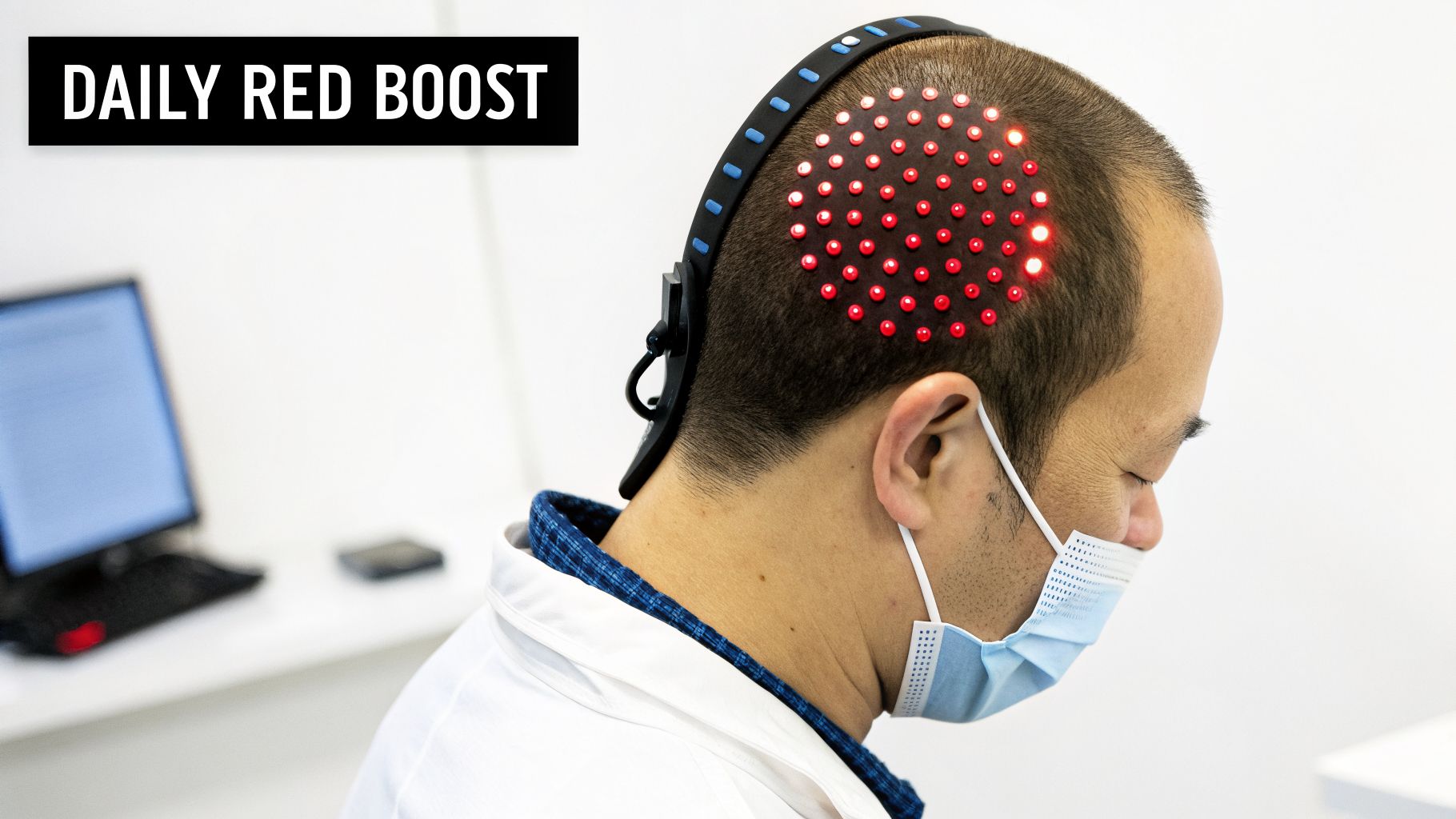
If red light is the deep rejuvenator, then blue light is the calming surface purifier. It operates at a very specific wavelength, right around 415nm, giving it a unique role in scalp health: it’s all about addressing issues right at the skin’s surface.
Blue light’s magic happens in the outermost layer of your skin. It has a remarkable ability to neutralize certain types of bacteria without affecting the surrounding tissue. This is fantastic news for anyone who gets scalp breakouts or deals with the irritation of folliculitis (inflamed hair follicles). And just to be clear, this is a controlled, beneficial wavelength—nothing like the damaging UV light from the sun.
Restoring Scalp Balance
You can't have healthy hair without a healthy scalp, and that starts with its microbiome. When the scalp’s delicate ecosystem is thrown off balance, irritation and inflammation often follow, creating a hostile environment that can even lead to shedding. Blue light therapy steps in to gently restore that balance and calm things down at the source.
The science backs this up. Blue LED light, typically in the 415-470 nm range, is well-known for targeting bacteria and soothing inflammation. In fact, it’s so effective that in North America, blue light devices now make up 30% of dermatologist prescriptions for mild acne. Clinical trials have shown it can reduce lesions by 76% over just 4-6 weeks. For anyone whose shedding is tied to scalp inflammation, this is a game-changer. You can read more on this market research from polarismarketresearch.com.
This purifying effect makes blue light an essential tool for maintaining a clean, serene scalp environment.
Who Benefits Most from Blue Light?
While a balanced scalp is good for everyone, some people will find blue light especially useful.
Blue light provides targeted, surface-level support. It’s the ideal choice for managing acute irritation and keeping the scalp environment pristine, which is a foundational element of overall hair wellness.
You might want to reach for a blue light session if you are:
- Prone to Scalp Breakouts: It helps manage the bacteria that cause those pesky pimples and blemishes on your scalp.
- Dealing with Folliculitis: The light helps calm the inflammation that occurs around the hair follicles.
- An Active Person: A quick session after a workout can help purify a sweaty scalp and prevent clogged pores.
Adding blue light to your routine is a simple, non-invasive way to maintain a clean foundation for your hair. It’s all about tackling surface-level issues before they have a chance to become bigger problems.
Build a Strong Foundation with Infrared Light
While red light works on the surface and blue light handles the cleanup, infrared light gets down to the foundation. This is the deep worker. Operating at a wavelength of 850nm, it's actually invisible to the human eye, but its power lies in how deeply it can penetrate your tissue—far deeper than any other color. Its primary job is foundational recovery and reinforcement.
Think of it like this: if red light is the expert crew renovating your home, infrared light is the team shoring up the concrete foundation underneath. It works entirely behind the scenes to provide deep, structural support, which is what makes it so essential.
For your scalp, this means infrared can get right to the source of problems, tackling underlying inflammation that might be quietly holding back your hair follicles. It also gives a major boost to deep-seated circulation and fires up cellular repair from the inside out, creating the perfect environment for long-term scalp health.
The Power of Teamwork
But infrared's real magic happens when it’s not working solo. It’s a fantastic team player, especially with red light. When you use them together, they create a one-two punch for total scalp wellness. The red light energizes the cells, while the infrared light makes sure the entire environment is primed and ready for that energy to be used effectively.
This combined effect is exactly why near-infrared (NIR) therapy is getting so much buzz. We know from research that the 850 nm wavelength penetrates deepest, making it the MVP for supporting tissue repair and improving circulation. On the scalp, this wavelength is known to kickstart ATP production—the very fuel your cells need for a healthy hair growth cycle.
The results speak for themselves. Some studies show a 25-30% improvement in hair density after just 12 weeks of using combined red and infrared protocols. It’s no wonder that a recent market survey found 55% of users now prefer devices that include NIR, noting its power to reduce the inflammation linked to common hair loss. You can discover more insights about these market trends on dataintelo.com.
When to Use Infrared Light
Because it goes so deep, infrared light is your go-to for building a strong foundation. It’s the perfect choice for anyone looking to build a truly resilient and healthy scalp from the ground up, not just manage surface-level issues.
Infrared light therapy does more than offer a temporary fix. It gets to the heart of the matter—poor circulation and inflammation—which are often the root cause of an unhealthy scalp. It provides the deep support needed for lasting vitality.
I recommend using an infrared-only or a red/infrared combo mode for:
- Weekly Recovery: Use it a few times a week to calm down deep-seated inflammation that builds up from stress and daily life.
- Boosting Other Treatments: It essentially preps the tissue, helping your scalp absorb the benefits of other therapies (like red light) more effectively.
- Long-Term Resilience: With consistent use, you're not just treating a problem; you're building a stronger, healthier scalp environment over time.
This deep-healing wavelength is a core component of any serious wellness routine. You can learn more about the benefits of near-infrared light therapy in our article.
How to Choose the Right Mode for Your Scalp Goals
Alright, you've got the science down. Now it’s time for the fun part: putting that knowledge into practice. This is where we bridge the gap between understanding the LED light therapy color meaning and seeing real, tangible results on your scalp.
Don't worry, this isn't complicated. Think of it as simply matching the right tool to the right job. With a device like Prospek, you have a full toolkit at your disposal. Each mode is intentionally designed for a specific wellness goal, so you can always be sure you’re getting exactly what your scalp needs.
Matching Prospek Modes to Your Scalp Needs
Think of your device’s modes like different settings on a high-end sound system. You wouldn't use the "bass boost" setting if you were listening to a delicate piano solo, right? The same logic applies here. You choose the setting—the light color—that is perfectly tuned to your scalp's concern for that day.
Let’s map each Prospek mode to a specific goal so you always feel confident in your choice.
-
For a Daily Energy Boost: Is your main goal to support consistent hair vitality and energize your scalp? Red Mode is your go-to. It's the perfect setting for routine maintenance and building long-term scalp health.
-
For Calming Surface Irritation: Dealing with annoying scalp breakouts after a workout or just general sensitivity? Switch over to Blue Mode. Its purifying properties are fantastic for keeping the scalp's surface clean and balanced.
-
For Deep Foundational Support: Has it been a stressful week, or do you feel like you need to get ahead of underlying inflammation? The IR Mode is designed for that deep, foundational reinforcement, working from within to help your scalp recover.
-
For All-Around Efficiency: Short on time but want the most comprehensive care possible? The Combo Mode is your best bet. It delivers the synergistic power of both Red and Infrared light at once for maximum benefit in a single session.
Choosing the right mode is really about listening to your body. Some days you'll crave the deep recovery of infrared light, while others might just call for the surface-calming effects of blue. Having a flexible device empowers you to adapt your routine to whatever your scalp is telling you it needs.
A Practical Guide to Mode Selection
To make this crystal clear, we've put together a simple cheat sheet. It’s designed to help you build an intuitive feel for which mode to select, ensuring you get the most out of every single session.
Choosing Your Prospek Mode
Match your daily scalp wellness goal with the perfect Prospek light therapy mode.
| Your Goal | Recommended Prospek Mode | Why It Works |
|---|---|---|
| Daily scalp revitalization and energy. | Red Mode | Delivers 660nm light to energize cells and boost circulation, creating a supportive environment for hair follicles. |
| Calm breakouts or post-workout irritation. | Blue Mode | Uses 415nm light to purify the scalp's surface and soothe the source of inflammation. |
| Deep recovery and inflammation reduction. | IR Mode | Penetrates with 850nm light to support deep tissue repair and foundational health from within. |
| Comprehensive, efficient scalp care. | Combo (Red + IR) Mode | Combines the benefits of red and infrared light for a powerful, time-saving, all-in-one session. |
By using this guide, you can start using your device with true intention. This strategic approach ensures that every 15-minute session is perfectly tailored to your needs, helping you build a wellness routine that actually works.
Building Your Consistent LED Therapy Routine
When it comes to seeing real, lasting results from LED therapy, the one thing that matters more than anything else is consistency. A single session feels great, but the true magic happens when you make it a regular part of your life.
Think of it like tending to a garden. You can't just water it once and expect everything to flourish. It’s the steady, reliable care that helps the roots grow strong. Your scalp's cells work the same way—they thrive on the consistent energy that regular light therapy provides.
Setting Your Session Schedule
So, what does a good routine look like? It’s actually pretty straightforward and designed to be easy, not another chore on your to-do list.
Based on what we've seen work best in clinical studies, here’s a simple framework to follow:
- Frequency: Aim for 3 to 5 sessions per week. This rhythm keeps cellular activity humming along and allows the benefits to build on each other.
- Duration: Keep each session between 15 to 20 minutes. That's the ideal window for your scalp to absorb the light energy effectively without overdoing it.
The best routine is one you can actually stick with. Because Prospek is hands-free and cordless, it’s made to slide right into your day. You can easily wear it while you’re catching up on emails, listening to a podcast, or just relaxing before you go to sleep.
Best Practices for Maximum Results
To get the absolute most out of every session, you’ll want to make sure the light has a clear path to your scalp. A few simple prep steps can make a huge difference.
Here’s how to set yourself up for success:
- Start with a Clean Scalp: It's best to use the device on a clean, dry scalp. Any heavy oils, thick serums, or styling products can act like a barrier, reflecting the light away.
- Ensure Good Contact: Get the device positioned so the LEDs are nice and close to your scalp. The goal is to get that light delivered as directly as possible.
- Stay Consistent: The easiest way to build a habit is to attach it to something you already do. Try doing your sessions with your morning coffee or while you unwind with a book at night. It makes it almost automatic.
By making LED therapy a simple, recurring part of your week, you're not just treating a symptom—you're investing in the fundamental health of your scalp. That consistent effort is what will truly unlock the results you’re looking for.
Common Questions About LED Light Therapy
It's completely normal to have questions when you're trying something new. Let's walk through some of the most common ones we hear about LED therapy, so you can start your journey with total confidence.
Now that you have a handle on what the led light therapy colors mean, we can get into the practical side of things.
Is LED Light Therapy Safe for My Eyes and Skin?
Absolutely. High-quality LED therapy is clinically recognized as both safe and effective for at-home use. Unlike the sun's damaging UV rays, the specific wavelengths of red, blue, and infrared light used in devices like Prospek are non-damaging. They won't burn or tan your skin and produce very little heat.
The whole process is non-invasive. And since Prospek is designed as a cap, your eyes are naturally shielded from the lights during a session. That said, it's always a good rule of thumb to avoid staring directly into any powerful LED source for a long time.
How Long Until I See Results from LED Light Therapy?
This is where patience and consistency really pay off. For issues on the surface, like using blue light to calm irritation, you might notice a change in just a few weeks. But for the deeper work that supports the hair growth cycle—which relies on red and infrared light—you're playing the long game.
Results from LED therapy are cumulative, meaning they build upon each other with every session. Think of it as a long-term investment in your scalp’s health rather than a quick fix.
Most clinical studies see visible improvements in hair density and overall scalp health after 12 to 16 weeks of consistent use. "Consistent" usually means at least 3-5 sessions per week.
Can I Use Different LED Colors on the Same Day?
Yes, you can, and this is where a flexible, multi-mode device truly shines. The best approach is to focus on one main goal for each session. For instance, you could use the Red/Infrared Combo mode for your primary session to encourage deep rejuvenation and support your hair follicles.
Then, if you notice your scalp feels a bit oily or irritated later in the day, you could run a separate, shorter session using just the Blue light. This lets you adapt the treatment to whatever your scalp needs on any given day. Just be sure to stick to the recommended session times so you don't overdo it.
Ready to make consistent, effective light therapy a part of your daily routine? Discover the wire-free convenience of Prospek and start your journey to better scalp wellness. Learn more on the official Prospek website.