

A lot of people find infrared light therapy at home the same way they find most wellness tools now. Late at night, half-working, half-scrolling, noticing more hair in the brush, more scalp showing under bathroom lighting, and less patience for anything that requires appointments, cables, or a rigid schedule.
That frustration is real. So is the reason many people quit. They pick a device that looks impressive, use it a few times, then leave it in a drawer because the routine does not fit ordinary life.
The good news is that home light therapy has moved well past novelty. The global light therapy market was valued at $521.1 million in 2021 and is projected to reach $802.7 million by 2031, reflecting stronger consumer demand for portable, user-friendly devices and broader adoption of at-home use, according to this light therapy market overview.
That matters because better home devices make one thing easier: consistency. And with LED therapy, consistency is where useful routines are built.
The Modern Solution for At-Home Wellness
A common pattern looks like this. Someone notices early thinning around the temples or crown, buys a topical product, uses it inconsistently, and then gives up because it feels like one more task at the end of a long day.
Infrared light therapy at home works best when it solves that exact problem. It should feel less like a treatment event and more like something you can do while answering email, folding laundry, listening to a podcast, or winding down before bed.
That shift in mindset changes everything. Instead of asking, “Do I have time for a session?” the better question is, “What device fits the life I already have?”
Why convenience matters more than hype
People often assume the most powerful-looking setup is the one they need. In practice, the device that gets used on schedule usually beats the device that sits untouched because it is awkward, bulky, or tied to one room.
For busy users, the key appeal is simple:
- Hands-free wearability: You are not forced to sit still in front of a panel.
- Portable design: You can keep the routine going during travel or long workdays.
- Low-friction setup: Fewer steps mean fewer skipped sessions.
A lot of readers first explore this category through broader education on near-infrared light therapy benefits, then realize the bigger challenge is not understanding the concept. It is making the practice realistic.
The most effective home wellness tools are the ones that survive contact with a busy calendar.
Infrared LED therapy fits modern self-care well because it can be targeted, repeatable, and easy to build into normal routines. That is what makes it useful for scalp and skin support at home.
How Infrared LED Light Works for Your Scalp and Skin
The short version is straightforward. Light therapy uses specific wavelengths of light to influence cellular activity. The technical term is photobiomodulation, but you do not need to memorize that to use it well.
Think of it as targeted light input. Different wavelengths interact with tissue differently, which is why device specs matter.
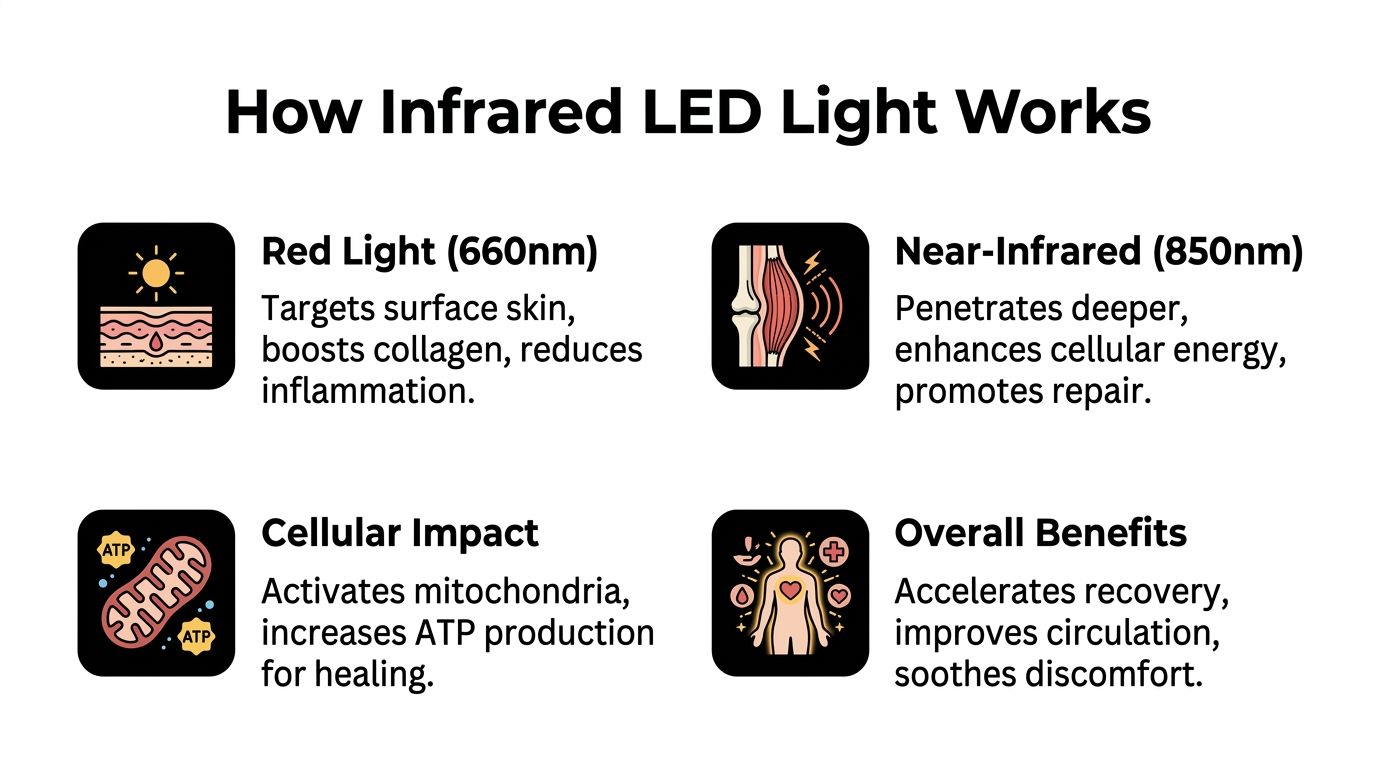
What 660 nm red light does
660 nm red light is used for more superficial tissue. That makes it relevant for visible skin concerns and upper-layer scalp support.
If your interest includes scalp comfort, general skin appearance, or a dual-mode routine, red light is the visible part of the system that works closer to the surface.
In plain terms, it is the wavelength people usually notice first because they can see it. But visible does not mean shallow in value. It has a practical role when the goal includes surface-level support.
What 850 nm near-infrared light does
850 nm near-infrared light goes deeper than visible red light. It is the wavelength often highlighted for deeper scalp and tissue support.
That deeper reach is why scalp devices often combine both modes rather than forcing you to choose one. The visible red light supports surface-level tissue, while near-infrared is used when the target sits below that surface.
Consider this:
- 660 nm red light: Better aligned with surface tissue.
- 850 nm near-infrared: Better aligned with deeper penetration.
- Combined mode: Useful when you want broader coverage in one session.
Research reviewed in this photobiomodulation overview found that red light plus near-infrared devices were recommended in 63.7% of social media posts on the topic, with 660 nm paired for superficial tissue and 850 nm for deeper penetration. That same source notes some studies showed a 70% reduction in inflammatory acne within 8 weeks with consistent self-administered use.
Why LED format makes sense at home
For home users, LED systems are practical because they can distribute light across a treatment area without demanding constant hand positioning. That matters on the scalp, where coverage consistency matters as much as raw enthusiasm.
A well-designed LED array helps with:
- Evener coverage across the scalp
- Simpler repeat use
- Lower setup burden
- Hands-free wear in cap-style formats
That last point matters more than people expect. When a device sits securely and covers the intended area evenly, sessions become easier to repeat without overthinking angles every time.
If you want a deeper primer on the mechanism itself, this guide on how LED light therapy works is a useful companion.
Good home light therapy is not about guessing. It is about using the right wavelengths in a format you will keep using.
What the light does
At the cell level, light is used to support mitochondrial activity. Mitochondria are often described as the energy centers of the cell. When a protocol is well matched to the target area, the goal is to support normal cellular energy processes rather than force a dramatic, one-time effect.
That is why home use is a routine, not a stunt. Results depend less on a heroic session and more on steady exposure delivered correctly.
Choosing Your Ideal At-Home Infrared Therapy Device
A device can look impressive on a product page and still fail in real life at 8:30 p.m., when you are answering emails, packing for the next day, and trying to fit in one more wellness habit before bed. For scalp use, the right choice is the device you can position correctly, wear comfortably, and repeat without turning it into a project.
Start with the specifications that affect outcomes
For scalp and deeper tissue support, wavelength and output still do the heavy lifting. Look for brands that clearly list the wavelengths used, explain the intended use distance, and provide enough output information to make dosing predictable.
If those details are missing, buying decisions turn into guesswork.
A useful screening checklist:
- Wavelength disclosure: The device should state the actual wavelengths used.
- Irradiance information: Output should be clear enough to support a repeatable protocol.
- Use distance guidance: Scalp treatment depends on correct spacing or direct wearable placement.
- Built-for-purpose design: A scalp device should be designed for scalp placement, not treated as an afterthought on a generic beauty tool.
Choose a form factor you will keep using
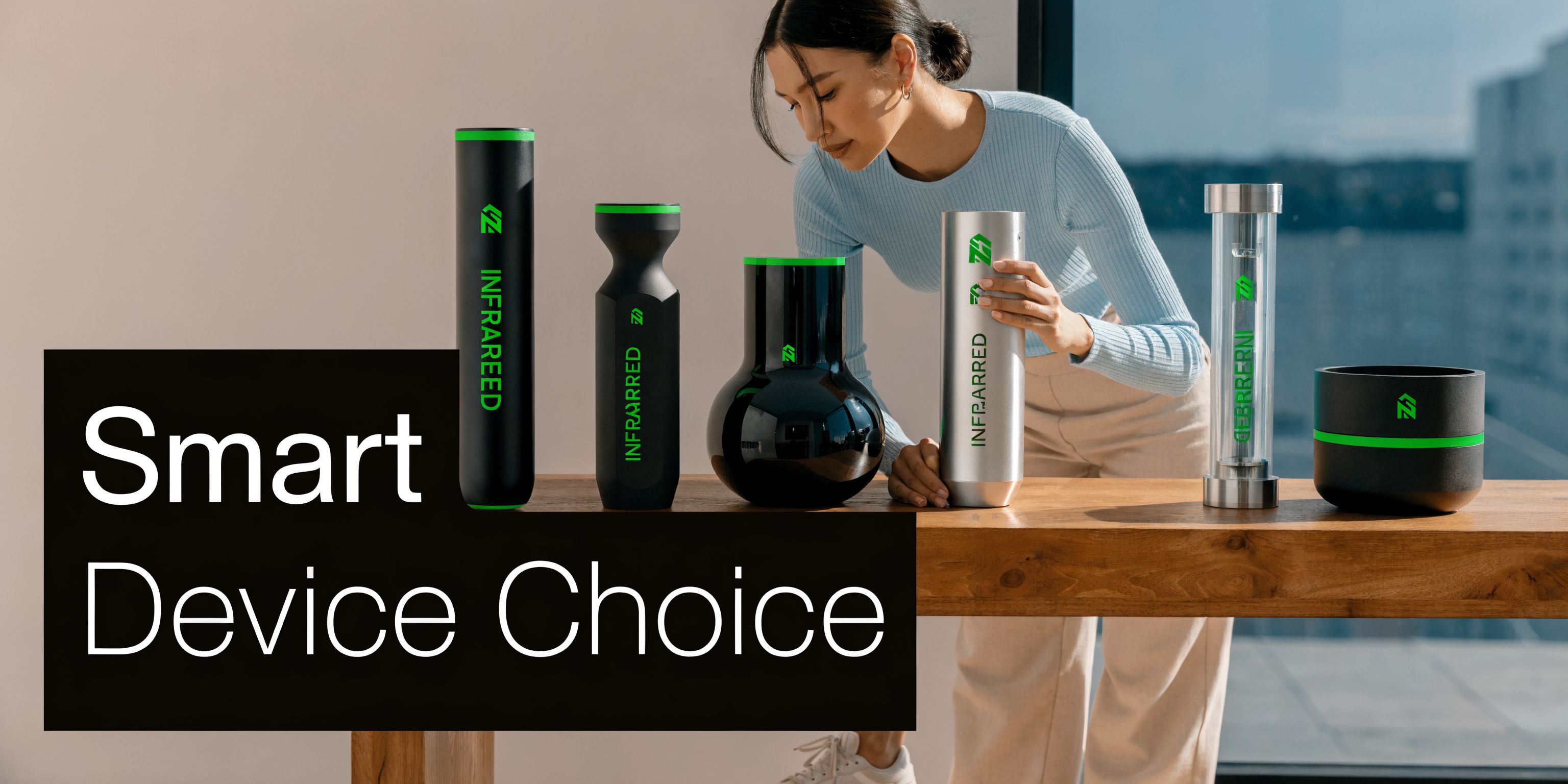
Form factor matters more than many first-time buyers expect. A panel can work well at home, but it usually requires a fixed setup and consistent positioning. A handheld gives you control, though it also asks for more time and attention. For scalp care, a wearable cap or flexible insert often fits real schedules better because it keeps coverage consistent while you answer messages, fold laundry, or work at a desk.
That practical advantage is the whole point for busy users. If a device needs perfect room setup and uninterrupted time, adherence usually drops after the first week.
A cordless wearable format solves a real problem. It reduces friction. A device like Prospek uses 660 nm red and 850 nm near-infrared LEDs in a cap-style format with ventilation and an auto timer. That does not make it the only good option. It makes it a sensible option for people who need scalp sessions to fit around a normal day instead of replacing it.
Coverage matters as much as raw power
Buyers often focus on wavelength and forget coverage. On the scalp, uneven LED placement or poor beam control can leave you with strong exposure in one area and weak exposure in another. That is not just a technical detail. It affects whether the routine is repeatable enough to be worth doing.
For scalp care, look for even LED distribution, stable fit, and a design that stays close to the treatment area without constant adjustment. Comfort matters here too. If a device shifts every few minutes or traps heat, users tend to shorten sessions or skip them.
Portability affects consistency
Portable does not mean gimmicky. It means usable.
A home device should work with the way people live. That includes short morning routines, work-from-home schedules, travel, shared spaces, and days when motivation is low. A corded panel may still be the right choice for some users, especially for larger treatment areas. For scalp-focused use, a cordless cap is often easier to stick with because there is less setup, less positioning, and less temptation to postpone the session.
If you want a broader comparison of how device format changes the experience, this guide to an infrared therapy mat for home recovery routines is a useful reference point.
A practical buying filter
Before you buy, check these points in order:
- Target match: Is it intended for scalp use?
- Wearability: Can you keep it on during normal tasks?
- Coverage: Does the LED layout reach the area evenly?
- Comfort: Ventilation and weight affect repeat use.
- Power design: Cordless operation often makes adherence easier.
- Controls: Simple settings reduce user error.
A quick visual can help you compare styles and usage expectations:
Buy for repeat use on a busy Tuesday, not for an ideal routine that only happens on weekends.
Your First Infrared Light Therapy Session Protocol
The first session should feel controlled and boring. That is a good thing. You are not trying to “feel” a dramatic effect. You are building a routine that you can repeat accurately.
For scalp penetration, effective protocols use 850 nm near-infrared light for 15 to 20 minutes, 3 to 5 times per week, and studies on hair growth reported 30 to 50% density increases after 12 to 16 weeks of consistent use with FDA-cleared devices. The same review notes that inconsistent use, such as once weekly, yields almost no cumulative benefit in practice, based on this home NIR protocol review.
Before the session
Start with a clean, bare scalp. Heavy styling product, residue, and anything that blocks light contact can interfere with a session.
If you are using a wearable LED cap or insert, make sure it sits securely and covers the intended treatment area evenly. You do not want a device slipping backward halfway through the session.
A simple prep routine works best:
- Clean the area: Start with a dry, product-light scalp.
- Set your environment: Pick a chair, desk, couch, or workspace where you can stay relaxed.
- Check fit: The device should sit close and evenly.
- Use the correct mode: For deeper scalp support, near-infrared mode is the key setting.
During the session
Most beginners do better when they stop chasing intensity and focus on consistency. You do not need to stack long sessions on day one.
For many home users, 15 to 20 minutes is a practical range for scalp use when paired with the right wavelength and schedule. If your device includes a timer, use it.
Pay attention to comfort, not drama. A session should feel manageable. If the setup is awkward, that is a routine problem worth solving now.
Start with the protocol you can repeat next week, not the one that feels impressive today.
After the session
Do not overcomplicate post-session care. Let the session finish, remove the device, and continue with the rest of your routine.
For scalp users, this is usually the best time to apply leave-in products or serums if they are part of your regimen. Clean exposure first, products after, is the more practical sequence.
Tracking helps more than people expect. Use the same mirror, same lighting, and same angle every couple of weeks. Progress is often gradual, and casual daily checking is a poor measurement method.
Sample At-Home Infrared Therapy Protocols
| Goal | Wavelength Mode | Session Duration | Frequency |
|---|---|---|---|
| General scalp wellness | 850 nm near-infrared | 15 to 20 minutes | 3 times per week |
| Support for hair density routine | 850 nm near-infrared | 15 to 20 minutes | 3 to 5 times per week |
| Surface scalp and skin support | 660 nm red light | Follow device instructions | Consistent routine |
| Broad scalp routine with dual support | 660 nm red + 850 nm near-infrared | Follow device instructions | Consistent routine |
What your first month should look like
The first month is not the time to improvise every session. Keep the setup fixed.
A useful approach is:
- Pick the same time block on your calendar.
- Use the same device position every session.
- Keep the same session length.
- Track photos on a regular schedule.
- Resist the urge to overuse the device because you missed a day.
That last point matters. Home light therapy works better as a repeated signal than a catch-up sprint.
Mistakes beginners make early
The most common early problems are not medical. They are behavioral.
- Changing too many variables: New device, new serum, new shampoo, new angle, new timing.
- Skipping fit checks: Poor contact or uneven placement weakens consistency.
- Using the device sporadically: Good intentions do not replace routine.
- Expecting instant visible change: That expectation leads people to quit too early.
The better strategy is plain. Pick a protocol grounded in the device’s intended use, repeat it, and document it.
Integrating Light Therapy Into Your Daily Wellness Routine
The people who stick with infrared light therapy at home usually do one thing well. They attach it to something they already do.
That can be morning coffee, inbox cleanup, an evening podcast, a train commute, or the half hour before bed when you would otherwise scroll on your phone.
What real-life use looks like
A wearable LED cap changes the routine because it frees your hands. That opens up practical use cases that stationary devices do not handle as gracefully.
One person uses it while answering low-stakes emails before the first meeting of the day. Another keeps it by the couch and runs a session during one episode of a show. A frequent traveler packs it in a carry-on and uses it in the hotel room while reviewing tomorrow’s schedule.
None of that sounds glamorous. That is exactly why it works.
Put the session before your scalp products
If you use serums, oils, or leave-in treatments, run your light session first. Clean exposure is the better starting point, especially on the scalp.
After the session, move into the rest of your hair-care routine as usual. That order keeps the light routine simple and avoids one more reason to skip it.
A useful rhythm looks like this:
- Morning option: Light session, then styling.
- Evening option: Light session, then serum or leave-in care.
- Travel option: Session during downtime, then normal routine.
If a routine depends on perfect conditions, it will collapse. Build one that works on ordinary days.
Use tracking to protect motivation
People quit when they rely on memory. Memory is a poor record keeper.
Take photos in consistent lighting every couple of weeks. Keep them in one album. Do not analyze your scalp every morning under harsh overhead light. That habit creates anxiety, not clarity.
Progress tracking does two useful things. It helps you notice gradual changes, and it gives structure to a routine that might otherwise feel abstract.
Keep the setup visible
One of the simplest adherence tricks is environmental. Store the device where you will see it, not where you will forget it.
A cordless, compact format helps because it can live near your desk, nightstand, or reading chair without turning the room into a clinic. The easier it is to grab and use, the fewer excuses survive.
Safety Guidelines and Troubleshooting Common Issues
A home light routine usually goes off track in ordinary ways. Someone uses the cap longer than directed because they missed two days. Someone else adds a serum first, then wonders why the session feels inconsistent. Another user buys a vague device, gets no clear protocol, and starts changing variables every week.
Safe use is less dramatic than people expect. It comes down to correct dosing, a device with clear specs, and a setup you can repeat without guessing.
The safety basics that matter
Start with the manufacturer’s protocol. Use the stated session length, the recommended mode, and any eye protection guidance that applies to your device.
For scalp therapy, comfort is part of safety. A wearable device should sit securely, stay within a comfortable heat range, and not leave you tempted to fidget with placement mid-session. If it feels uncomfortably warm, unstable, or irritating, stop the session and correct the fit before using it again.
Some people should get medical input first. That includes anyone with a condition linked to light sensitivity, anyone taking medication that can increase photosensitivity, or anyone managing a scalp condition that is inflamed, painful, or medically complex.
Why home routines fail
The common problems are predictable. The device is poorly specified. The positioning is inconsistent. The session length keeps changing. The user expects a stronger sensation than LED therapy is meant to produce, then starts improvising.
I see this often with busy users who are trying to squeeze treatment into a crowded day. The cordless cap format helps because it removes distance guesswork and makes scalp coverage more repeatable, but it still has to be used as directed. Convenience helps adherence. It does not replace protocol.
Problem one: The device is too vague
If a product does not disclose wavelength, treatment area, and basic usage guidance, there is no real way to judge what you are doing.
This matters more at home because you do not have a practitioner calibrating the setup for you. A cheap device with unclear specs can waste months, especially for scalp care where even coverage matters. If the product page relies on glowing claims and avoids technical details, that is a warning sign.
Problem two: Placement is inconsistent
Panels and handheld devices often fail in home use because people shift position, multitask badly, or misjudge distance. Small changes in placement can change how much light reaches the target area.
Wearable scalp devices solve part of that problem by holding placement more steady across sessions. That is one of their real advantages for people with demanding schedules. Less setup friction usually means fewer skipped sessions and fewer sloppy ones.
Problem three: Session length keeps creeping up
Long sessions are a common self-inflicted mistake. Users miss a few days, then try to make up for it by running extra time. That usually creates irritation, inconsistency, or both.
Use the prescribed session. Then stop. A shorter protocol you can repeat four or five times a week beats an aggressive protocol you abandon after ten days.
What to check if results feel weak
Before deciding that infrared light therapy is ineffective, audit the routine.
Ask:
- Am I using the device on the recommended schedule, not just when I remember?
- Am I following the correct mode for scalp use?
- Is placement consistent every session?
- Am I using it on a clean, product-free scalp at the time of treatment?
- Does the device have clear specifications and realistic scalp coverage?
- Have I given the routine enough time to judge it fairly?
One missed detail can flatten results. Three or four at once usually explain the problem.
Sensation is not the goal
Users often expect a strong physical cue. Heat. Tingling. A dramatic after-effect. That expectation causes trouble because it pushes people to chase intensity instead of consistency.
A well-run LED session can feel uneventful. That is normal. The better question is whether the routine is comfortable, repeatable, and easy to perform correctly on a workday, while traveling, or at the end of a long evening. For home scalp care, that is what keeps results on track.
A few myths to drop
Several assumptions keep showing up in poor home routines:
- “I can use it once in a while and still judge it fairly.” Scalp routines usually need steady repetition.
- “If ten minutes is good, twenty must be better.” Dose discipline matters more than enthusiasm.
- “Any red-looking light is close enough.” Specs matter.
- “If a setup feels intense, it must be working.” Comfort and consistency are better markers for home use.
- “I can fix a weak routine by changing three things at once.” Change one variable, then reassess.
The safest approach is also the most practical. Use a properly specified device, keep the routine boringly consistent, and fix execution problems before blaming the method.
Your Path to Consistent Results
The people who get the most out of infrared light therapy at home usually keep three things simple.
They choose a device that matches the primary goal. They follow a routine that fits ordinary life. They stay consistent long enough to judge the outcome fairly.
That is the practical standard for scalp and skin support. Not hype. Not marathon sessions. Not buying a device and hoping motivation will do the rest.
A good home routine respects trade-offs. Panels can be useful, but they often ask for dedicated time and positioning. Wearable LED scalp devices lower the effort of repeat use. Clean scalp exposure matters. Session length matters. Tracking matters.
Most of all, consistency matters.
If your schedule is demanding, build around that reality instead of fighting it. Put the device where you will use it. Attach sessions to habits that already exist. Keep the protocol steady. Let progress be measured, not guessed.
Infrared light therapy at home works best when it becomes boring in the best possible way. Easy to start, easy to repeat, hard to forget.
If you want a wearable option built around that kind of repeatable routine, take a look at Prospek. Its cordless LED cap format is designed for practical scalp sessions that fit into everyday life without turning treatment into a major event.