

You wash your hair, glance down, and your stomach drops. There is more hair in the drain than usual. Later, your brush looks fuller too. Then you notice strands on your sweater, your pillow, the bathroom floor.
That moment can feel bigger than it looks. People generally do not panic over one loose strand. They panic when it starts to feel like a pattern.
The hard part is that hair shedding more than usual can mean very different things. Sometimes it is a normal shift that settles on its own. Sometimes it is your body reacting to stress, illness, rapid dieting, childbirth, or a nutrient issue. Sometimes the amount looks dramatic because your hair is long.
What matters is separating fear from facts. Shedding is not always the same as permanent hair loss. A scalp can shed more for a season and still recover. But increased shedding can also be an early signal that your follicles need support and your body needs a closer look.
This guide is for that uneasy in-between moment. You know something has changed, but you do not yet know why.
That Sinking Feeling in the Shower Drain
A common story goes like this. Nothing seems wrong at first. Then one wash day feels different. The hair caught near the drain looks like too much. A few days later, the same thing happens again. You start checking your hands during shampooing. You inspect your part in brighter light. You wonder if every loose strand means your hair is thinning for good.
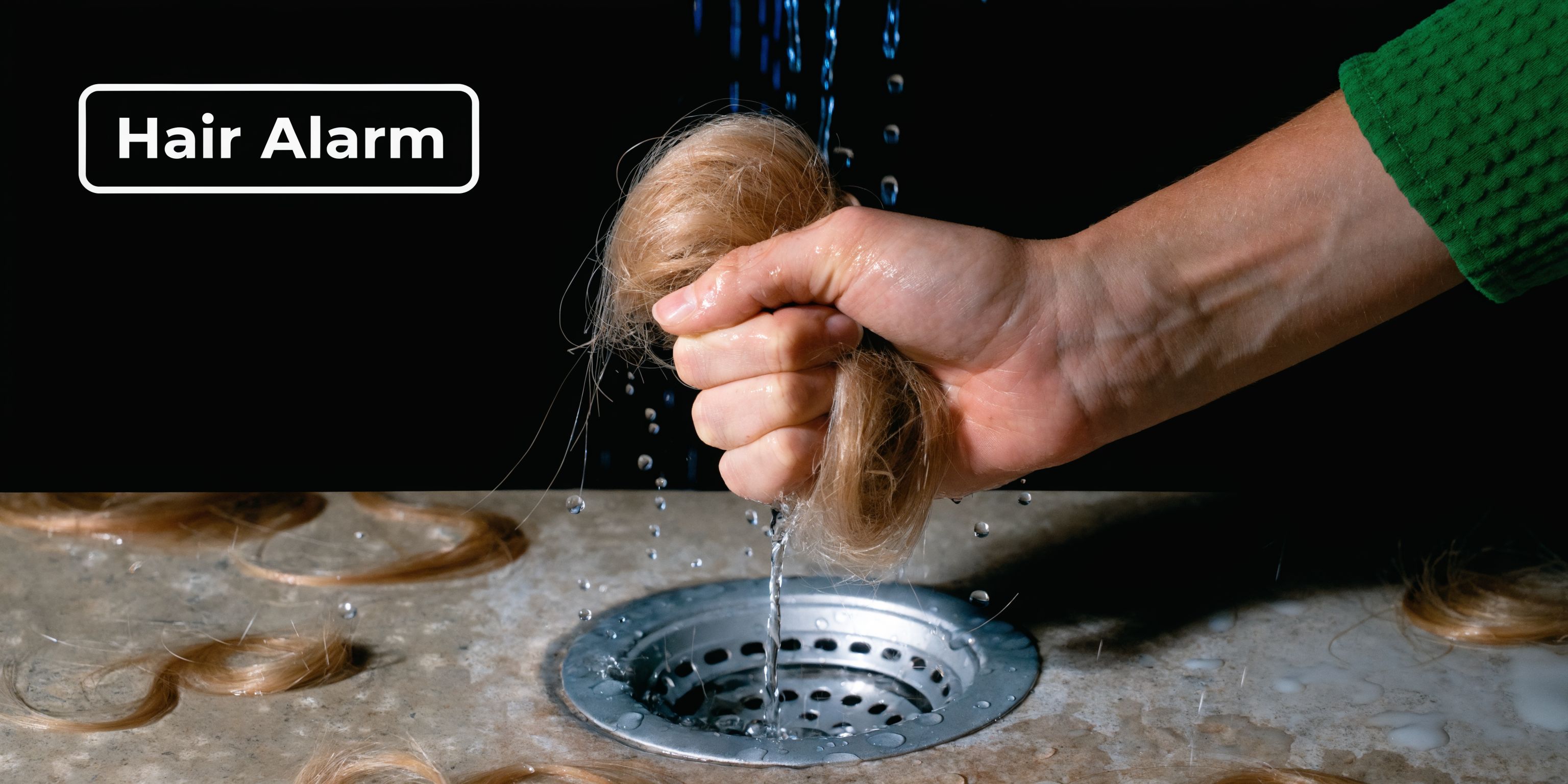
That anxiety is understandable. Hair is personal. It is tied to identity, routine, confidence, and control. When it starts behaving differently, people often assume the worst.
But the first helpful shift is this. Seeing more hair does not automatically mean you are losing your hair permanently. Hair naturally cycles out. Some people notice it more on wash days, after brushing, or during periods of stress.
A second source of confusion is timing. Your scalp often reacts late. A stressor from months ago can show up as shedding now. That delay makes it hard to connect cause and effect. You may feel fine today and still be seeing the aftermath of an earlier disruption.
If you are noticing more shedding, treat it as a clue, not a verdict.
The goal is not to guess wildly or doom-scroll photos of other people’s hairlines. The goal is to observe your pattern, understand the biology, and respond in a calm, informed way.
The Difference Between Normal Shedding and Hair Loss
Hair does not grow as one continuous event. It behaves more like a garden with many plants on different schedules. Some strands are actively growing. Some are winding down. Some are resting before they release and make room for new growth.
That rhythm is why shedding happens at all.
Your scalp runs on a cycle
Each follicle moves through three main phases:
- Anagen is the growth phase. This is when a strand is actively produced.
- Catagen is the transition phase. The follicle shifts gears.
- Telogen is the resting and shedding phase. The old hair releases so the cycle can begin again.
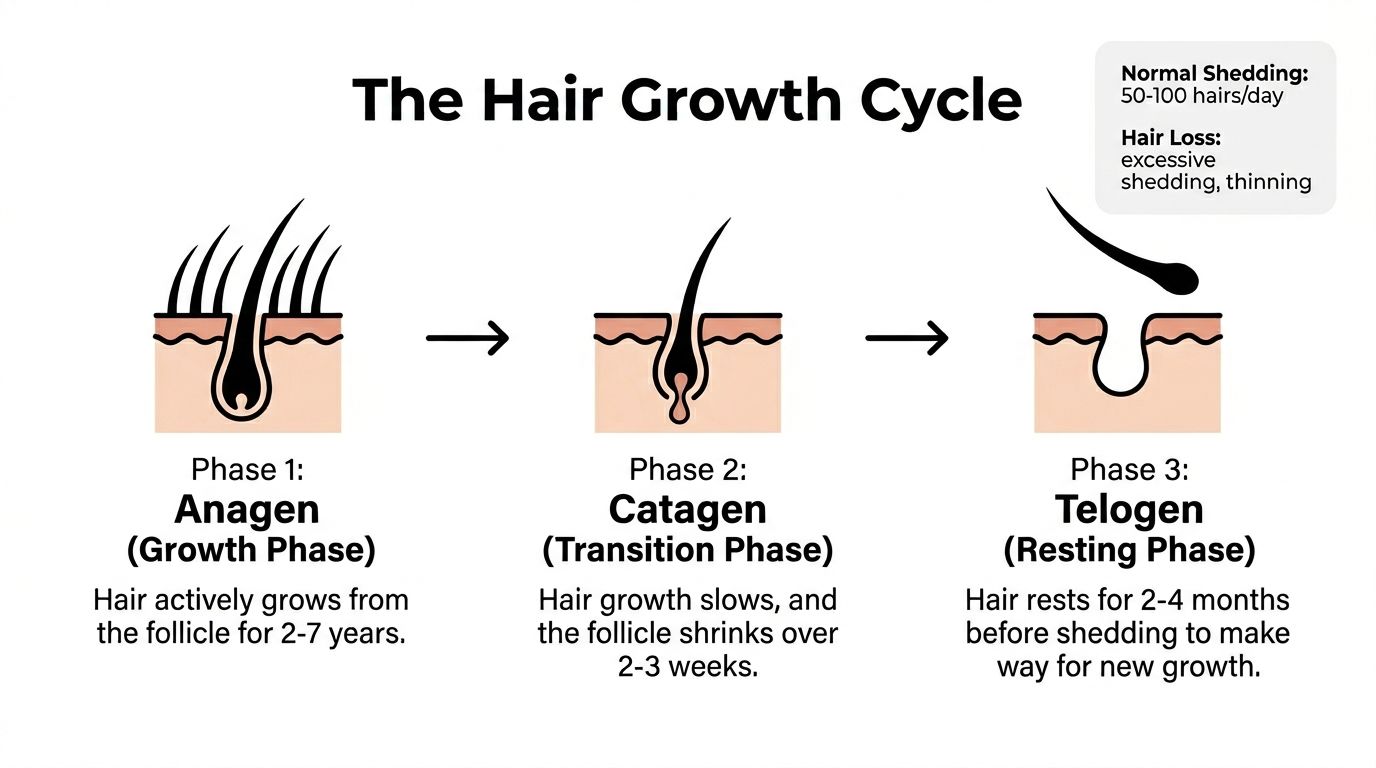
Imagine it as a neighborhood of tiny factories. Not every factory closes for maintenance at once. If they did, everyone would notice. Instead, healthy scalps keep most follicles on staggered schedules so shedding stays relatively subtle.
What counts as normal
Normal daily hair shedding ranges from 50 to 150 hairs per day, according to the NCOA summary on hair loss statistics. That normal range surprises many people because the number sounds high. In practice, it often goes unnoticed because the scalp is dense and the shed hairs are spread across the day.
Trouble starts when the volume clearly exceeds your usual pattern, especially when it keeps going.
Here is a simple distinction:
| Pattern | What it usually suggests |
|---|---|
| A steady background of loose hairs | Normal cycle activity |
| A clear jump in shedding for days or weeks | A trigger may have pushed more hairs into resting phase |
| More visible scalp, widening part, or reduced density | You may be dealing with more than shedding alone |
Why people get confused
Long hair can make ordinary shedding look dramatic. A few long strands collected in the shower can appear like a frightening amount, while short hairs may barely register. Curly or voluminous hair can create a different kind of confusion. Shed hairs may stay trapped until wash day, so one shower suddenly looks like a major event.
This is why visual panic is common. The eye is not a precise measuring tool.
Two simple ways to get more objective
Try a gentle pull check
Take a small section of dry hair and lightly pull from near the scalp to the ends. If several hairs come away easily, that can suggest active shedding. Be gentle. The point is observation, not force.
Watch your wash day pattern
Look for consistency, not one dramatic day. If shedding seems concentrated on wash days, note whether your hair is long, how often you wash, and whether the hairs have little white bulbs at the base. That bulb often points to shedding from the root rather than breakage along the shaft.
Hair breakage and hair shedding are not the same. Shed hairs come out from the follicle. Broken hairs snap mid-length and usually look shorter and more uneven.
The practical takeaway
If your shedding looks a little higher than normal for a short stretch, that does not automatically signal permanent loss. But if your baseline has changed and stays changed, your scalp is giving you useful information. The next step is figuring out what moved those follicles off their usual schedule.
Uncovering the Triggers Behind Increased Hair Shedding
When hair shedding ramps up, many people search for one villain. In reality, the scalp often responds to disruption in a patterned way. The most common pattern is telogen effluvium, often shortened to TE.
Telogen effluvium and the delayed reaction problem
With TE, a larger share of follicles gets pushed into the resting phase too early. This shift can involve up to 50% or more of scalp follicles, and daily shedding often surpasses 200 to 300 hairs according to JAMA’s discussion of telogen effluvium. Common triggers include physiological stress, rapid weight loss, nutritional deficiencies, especially iron, and thyroid dysfunction.
What makes TE confusing is the delay. The trigger happens first. The shedding shows up later. So the event that started it may already feel “over” by the time your brush fills up.
Examples of triggers people often overlook include:
- A major illness or fever that your body had to recover from
- Surgery or childbirth
- Rapid dieting or significant weight loss
- Low iron or other nutrient gaps
- Thyroid imbalance
- A period of intense emotional stress
The scalp is not being dramatic. It is conserving resources. Hair is not essential to immediate survival, so the body may pause its normal growth priorities during or after strain.
What TE usually looks like
TE tends to be diffuse. That means you notice shedding from all over rather than one neat bald patch. Ponytails may feel smaller. The shower may look startling. Hair may seem thinner overall, especially if the shedding continues for a while.
A useful clue is the white bulb at the end of a shed hair. That often suggests the hair completed a shedding event instead of snapping from damage.
Anagen effluvium is different
Anagen effluvium is a faster, more abrupt kind of hair loss. It happens when the growth phase itself is disrupted. This pattern is often linked to medical treatments or more severe follicle stress, not the delayed cycle shift seen in TE.
The timing is one of the biggest clues. TE tends to arrive after a lag. Anagen effluvium tends to happen much more quickly after the trigger.
Pattern hair loss can overlap with shedding
Some people are not dealing with “just shedding.” They may also have androgenetic alopecia, also called pattern hair loss. In women, this can show up as reduced density, a broader part, or a gradual drop in fullness.
Shedding can be the symptom that gets your attention first, even if the underlying issue has been developing without being noticed. That is why it helps to look beyond the drain and ask whether your hair volume, part width, or regrowth pattern has changed over time.
The scalp environment matters too
There is also growing interest in the scalp microbiome. Some clinicians point to microbiome imbalance and Malassezia yeast overgrowth as factors that may keep shedding cycles going in some people, especially when the scalp feels inflamed, flaky, or chronically “off.” In that context, washing harder is not always the answer. Over-cleansing can irritate the scalp barrier and leave the environment less balanced.
A broader view helps in this situation. Hair follicles do not work in isolation. They are affected by stress, hormones, nutrition, inflammation, and the condition of the scalp surface itself.
A quick way to think about causes
Instead of asking only, “Why is my hair falling out?” ask these three questions:
- Was there a trigger a few months ago such as illness, postpartum changes, surgery, or a crash diet?
- Is the loss diffuse or patterned across a part line, temples, or crown?
- Does my scalp feel healthy or is there itching, flaking, buildup, or tenderness?
Those answers do not replace a diagnosis. They do give you a more grounded starting point.
How to Investigate Your Hair Shedding
When people feel anxious, they usually do one of two things. They either obsessively inspect every strand or ignore the problem and hope it disappears. Neither approach is very useful.
A better approach is calm tracking.

Start with what you can observe
One of the biggest traps is trusting your eyes alone. Perception of hair loss is strongly correlated with hair length, and research discussing visual assessment of female hair shedding notes that longer hair can make normal shedding look much more dramatic. The same research also points out that many people without female pattern hair loss still overestimate how much they are losing.
That means your first job is not to panic. It is to make your observations more objective.
Try this for a few weeks:
- Take photos in the same lighting of your part, temples, and crown.
- Notice where shedding shows up most. Is it mainly wash day, brushing, or all day long?
- Look at the hair itself. Full-length strands with bulbs suggest shedding. Shorter snapped pieces suggest breakage.
- Pay attention to scalp symptoms like itch, flaking, tenderness, or heavy buildup.
Build a simple timeline
Hair often tells the story late. Make a short note of anything that happened in the past few months that might matter.
Useful questions to ask yourself
- Health changes such as illness, fever, surgery, or postpartum recovery
- Diet shifts including restriction, skipped meals, or rapid weight change
- Stress load from grief, burnout, travel disruption, or poor sleep
- Medication changes or new supplements
- Scalp changes like dandruff, irritation, or product buildup
Often the answer becomes clearer when you stop looking only at your hair and start looking at your whole body and routine.
Know when home tracking is enough and when it is not
Some shedding settles once the trigger passes. But there are times when you should stop guessing and get medical input.
Seek professional evaluation if shedding keeps going, you notice visible thinning or a widening part, you develop bald patches, or your scalp becomes painful, inflamed, or very itchy.
A clinician may examine your scalp, ask about timing, and consider lab work if a deficiency or thyroid issue seems possible. That is especially useful when shedding persists or when your energy, mood, cycle, or general health also feels different.
A short visual overview can also help you understand what clinicians look for when evaluating shedding patterns:
What not to do while you investigate
Do not rotate five new products in one week. Do not count every hair obsessively. Do not assume that more hair in the shower always means active thinning.
The point of investigation is pattern recognition. Once you can name the likely category, your next steps become much more useful.
A Modern Toolkit for Managing Hair Shedding
Managing shedding works best when you match the tool to the likely cause. A random pile of “hair growth tips” usually creates noise, not progress.
Start with the root cause, not the symptom alone
If your shedding follows a medical or nutritional trigger, the foundation is addressing that trigger. If your scalp is inflamed or imbalanced, the environment around the follicle matters. If your clinician suspects pattern hair loss, they may discuss options like topical treatment as part of a broader plan.
That is why a smart routine often has several layers:
| Layer | What it targets |
|---|---|
| Medical evaluation | Deficiencies, thyroid issues, pattern hair loss, persistent shedding |
| Daily scalp care | Irritation, buildup, barrier stress |
| Lifestyle support | Stress load, sleep disruption, under-fueling |
| Non-invasive tech | Consistency and support for scalp wellness |
Build the basics first
Gentle cleansing
A scalp with heavy residue, sweat, or irritation does not provide the calmest environment for follicles. But “clean” does not mean harsh. If your scalp already feels reactive, aggressive scrubbing and over-cleansing can make it feel worse.
Smarter styling
If your hair is fragile, reduce tension. Tight hairstyles, repeated heat, and rough detangling can turn a shedding problem into a breakage problem. That makes it harder to tell what is happening.
Nutritional support
If low iron, low protein intake, or another deficiency is part of the picture, topical products alone will not solve it. Hair follicles need enough internal support to maintain growth.
Stress management
Stress is not just a vague wellness buzzword here. The body can respond to strain by shifting follicles out of growth mode. Simple routines that reduce allostatic load, like better sleep regularity and moments of recovery in the day, can help the scalp return to a steadier rhythm over time.
Where LED therapy fits
Some people want a non-invasive option they can use consistently alongside medical care and daily scalp care. That is where LED light therapy has become part of the conversation.
Emerging discussion in clinician-led content suggests that scalp microbiome imbalance, including Malassezia yeast overgrowth, may contribute to persistent shedding in some people, and this dermatologist discussion of scalp microbiome imbalance and LED support highlights non-invasive LED therapy as one modern way to help manage the scalp environment while supporting the anagen, or growth, phase.
The appeal is straightforward:
- It is non-invasive
- It fits into a daily routine
- It can complement broader scalp-care efforts
- It gives people a structured habit instead of a reactive scramble
If you want a technical primer, this overview of how LED light therapy works explains the basic concept in a practical way.
Think of LED as part of a system
LED therapy makes the most sense when it is not treated like a magic wand. It works better as one piece of a complete scalp wellness plan.
That system might include:
- A wash routine your scalp tolerates well
- Medical follow-up if symptoms suggest a deficiency or thyroid issue
- Lower-tension styling
- Better recovery habits if stress has been relentless
- Regular LED sessions to support scalp wellness without adding friction to your day
The best routine is not the most complicated one. It is the one you can repeat calmly and consistently.
What realistic progress looks like
Progress is often quieter than people expect. You may first notice fewer hairs collecting in the shower, less scalp irritation, or short regrowth near the hairline. Hair biology moves slowly. Consistency matters more than intensity.
If your shedding is driven by a trigger that has passed, support and patience often need to work together.
Building Your Proactive Daily Scalp Care Routine
A strong scalp routine should feel doable on your busiest week, not just on your most motivated day.
A simple daily rhythm
Morning does not need to be complicated. Start by checking how your scalp feels, not just how your hair looks. If it feels itchy, greasy, tight, or flaky, adjust your cleansing and styling decisions around that.
A practical daily routine can look like this:
- Use gentle handling from the start. Detangle carefully, especially when hair is wet.
- Avoid high-tension styles. If you need your hair up, choose a style that does not pull hard at the hairline.
- Keep scalp products targeted. If you use a topical recommended by your clinician, apply it consistently rather than hopping between trends.
- Make room for LED sessions. The easiest routine is the one that happens while you work, read, answer emails, or wind down.
For people who want a routine that travels well, a portable setup matters. If you want ideas for integrating care into real life, this at-home scalp treatment guide offers useful routine inspiration.
A weekly check-in works better than daily worry
Instead of evaluating your hair ten times a day, choose one weekly review. Look at your part photos, note scalp comfort, and ask whether your shedding seems stable, improving, or escalating.
That weekly check-in can include:
- Wash day notes on how much shedding you noticed
- Scalp comfort such as less itch or less buildup
- Styling habits that may have added stress
- Routine consistency rather than perfection
What to do on wash day
Wash day is often when fear spikes. It helps to have a script.
Before washing
Detangle gently. Do not rake through knots aggressively.
During washing
Massage the scalp with your fingertips, not your nails. Focus on cleansing the scalp rather than roughing up the lengths.
After washing
Blot instead of twisting. Then detangle with patience. If you use LED therapy as part of your routine, attach it to a repeatable time so it becomes automatic rather than optional.
Protect your routine from common mistakes
People often sabotage progress by changing everything at once. A better rule is one change at a time, repeated long enough to judge fairly.
Keep these principles in mind:
- Consistency beats intensity
- Gentleness beats overcorrection
- Tracking beats guessing
- Support beats panic
A proactive routine is less about chasing instant regrowth and more about giving your follicles a steady environment in which normal cycling can recover.
Taking Control of Your Scalp and Hair Health
More shedding than usual can feel alarming. It does not have to leave you powerless.
When you understand the difference between normal cycling, stress-related shedding, and signs that need clinical attention, the problem becomes more manageable. You stop reacting to every strand and start looking for patterns that matter.
That shift changes everything. Instead of asking, “Is this the beginning of the end?” you can ask, “What is my scalp responding to, and how do I support it well?”
For some people, the answer is patience while a temporary shedding phase resolves. For others, it means checking iron or thyroid function, improving scalp care, lowering styling stress, and adding a non-invasive support tool such as LED therapy to build consistency into daily life.
If you are looking for a broader perspective on supportive options, this guide to scalp treatment for thinning hair is a useful next read.
The goal is not perfection. It is a calmer, smarter response. Your scalp gives signals. You can learn to read them, respond early, and build habits that support long-term hair wellness.
Frequently Asked Questions About Hair Shedding
Is more shedding on wash day always a bad sign
Not necessarily. Among women, 40 to 60% report excessive hair shedding on washing days, and this study on female hair shedding and wash day perception found that perceived shedding is strongly linked to hair length over shoulder length and is inversely related to age. In plain terms, wash day can look dramatic without automatically meaning a clinical disorder.
If your hair is long, curly, or usually worn up, shed hairs may collect until wash day.
How can I tell shedding from breakage
Shed hairs usually come out at full length and may have a small bulb at one end. Breakage tends to leave shorter, uneven pieces and often shows up after heat, bleach, rough brushing, or tight styling.
If you see a mix of both, you may be dealing with shedding plus hair shaft damage.
Can stress really affect my hair
Yes. The scalp can react to internal stress by shifting more hairs out of active growth and into the resting phase. The frustrating part is timing. Shedding often appears after the stressful period, not during it.
That is one reason people miss the connection.
Should I wash less if I am shedding
Not automatically. Washing does not cause telogen hairs to enter shedding. It often just reveals hairs that were already ready to come out. What matters more is using a scalp-friendly washing routine that does not irritate your skin or create more breakage.
If your scalp feels inflamed or very flaky, that deserves attention.
Can I use LED therapy with other hair-care approaches
In many routines, yes. People often use LED therapy alongside clinician-guided care, gentle scalp hygiene, and nutrition-focused support. The key is not to overload your scalp with too many new variables at once.
If you are under medical treatment or have a scalp condition, ask your clinician how to sequence your routine.
How long does it take to see improvement
That depends on the cause. Hair does not respond overnight. Shedding related to a temporary trigger often improves gradually once the trigger resolves and the growth cycle restabilizes.
What you are looking for first is usually less active shedding, better scalp comfort, and signs of new regrowth, not instant density.
Do styling products cause hair loss
Styling products are more likely to contribute to buildup, irritation, or breakage than true follicle shutdown. The bigger issue is often how the hair is handled. Tight styles, heat, harsh detangling, and frequent chemical processing can make hair look thinner by causing shaft damage.
If your roots are shedding from the bulb, look deeper than styling products alone.
If you want a simple way to support scalp wellness without adding another complicated step to your day, Prospek offers a cordless LED therapy cap designed for easy, hands-free use at home, at work, or while traveling. Its portable design and dual-spectrum LED setup make it a practical option for people building a consistent scalp-care routine around real life.