

You notice it on an ordinary morning. More strands than usual in the brush. A little extra hair circling the shower drain. Maybe your part looks wider in bright bathroom light than it did a few months ago.
That moment can feel personal fast. For many women, it also feels isolating, even though it isn’t rare. The more useful response isn’t panic. It’s structure.
A good hair growth routine for women doesn’t start with chasing whatever product is loudest online. It starts with understanding what your hair can realistically do, supporting the body systems that feed the follicle, keeping the scalp clear and calm, and then adding modern tools that are easy enough to use consistently. Consistency is where most routines either become effective or fall apart.
You also need to separate normal shedding from a pattern that deserves closer attention. Some women are dealing with temporary stress shedding. Others are seeing the early signs of age-related thinning. Some are growing hair just fine but losing length to breakage. Those are different problems, so they need different adjustments.
The encouraging part is that you can build a routine that is practical, low-friction, and sustainable. You don’t need a crowded shelf or an exhausting schedule. You need a system you’ll keep using.
Your Path to Healthier Hair Starts Now
A lot of women begin their routine after a small but unmistakable shift. They don’t wake up one day completely surprised by hair changes. They notice patterns. A ponytail feels thinner. Wash day leaves more strands in the sink. The crown doesn’t sit the same way it used to.
That concern is understandable. Female hair loss is common. Research indicates that many women do not go through life with a full head of hair, and many women experience some degree of hair loss by age 50. The prevalence of female pattern hair loss also rises with age, from around 12% in women aged 20 to 29 to over 50% in women over age 80 according to this review on female pattern hair loss.

The mistake I see most often is treating that moment as proof that nothing works. That’s rarely true. What usually fails is the approach. Women jump from oil to supplement to shampoo to social media trick, never giving one coherent routine enough time to do its job.
What control looks like
Control doesn’t mean forcing hair to change overnight. It means building the conditions that support healthier growth and better retention.
That looks like:
- Feeding the follicle well: Your routine has to account for nutrition, hydration, and recovery.
- Protecting the scalp environment: Buildup, irritation, and aggressive handling can work against you.
- Reducing breakage: Some women think they have a growth problem when the bigger issue is length retention.
- Using tools you’ll keep up with: The best routine is one that fits real life, including workdays, travel, parenting, and protective styling.
Healthy hair routines work best when they’re boring enough to repeat.
A better mindset for the next few months
Hair wellness responds to patience. That doesn’t mean passive waiting. It means using the next few months wisely instead of restarting every two weeks.
If you’re seeing more shedding, early thinning, or fragile ends, the goal isn’t perfection. The goal is to make your routine more predictable than your hair problem. Once your habits become steady, your scalp and strands usually become easier to read.
That’s where a modern hair growth routine for women has real value. It combines timeless habits, gentle scalp care, and convenient technology into one repeatable plan.
The Internal Foundation for Strong Hair Growth
Hair is built from what your body has available, not from what you wish it had. If the internal foundation is shaky, the rest of your routine has to work much harder.
Hair growth also follows a biological timetable. The average person grows about 6 inches of new hair per year, or roughly 0.5 inches per month, during the anagen or growth phase, which can last 2 to 6 years according to this overview of hair growth rate by age. This resets expectations. Growth is gradual. Your routine should support that pace, not fight it.
Build meals around follicle support
You don’t need a “hair diet.” You need regular meals that include the raw materials healthy hair depends on.
Focus your shopping list on foods that naturally provide nutrients often associated with hair health:
- Iron-rich options: Lentils, beans, spinach, red meat, fortified grains.
- Zinc sources: Pumpkin seeds, chickpeas, shellfish, nuts.
- Biotin-containing foods: Eggs, salmon, seeds, sweet potatoes.
- Protein staples: Greek yogurt, fish, poultry, tofu, cottage cheese.
- Supportive fats: Avocado, olive oil, nuts, seeds.
A practical rule works better than a complicated meal plan. Try to include a protein source at each meal, one iron- or zinc-rich food daily, and enough whole foods that your scalp isn’t relying on convenience snacks to carry the load.
Don’t outsource everything to supplements
Supplements can be useful in the right context, especially when a clinician identifies a deficiency. But many women use them as a shortcut around diet, sleep, hydration, and stress. That rarely produces the steady results they want.
If you suspect low iron, poor nutrition, hormonal shifts, or thyroid concerns, getting checked is more useful than self-prescribing a pile of bottles. A targeted approach beats a random one.
Practical rule: If your routine depends more on capsules than on meals, water, and recovery, it’s probably upside down.
Stress shows up at the scalp
Women often underestimate how strongly stress can affect the hair cycle. High stress doesn’t just feel bad. It can change consistency, shedding patterns, and scalp comfort.
You don’t need a perfect wellness routine to improve this. You need a few repeatable pressure-release habits:
- Short walks: Ten minutes outside can lower the intensity of a stressful day.
- Earlier sleep cues: Dim lights, put the phone down sooner, and stop treating bedtime like leftover work time.
- Simple breathing reset: A few slow breaths before meals or before bed can interrupt that “always on” state.
- Calendar boundaries: If every day runs long, recovery never catches up.
I often tell clients to stop separating “stress management” from “hair care.” For the body, they’re linked.
Hydration and routine matter more than hacks
Dry, brittle hair doesn’t always come from one dramatic cause. Sometimes the issue is cumulative. Too little water, too much heat, inconsistent meals, skipped conditioning, rushed detangling. Small things add up.
A solid internal base usually looks plain on paper:
| Daily habit | What it supports |
|---|---|
| Regular meals | Steadier nutrient availability |
| Adequate protein | Stronger strand structure |
| Water intake | Better overall tissue support |
| Better sleep | Recovery and hormonal balance |
| Lower stress load | A calmer growth environment |
That may not sound exciting, but it’s where good routines become believable. If your internal foundation improves, every scalp-focused step you add later has a better chance to help.
Set realistic expectations early
If your hair grows slowly, don’t assume your routine has failed in one month. If you’re seeing breakage, remember that growth and retention are different. New hair can be coming in while your ends still struggle.
The women who do best with a hair growth routine for women are usually the ones who stop looking for dramatic weekly change and start looking for steadier monthly patterns. Less shedding. Better scalp comfort. Stronger feel through the mid-lengths. A part that looks more stable over time.
That’s how progress usually starts.
Building Your Scalp-First Care Regimen
If the scalp is congested, irritated, or neglected, your routine stays limited. Healthy-looking hair starts with a scalp that’s clean enough, balanced enough, and handled gently enough to support better growth conditions.
A useful scalp routine doesn’t need to be aggressive. It needs to be deliberate.
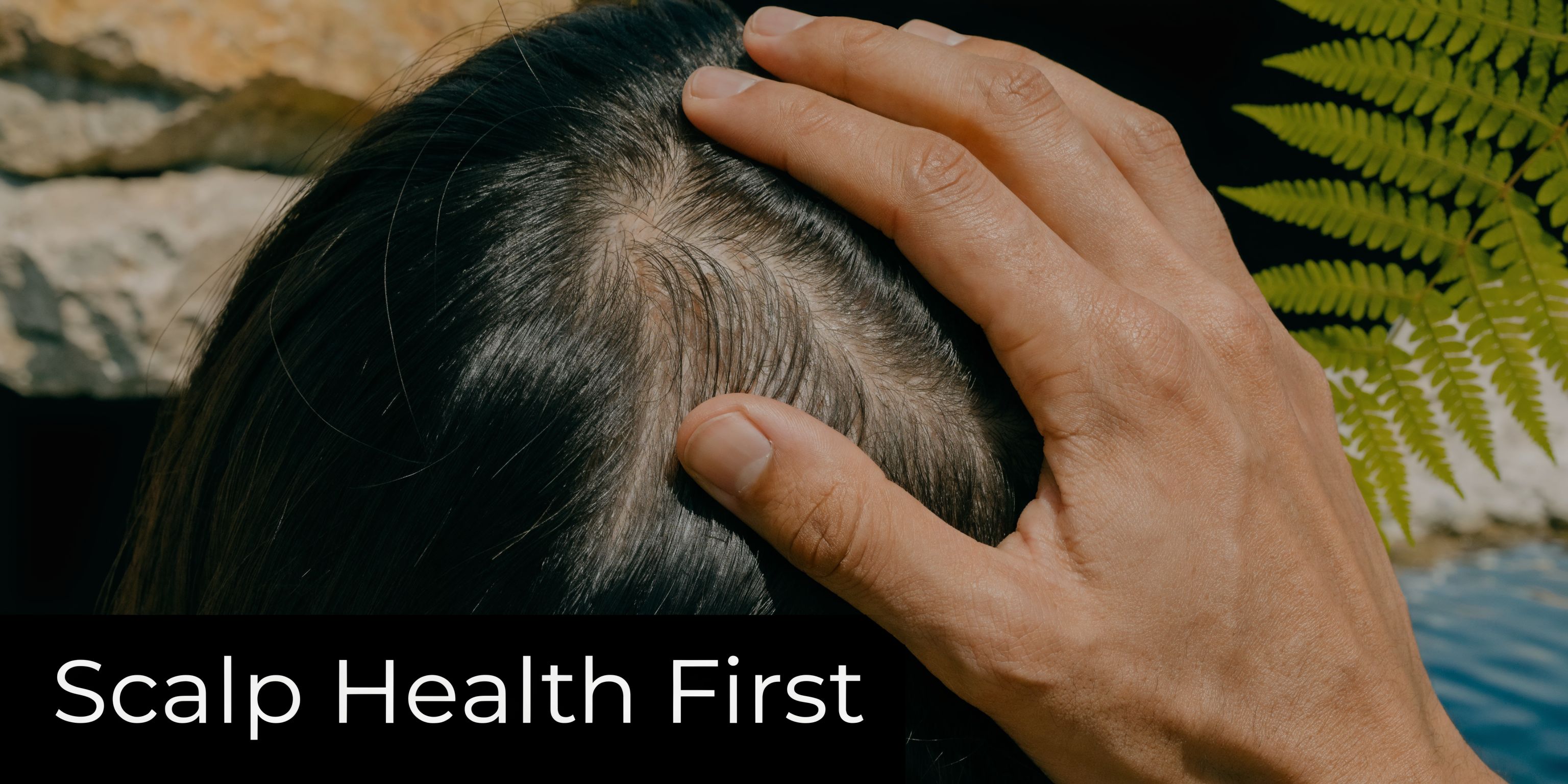
A multi-phase scalp routine focused on stimulation and cleansing can make a real difference. Weekly cleansing with clarifying agents can reduce follicle-clogging buildup by up to 40%, which is especially useful before treatments such as LED therapy, according to this guide to a scalp stimulation and protection routine that works.
Clean scalp first, products second
Women often layer oils, dry shampoo, leave-ins, edge products, and styling creams all week, then wonder why the scalp feels tight or unresponsive. Buildup changes the environment.
A better pattern looks like this:
- Use your regular shampoo based on scalp feel: Wash when the scalp feels greasy, itchy, heavy, or coated.
- Bring in a clarifying wash periodically: This helps reset buildup from styling products and residue.
- Condition mostly from mid-length to ends: Don’t smother the scalp unless a product is specifically made for it.
If you want more guidance on practical home care, this at-home scalp treatment guide is a helpful place to start.
How to wash for growth support
Technique matters. A rushed wash can leave residue behind or create tangling that leads to breakage later.
Use this sequence:
- Soak thoroughly first. Let water loosen surface buildup before shampoo touches the scalp.
- Apply shampoo to the scalp, not the ends. Your lengths usually get clean enough as the rinse runs through.
- Use your fingertips, not nails. Scratching can irritate the scalp.
- Work in sections if your hair is dense or textured. That keeps cleansing even and lowers tangling.
- Rinse longer than you think you need to. Residue often comes from poor rinsing, not poor products.
Massage without over-handling
Scalp massage can be useful, but it’s often overdone. You do not need to aggressively rub or spend long stretches manipulating the roots every day.
Gentle pressure is enough. Use the pads of your fingers and make small movements across the scalp. Keep it brief and consistent rather than forceful and occasional.
For women with fine hair, the trade-off is oil distribution versus flattening the roots. For women with curls, coils, or protective styles, the trade-off is stimulation versus unnecessary disturbance. That’s why technique has to match texture and styling reality.
A good scalp routine should leave the scalp feeling lighter and calmer, not sore.
Pick products by function
Don’t shop by trend names alone. Shop by what the product needs to do in your routine.
Shampoo priorities
Look for formulas that match your actual scalp state.
- Oily or buildup-prone scalp: Choose something balancing or clarifying.
- Dry or easily irritated scalp: Use a gentler cleanser between stronger wash days.
- Heavy styling routine: Keep a clarifier in rotation.
Conditioner priorities
Conditioner should improve slip, softness, and manageability without turning wash day into a coating session.
- Fine hair: Go lighter so you don’t collapse volume.
- Thicker or textured hair: Richer formulas often help with detangling and retention.
- Damaged ends: Leave-in support may matter more than adding more scalp product.
Product choices to question
Be cautious with routines that pile on multiple oils, thick butters, and heavy stylers directly at the roots. Some women tolerate that well. Many don’t.
If your scalp feels waxy, itchy, tight, or filmy, simplify before you add.
The lowest-friction scalp routine often wins
The best regimen is usually not the most elaborate one. It’s the one that keeps the scalp clean, supports comfort, and doesn’t create extra breakage through excessive washing or handling.
A balanced weekly approach might include one thorough wash, one clarifying reset when needed, light conditioning where the hair needs it, and brief scalp stimulation that doesn’t interfere with your style.
That gives you a much better base for adding LED therapy in a way that feels organized rather than random.
Integrating LED Light Therapy with Your Prospek Cap
Portable LED therapy fills a gap that many hair guides ignore. Women want something they can use without scheduling their life around it, and they want support that doesn’t depend on messy application or constant hands-on effort.
A 2025 Elle article highlighted one woman who reported “baby fuzz growing” and full regrowth after using an infrared hat 5 days a week for 30 minutes, and the same piece notes that low-level light therapy studies show a 25 to 35% increase in hair density after 16 to 24 weeks in reviewed research. You can read that in Elle’s hair growth treatments and advice feature.

That doesn’t make LED a magic switch. It makes it a practical tool. The women who get the most from it usually treat it like toothbrushing or skincare. It becomes part of the week instead of a special event.
What LED therapy is doing in plain language
Red and near-infrared light are used in scalp wellness routines to support the tissue environment around the follicle. In simple terms, the goal is to encourage a healthier setting for growth by supporting circulation and cellular activity without heat-heavy styling or invasive treatment.
That’s one reason LED works well inside a modern hair growth routine for women. It doesn’t ask you to rough up the scalp, saturate your roots daily, or rearrange your whole schedule.
If you want a clearer technical overview, this explanation of how LED light therapy works provides a simple breakdown.
How to fit the cap into real life
Busy women often fail with good tools because they never assign them a time slot. “I’ll do it later” is not a routine.
Pick one of these windows and stick to it:
- During desk work at home: Email, planning, admin, reading.
- During evening wind-down: TV, journaling, folding laundry.
- After your scalp is clean: Especially useful on wash day or the day after.
- During travel downtime: Hotel evenings, train rides, quiet work blocks.
The cap should fit around your life, not compete with it.
A simple usage structure
For most women, consistency matters more than making each session feel intense.
Use this practical sequence:
- Start with a reasonably clean scalp. You don’t need freshly shampooed hair every single session, but heavy buildup should be dealt with.
- Place the cap evenly. Make sure coverage feels centered and stable.
- Use it during a seated task. That makes the session easier to complete without fidgeting.
- Keep your schedule regular. Repetition matters more than occasional marathon use.
- Pair it with a cue. Same chair, same show, same work block, same time of day.
Which women tend to like LED most
The best fit is usually one of these profiles:
| Routine type | Why LED fits |
|---|---|
| Busy professional | Hands-free use during work or downtime |
| Early-thinning user | Easy to start before hair loss feels advanced |
| Protective-style wearer | Less need to disturb the style |
| Travel-heavy schedule | Portable routine with low setup |
Convenience isn’t a bonus. It determines whether you’ll still be doing the routine months from now.
Timing and patience
Women often ask how long it takes before a device feels worth it. The honest answer is that hair changes don’t announce themselves quickly. You’re looking for subtle signs first. Less alarm at wash day. More stability around the temples or part. New short hairs that don’t all look like breakage.
That’s why I advise women to stop evaluating after every single use. Evaluate by month, not by mood.
Here’s a visual walkthrough to make the process easier to picture.
What doesn’t work with LED
LED becomes less useful when women make one of a few predictable mistakes:
- Using it inconsistently: A great device can’t help much if it spends most of the week in a drawer.
- Stacking too many variables: If you change shampoo, supplements, oils, wash frequency, and styling habits all at once, it gets hard to tell what’s helping.
- Expecting visible density overnight: Hair routines don’t move that fast.
- Using it on a neglected scalp: Thick buildup and poor cleansing make the routine less coherent.
Keep the method simple enough that you can repeat it on an ordinary Tuesday.
How LED fits with the rest of the routine
Think of LED as a support layer, not a replacement for basics. It works best when your internal habits are stable and your scalp care is sensible.
That’s what makes the full routine modern instead of trendy. You aren’t choosing between timeless care and technology. You’re using technology in a way that supports the timeless parts.
Your Weekly Hair Growth Schedule and Tracking Progress
Most women don’t need more advice. They need a plan they can follow on a normal week.
The easiest way to stay consistent is to assign each part of your hair growth routine for women to a place in your calendar. Once that happens, your routine feels less like a project and more like maintenance.
Sample Weekly Hair Growth Routine
| Day | Morning/Daytime | Evening |
|---|---|---|
| Monday | Protein-rich breakfast, hydration, gentle style | LED cap session during work or TV time |
| Tuesday | Low-manipulation styling, regular meals | Brief scalp check, leave lengths alone |
| Wednesday | Wash day with scalp-focused cleanse | Condition mid-lengths and ends, LED cap if scalp feels fresh |
| Thursday | Protective or low-tension style | Early bedtime, no extra product layering |
| Friday | Hydration, simple meals, minimal heat | LED cap session during wind-down |
| Saturday | Clarify if buildup is present, detangle gently in sections | Deep conditioner on lengths if needed |
| Sunday | Rest day for hair, avoid over-handling | Review notes, take progress photo if it’s your tracking week |
This kind of schedule works because it spreads the effort out. You’re not trying to do everything on one wash day.
If you want a better sense of cadence for sessions, this article on how often you should do red light therapy can help you decide what feels realistic.
Track three things, not twenty
Women often lose motivation because they measure progress in the mirror only, and only when they’re already frustrated. That’s unreliable.
Track these instead:
Photos
Take pictures monthly, not daily.
Use the same:
- Lighting
- Angle
- Part placement
- Hair condition, such as dry and styled the same way
Focus on the hairline, temples, crown, and part.
Shedding patterns
You do not need to count every hair. That usually creates anxiety.
Instead, note patterns:
- Is wash day shedding about the same, worse, or less alarming?
- Is the brush filling faster than usual?
- Are you noticing more short broken hairs or more full-length shed hairs?
Retention
Some women are growing hair but snapping it off through friction, heat, or rough detangling.
Look for:
- Better feel at the ends
- Less mid-shaft breakage
- More consistency in fullness from root to tip
- Easier detangling over time
A wider part isn’t the only marker that matters. Better retention is progress too.
Use a simple log
You can keep this in your notes app. One line per week is enough.
Try a format like this:
| Week | Scalp feel | Shedding | Styling notes | LED consistency |
|---|---|---|---|---|
| Week 1 | Clean, a little dry after wash | Moderate | Less heat | Consistent |
| Week 2 | Comfortable | Similar | Protective style held well | Missed one session |
| Week 3 | Slight buildup before wash | Improved | Easier detangling | Consistent |
| Week 4 | Balanced | Less noticeable | Ends feel better | Consistent |
That’s enough to show patterns without turning your routine into homework.
Motivation comes from evidence
The women who stick with a routine usually create proof for themselves. They don’t rely on memory. They compare photos. They notice that the shower doesn’t look as alarming. They realize their ends aren’t shredding the same way.
That’s important because hair routines often show gradual improvement before dramatic changes.
When to adjust the plan
Adjust only when the pattern is clear.
Change your schedule if:
- Your scalp stays coated: Add or improve clarifying.
- Your hair feels stripped: Pull back on cleansing strength or frequency.
- Your ends keep splitting: Reduce heat and friction first.
- You can’t stay consistent: Make the routine simpler, not more ambitious.
A weekly plan should reduce decision fatigue. If your routine feels hard to maintain, the fix is usually not another product. It’s fewer moving parts.
Advanced Tips and Common Mistakes to Avoid
The biggest myth in hair care is that all women should follow the same routine. They shouldn’t.
A woman with fine, oily hair and daily workouts has different needs from a woman wearing braids, a woman recovering from stress shedding, or a woman trying to preserve dense curls with minimal manipulation. A smart hair growth routine for women has to flex.
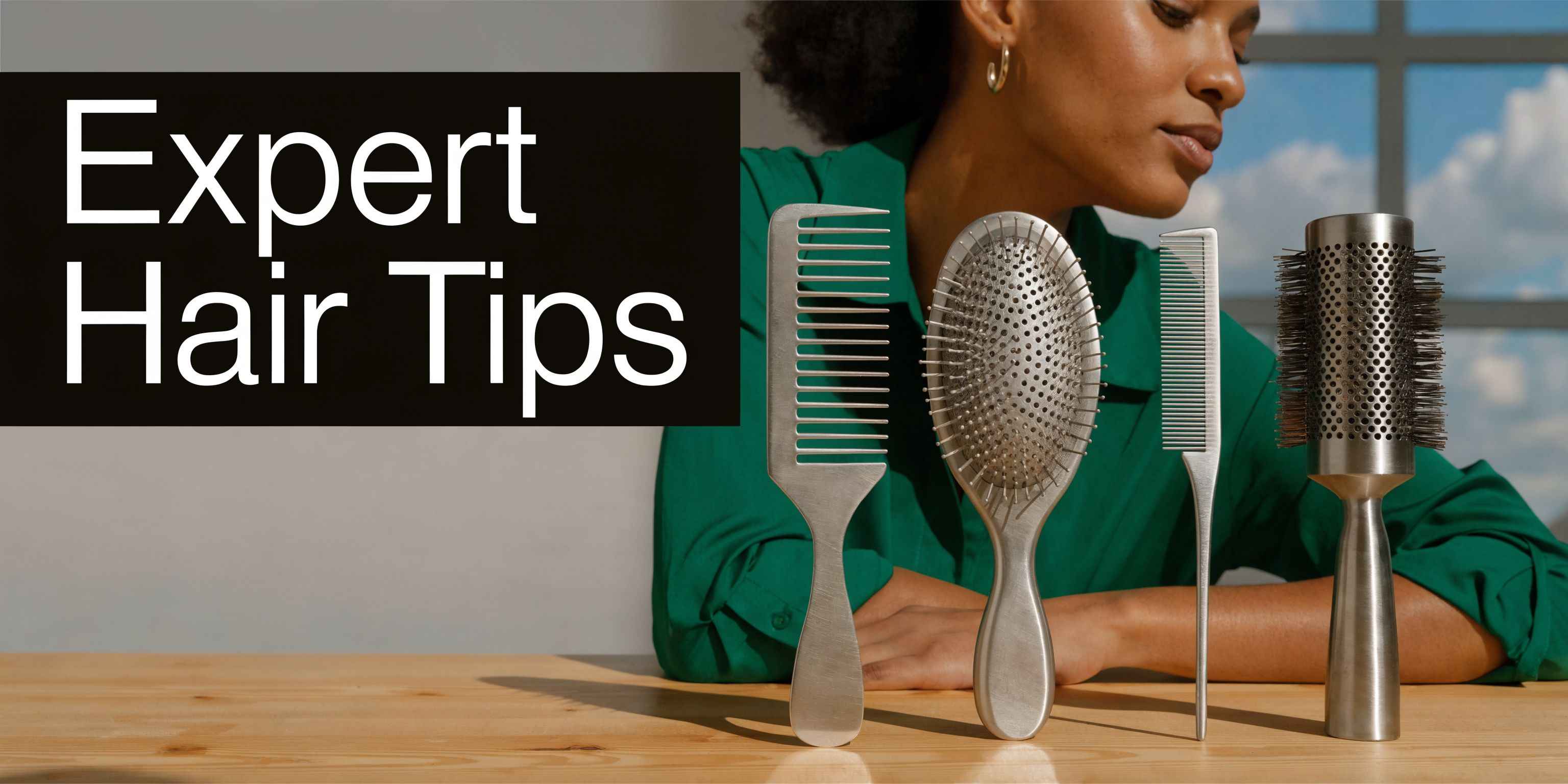
A good example is textured or high-density hair. Scalp access is often a key issue, not whether the hair can grow. The American Academy of Dermatology notes practical care considerations for African American hair, and the verified data here highlights that portable LED caps can help bypass blocked access by delivering uniform light without disturbing the style. That matters for the 40%+ of US women who use protective styles, making these devices especially useful in low-manipulation routines. The underlying scalp-care context appears in the AAD’s guidance on caring for African American hair.
Match the routine to the hair type
A few examples make this easier.
Fine hair
Fine hair usually needs lighter conditioning and more caution with oils near the root. Heavy layering can make the scalp feel dirty sooner and flatten the hair, which makes thinning look more obvious.
Curly and coily hair
These patterns often benefit from less manipulation, more sectioning, and better slip during detangling. Growth may be happening well enough, but retention can suffer if wash day is rough.
Protective styles
These can be excellent for reducing daily handling, but they can also make scalp access harder. That’s where hands-free LED support has a practical advantage because it doesn’t depend on parting every section to apply a topical.
Mistakes that stall progress
These are the errors I see most often.
- Over-washing: A scalp that gets stripped too often can become reactive. Hair lengths usually suffer first.
- Under-cleansing: Buildup, dry shampoo, oils, and stylers can leave the scalp congested.
- Starting too many things at once: You lose clarity fast.
- Rough detangling: Many women blame slow growth when breakage is the bigger issue.
- Inconsistent device use: Sporadic effort is hard to evaluate.
- Unrealistic expectations: If you expect dramatic change in a few weeks, you’ll probably quit too early.
The best routine is the one you can still follow during a busy month.
Trade-offs that matter
Some advice online ignores trade-offs, but they matter in practice.
If you wash less often, you may protect dry lengths better, but buildup can rise. If you wash more often, the scalp may feel fresher, but your ends may need more support. If you keep protective styles in longer, daily manipulation drops, but scalp access may get trickier.
The right answer is rarely extreme. It’s usually the middle path your hair responds to best.
When to get outside help
A home routine is valuable, but not every issue should be self-managed indefinitely.
Consider professional input if you notice:
- Sudden or dramatic shedding
- Increasing scalp irritation
- Visible widening that continues despite routine improvements
- Patchy areas or symptoms that don’t fit your usual pattern
That doesn’t mean your routine failed. It means your routine gave you enough awareness to know when it’s time for a closer look.
Keep the routine sustainable
The women who see the best long-term outcomes usually do a few things well for a long time. They eat more deliberately. They stop rough handling. They keep the scalp cleaner. They use convenient tools consistently. They adjust without overreacting.
That is the main secret. Not a miracle product. Not a 12-step ritual. A system you can live with.
If you want a portable way to support scalp wellness without adding another messy, high-maintenance step, take a look at Prospek. Its cordless LED therapy cap is designed for comfortable, hands-free sessions that fit into real life, whether you’re at home, at work, or traveling.